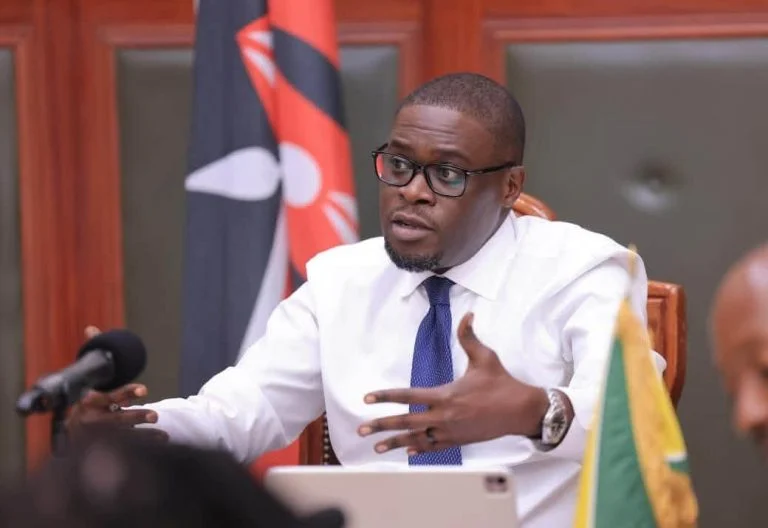
Nairobi Governor Johnson Sakaja’s political future is increasingly becoming central to the battle for City Hall, after he openly invited Orange Democratic Movement (ODM) supporters to back his possible entry into the party ahead of the 2027 General Election.
But beyond the prospect of another United Democratic Alliance (UDA) exit, Sakaja’s remarks at Jacaranda Grounds on Saturday, October 31, expose a much bigger political contest: the scramble to assemble a winning coalition for Nairobi, where at least four heavyweight politicians are positioning themselves to control the capital.
Addressing supporters during the climax of ODM’s month-long Mwezi wa Baba activities, Sakaja asked:
“Roundi hii mnasemaje? Niende kwa chama gani? Wangapi wanasema niingie ODM?”
The governor also put UDA and Rigathi Gachagua’s Democracy for the Citizens Party (DCP) into the conversation, effectively turning his political future into a public question before the crowd.
The response from sections of the audience appeared to favour ODM, prompting Sakaja to appeal to the party’s leadership to consider the people’s wishes.
It was not a formal defection announcement. But coming after months of speculation about ODM’s attempts to recruit him, the remarks suggest that the governor is increasingly comfortable publicly exploring an alternative political home.
The timing is significant. Sakaja is not merely searching for a party. He is searching for the political arrangement that gives him the strongest chance of retaining City Hall.
Sakaja’s UDA dilemma: Leaving Ruto without fighting him?
Sakaja’s possible departure is particularly interesting because, unlike some other politicians who have walked away from UDA, he has not publicly declared a fallout with President William Ruto.
The governor’s political challenge is therefore different from that of politicians whose exits have been driven by visible disagreements with the ruling establishment.
Kiharu MP Ndindi Nyoro, former Cabinet Secretary Aisha Jumwa and other politicians have pursued different political paths amid growing discontent within the ruling party.
Sakaja, however, could be contemplating a change of political vehicle without necessarily abandoning his relationship with State House.
That would be a significant test of Kenya’s broad-based political arrangement, in which political parties increasingly cooperate nationally while competing for elective positions locally.
His decision could also be influenced by the evolving relationship between UDA and ODM.
At Jacaranda, ODM leader Oburu Oginga announced that the two political camps were preparing separate coalition negotiations, expected to take place before February 2027.
If the negotiations produce a structured political agreement, Nairobi could become one of the most important bargaining grounds.
Sakaja’s potential move to ODM might therefore be more than an individual political decision. It could fit into a wider national arrangement involving the distribution of political support and elective positions.
Gakuya puts Gachagua’s Nairobi strategy to the test
While Sakaja explores ODM, Embakasi North MP James Gakuya is emerging as a significant player in the opposition’s Nairobi calculations.
Associated with Gachagua’s DCP, Gakuya has been positioned as the party’s gubernatorial contender, carrying the former Deputy President’s ambitions to establish a strong political presence in the capital.
But his latest position introduces a potential headache for Gachagua.
Gakuya has declared that he will contest the Nairobi gubernatorial election as an independent candidate if he is denied the DCP ticket.
The declaration is significant because it shows that the MP is unwilling to surrender his ambitions simply to accommodate broader coalition negotiations.
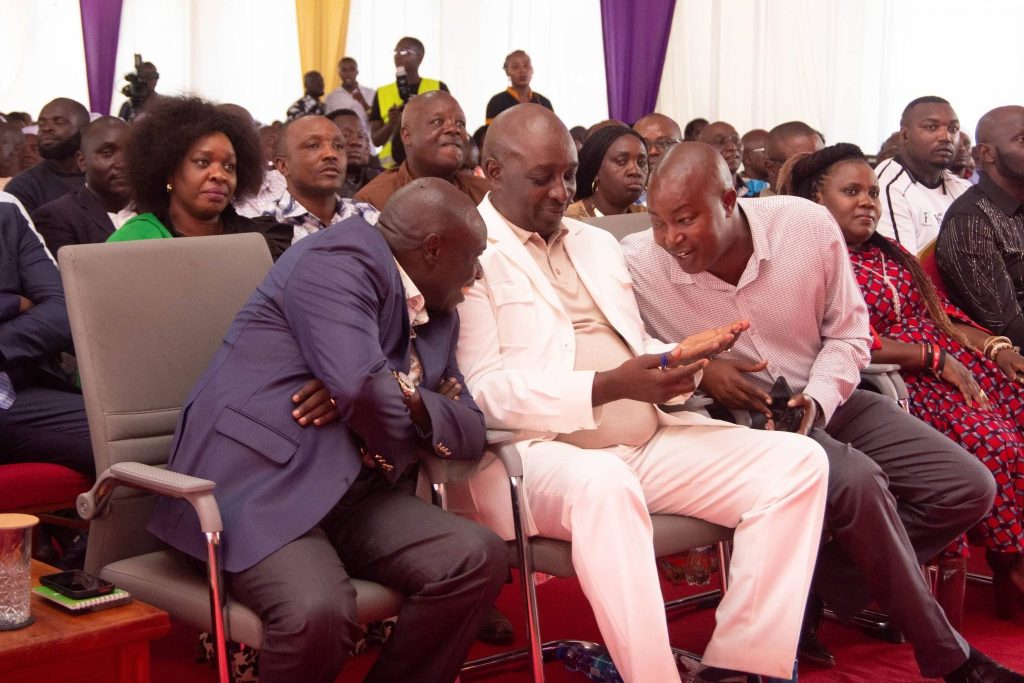
For Gachagua, the dilemma is whether to stand firmly behind Gakuya or consider a wider political arrangement that could require compromises over Nairobi’s gubernatorial ticket.
An independent Gakuya candidacy could also split votes within the opposition, particularly among voters who might otherwise support a common candidate against Sakaja.
The stakes are higher because Nairobi is not just another county. Its large electorate, economic significance and national political influence make control of City Hall an important prize in the wider power struggle.
Babu Owino presents another opposition headache
Embakasi East MP Babu Owino is another heavyweight in the unfolding contest.
Unlike Gakuya, who is associated with DCP, Babu has positioned The Mwananchi Party as his political vehicle for the 2027 election.
His strategy appears designed to preserve his independence in a political environment where coalition negotiations could force ambitious candidates to surrender their gubernatorial aspirations.
Recent reporting has also linked Gachagua’s engagement with Nairobi Senator Edwin Sifuna and the Linda Mwananchi movement to discussions that could affect the Nairobi governor contest.
However, Babu has maintained that he intends to be on the ballot, making any attempt to negotiate him out of the race politically complicated.
The implications are considerable.
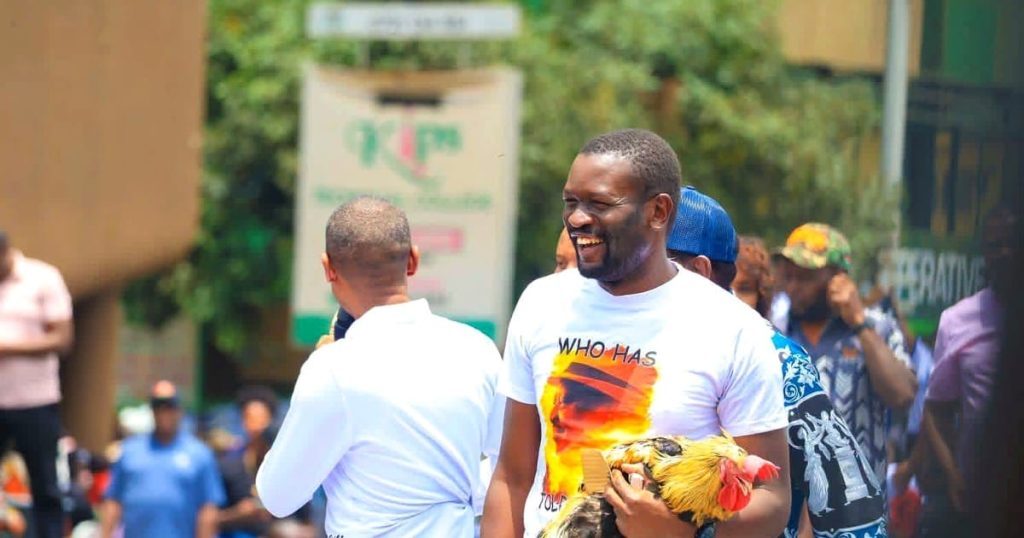
If Gakuya, Babu and Sakaja all remain in the contest, the opposition vote could become fragmented, potentially benefiting the incumbent.
For Babu, the challenge is converting his political popularity and established constituency base into a citywide electoral organisation.
For Gakuya, it is demonstrating that DCP’s political machinery can compete beyond Embakasi North.
Neither can rely on national political endorsements alone to secure City Hall.
Aladwa, Karauri and the battle beyond party colours
The contest is not limited to the three politicians.
Makadara MP George Aladwa remains an important figure within ODM’s Nairobi political structures and has his own gubernatorial ambitions.
His position complicates Sakaja’s possible entry into the Orange party because joining ODM does not automatically guarantee the incumbent its nomination certificate.
Aladwa and other established party figures could insist on competitive primaries rather than allowing a political newcomer to take over the party’s Nairobi machinery.
Kasarani MP Ronald Karauri also remains a potential challenger, bringing a different political profile built around his constituency support and business background.
Their presence means the 2027 race could become a contest not only between political parties but also between competing personal ambitions.
Can Sakaja turn incumbency into another victory?
For Sakaja, the central challenge is proving that his incumbency gives him an electoral advantage rather than making him vulnerable to criticism over City Hall’s performance.
His possible ODM entry could help consolidate support among sections of the capital’s electorate, but it also introduces the risk of alienating UDA supporters who backed him in 2022.
He must also convince ODM’s grassroots structures that he deserves its ticket, particularly when established aspirants have already invested in the party’s Nairobi ambitions.
The governor’s relationship with the late Raila Odinga, whom he previously described as a father figure, could offer a political bridge into ODM. But the party’s current leadership and nomination structures will ultimately determine whether that relationship translates into electoral support.

The Jacaranda remarks therefore represent more than speculation about another UDA exit.
They expose a Nairobi political contest in which Sakaja is calculating his next party, Gakuya is refusing to surrender his ambition, Babu is building an independent political vehicle, and other aspirants are positioning themselves for the same powerful seat.
The bigger question ahead of 2027 is no longer simply who will challenge Sakaja. It is who can assemble the broadest political coalition without losing control of their own ambitions.
For now, the City Hall chessboard remains wide open. And Sakaja’s next political move could determine how the rest of the players arrange their pieces.