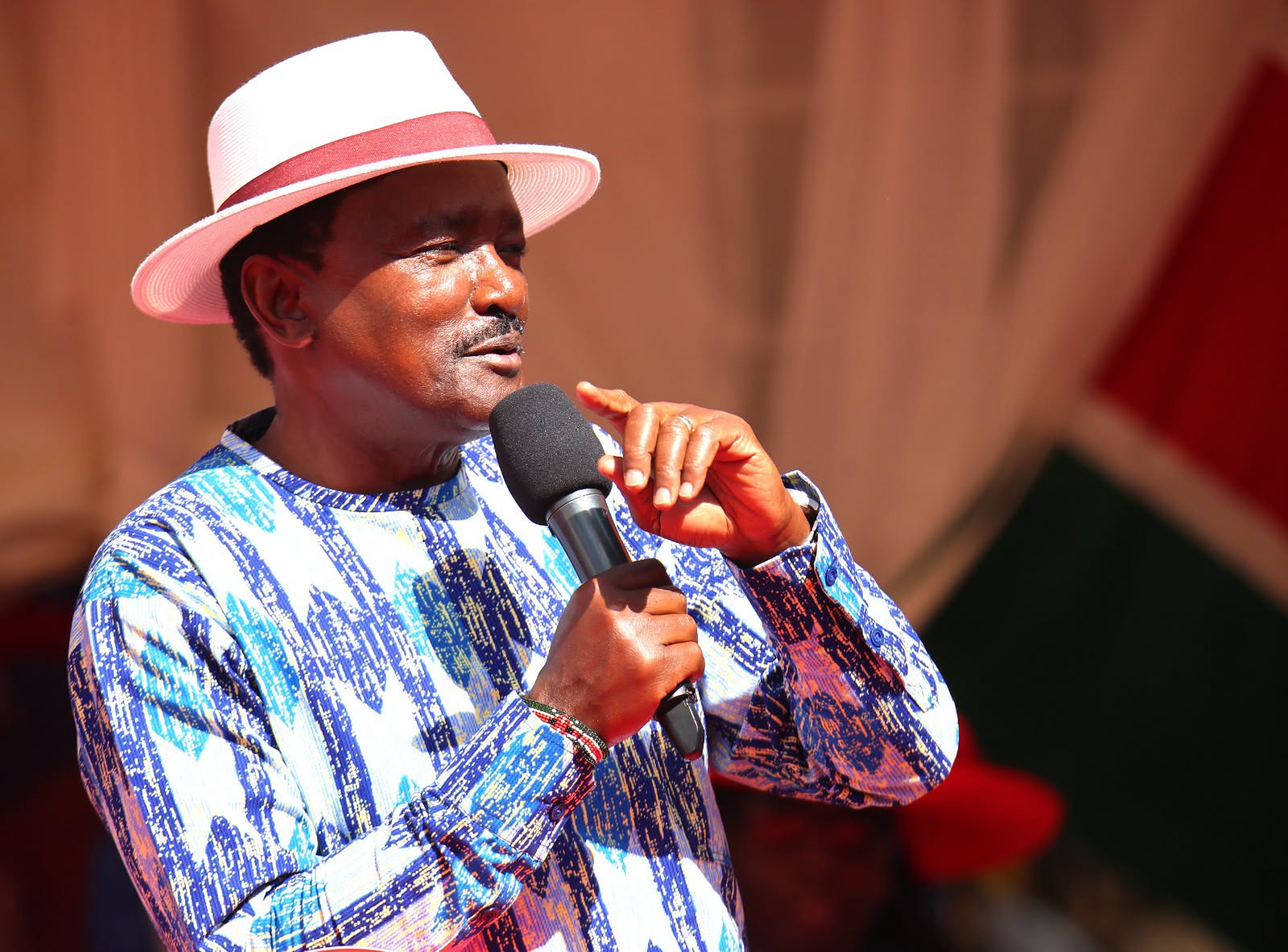
Wiper Patriotic Front leader Kalonzo Musyoka has criticised President William Ruto’s government over its crackdown on foreign nationals engaged in small-scale trade, accusing the administration of acting without a clear strategy and warning that the operation could deepen tensions with neighbouring countries.
Musyoka’s criticism came as the government began enforcing a directive announced by Ruto on September 2, 2026. targeting foreign nationals involved in hawking and certain small-scale retail activities.
Ruto said small-scale trade should be reserved for Kenyans and directed authorities to begin enforcement from September 7, 2026. He said Kenya remained open to foreign investment but that foreigners should not compete with Kenyans in businesses such as hawking and small retail.
“Crackdown without strategy is not governance,” Musyoka said in a statement, referring to hundreds of small-scale traders seeking emergency travel documents outside the Burundian Embassy in Nairobi.
His comments came amid uncertainty over how the directive would affect foreign nationals already operating businesses in Kenya.
Foreign Affairs Principal Secretary Korir Sing’oei said on Sept. 6 that reports of a blanket crackdown on foreign traders were inaccurate. He said foreign nationals of all nationalities with the required documentation, including work permits and licences, remained legally protected to operate businesses in Kenya.
Trade Cabinet Secretary Lee Kinyanjui also clarified on Sept. 7 that visa-free entry or exemption from Kenya’s electronic travel authorisation requirements does not give foreign nationals the right to work, trade or operate businesses without the necessary approvals.
He said the government had identified cases of visitors entering Kenya under one status and then engaging in activities outside the terms of their admission.
The clarification is significant because Ruto’s original remarks referred broadly to foreign nationals engaged in small-scale trade, while the government has since stressed the distinction between legal foreign businesses and activities conducted without the required permits.
Musyoka said the government could protect Kenyan traders without creating uncertainty for legitimate businesses.
“There are better, more deliberate ways to protect Kenyan small businesses and create an environment where entrepreneurs, Kenyan and foreign alike, can thrive within the law,” he said.
The former vice-president argued that competition from foreign traders was not the only challenge facing Kenya’s small businesses.
“The real threats facing our small traders are corruption, an unpredictable working environment including this regime’s erratic tariffs and taxation policies, and the pre-election tensions being deliberately stoked by the outgoing regime, not the presence of foreign traders alone,” Musyoka said.
Those are political allegations by Musyoka and were not independently established in his statement.
He urged the government to prioritise diplomacy, dialogue and the rule of law, particularly as Kenya approaches the 2027 general election.
“Diplomacy, dialogue, and respect for the rule of law must take centre stage,” Musyoka said.

He warned that poor handling of the issue could affect relations between communities and neighbouring countries and disrupt economic activity.
“A lack of diplomacy risks deepening divisions between communities, regions, and nations and destabilising economic activity at a time when Kenya can least afford it,” he said.
Musyoka also called for transparency in how affected foreign nationals are processed, including any changes to their documentation or legal status.
“We must also insist on full transparency in how affected foreign nationals are processed going forward,” he said.
He then broadened his criticism to Ruto’s economic record, accusing the government of using the foreign-trader issue to project power and divert attention from wider economic problems.
“Let us also be honest: this crackdown is not about protecting Kenyan businesses,” Musyoka said.
He accused the government of “projecting power where competence is clearly lacking” and cited corruption and taxation as what he considers greater threats to Kenyan livelihoods.
Those claims are also political assessments by Musyoka and have not been independently verified.
The government, meanwhile, says its focus is on enforcing existing immigration and work-permit rules while protecting opportunities for Kenyan traders. Kinyanjui said Kenya’s visa-free entry policy would continue, but foreigners must obtain the appropriate approvals before engaging in employment, trade or business.
The dispute puts the government under pressure to balance its protection of Kenyan small businesses with enforcement of immigration rules and its wider commitments to regional trade and movement.
For Musyoka, the episode is evidence of what he sees as a broader failure of governance.
“The country and the region are watching,” he said.