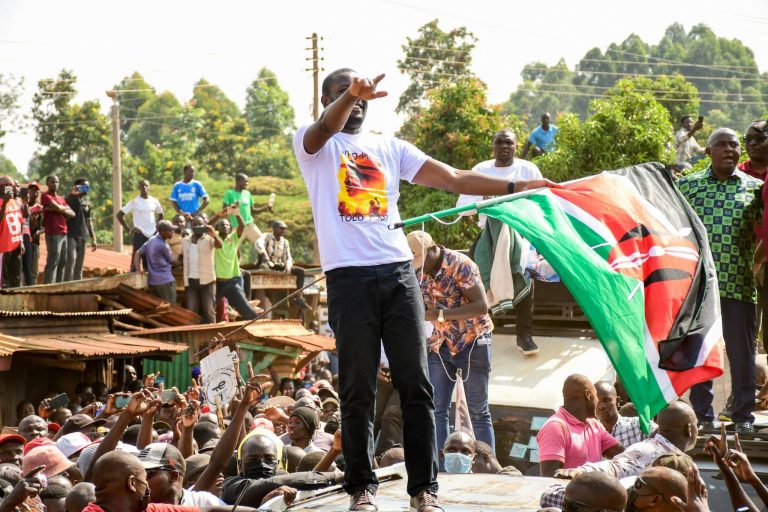
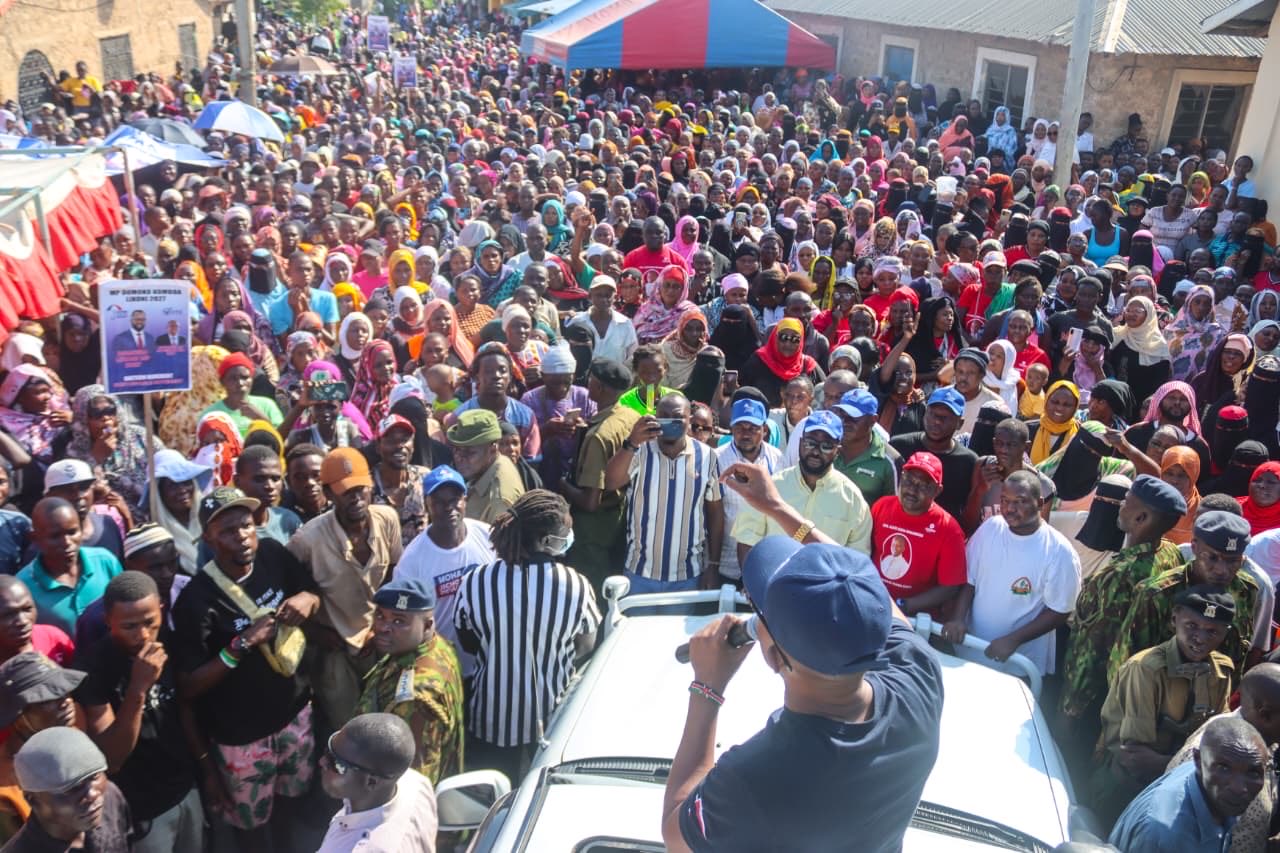
Nyali MP Mohamed Ali has emerged as one of the most serious challengers to Mombasa Governor Abdulswamad Nassir ahead of the 2027 elections, after securing the backing of key United Opposition leaders and positioning himself as their preferred candidate for the county’s top seat.
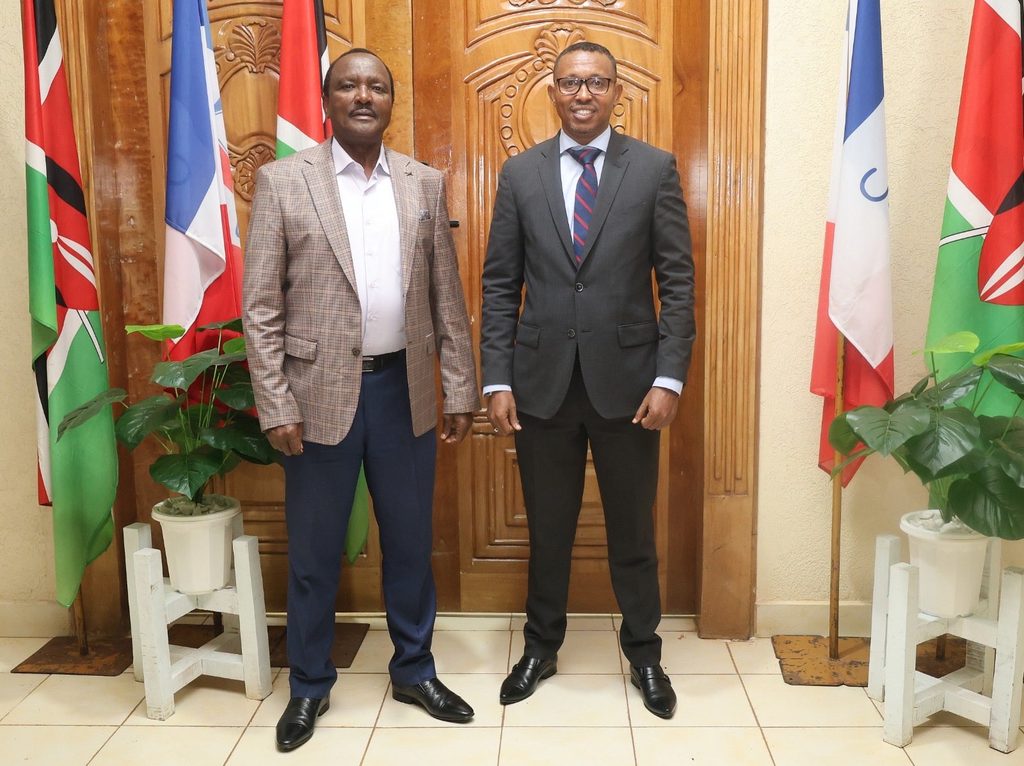
Ali, popularly known as Jicho Pevu, has received the backing of Wiper Patriotic Front leader Kalonzo Musyoka and former deputy president Rigathi Gachagua, giving his gubernatorial bid a national opposition platform.
But the strongest case for Ali is not simply the endorsements. His electoral record, political profile and the uncertainty surrounding an emerging ODM-UDA arrangement have combined to make the Mombasa contest more competitive.
Kalonzo has announced that Ali will receive the Wiper ticket for the governor race, while Gachagua has separately said the United Opposition has agreed to support the Nyali MP. Ali has accepted the endorsement and said he is ready to contest the seat.
The move gives the opposition a potentially important advantage: an early attempt to consolidate behind one candidate rather than allowing several challengers to compete for the same anti-incumbency vote.
Ali has already demonstrated electoral strength
Ali’s political weight is clearest in Nyali, where he has twice won the parliamentary seat.
In the 2022 election, he retained the constituency on a UDA ticket with about 33,000 votes, defeating ODM’s Said Abdallah by more than 14,000 votes. Kenya News Agency reported that Ali secured 32,933 votes against Abdallah’s 18,642.
The result matters beyond Nyali because it demonstrates that Ali can command a substantial personal vote even in Mombasa, an area where ODM won five of the county’s six parliamentary seats in 2022.
His political career also gives him a distinctive public identity. Before entering elective politics, Ali worked as an investigative journalist and became known for exposing corruption and misconduct. He has carried that reputation into Parliament and is now making the fight against what he calls cartels a central part of his gubernatorial pitch.
“We have agreed that I ensure that I deal with all cartels and I bring the vote home and we move together,” Ali said after receiving the opposition endorsement.
That message could allow him to campaign not only as an opposition politician but also as an outsider challenging established political interests.
The 2022 numbers show why Nassir cannot take the race for granted
Nassir remains the stronger starting point. He won the 2022 gubernatorial election with 119,083 votes against Hassan Omar’s 98,105, a margin of 20,978 votes. Nassir won all six constituencies, although the contest was particularly close in Nyali and Kisauni.
In Nyali, for example, Nassir received 22,387 gubernatorial votes against Omar’s 21,580.
Those figures provide an important warning to Ali: a strong Nyali base is not enough to win the governorship.
Ali must expand his support across Mvita, Kisauni, Changamwe, Jomvu and Likoni while building a political coalition capable of competing with Nassir’s ODM network.
That is the central test of his candidacy.
Why ODM-UDA zoning could change the race
The other major variable is the political relationship between ODM and UDA. The two parties have been cooperating nationally under the broad-based government arrangement while simultaneously positioning themselves for the 2027 elections.
In Mombasa, that has produced an unresolved question over whether the parties will use political zoning to avoid competing against each other.
Nassir has supported zoning, arguing that it can reduce political rivalry and promote stability.
But UDA Secretary-General Hassan Omar has publicly rejected the idea of being kept out of the Mombasa gubernatorial contest. In August, Omar said he would be on the ballot, and UDA Mombasa leaders said the party would field candidates at county and sub-county level.
That disagreement could have major consequences for Ali.If ODM and UDA fail to agree on a single candidate, the election could become a three-way contest involving Nassir, Ali and Omar or another UDA-backed candidate.
That scenario could benefit Ali if the United Opposition remains united behind him and the anti-incumbency vote is split among several candidates.
But zoning could also work against him. If ODM and UDA eventually agree to support Nassir and withdraw a serious UDA challenger, Ali would face a more consolidated political machine. Instead of competing against a divided establishment, he would have to defeat an incumbent backed by ODM and potentially supported by elements of the ruling coalition.
The outcome therefore depends less on the word “zoning” itself than on who is left on the ballot after the political negotiations are completed.
Ali’s UDA exit gives him a different political lane
Ali’s departure from UDA is another important part of the equation. The MP had increasingly positioned himself against sections of the party’s leadership as his gubernatorial ambitions became clearer. His disagreements with Hassan Omar also exposed the competing ambitions within UDA’s Mombasa network.
By moving into the United Opposition camp, Ali has avoided an internal UDA contest and secured the backing of leaders who are seeking to build an alternative political force ahead of 2027.
That could strengthen his campaign if the opposition maintains discipline. It could also allow Ali to present himself as a candidate whose appeal extends beyond a single political party.
His October 2025 meeting with Gachagua and Kalonzo, which he accompanied with a cryptic message about “great, wise men”, now looks more significant in hindsight. It signalled the political realignment that would later place him outside UDA and closer to the emerging opposition alliance.
The biggest question is whether Ali can turn Nyali into a countywide vote
Ali therefore enters the race with genuine advantages, but not an established path to victory.
He has name recognition, a proven parliamentary vote in Nyali, an anti-corruption political identity and the backing of prominent opposition leaders.
Nassir has something equally important: incumbency, ODM’s longstanding strength in Mombasa and a demonstrated ability to win votes across all six constituencies.

The 2027 contest could ultimately be decided by political arithmetic rather than personalities alone.
If Ali keeps the United Opposition behind a single ticket while ODM and UDA remain divided over Mombasa, he could emerge as the principal alternative to Nassir and turn the governor’s race into a much closer contest.
If ODM and UDA reach a deal that consolidates their support behind Nassir, Ali’s task becomes considerably harder.
For now, the evidence does not justify calling Ali the favourite. It does, however, show why his candidacy has changed the equation.
The question facing Mombasa is no longer simply whether Nassir will seek a second term. It is whether Mohamed Ali can transform the electoral strength he has demonstrated in Nyali and the national alliances now behind him into a countywide coalition capable of ending Nassir’s first term as governor.