President William Ruto has told Kenyans to scrutinise every shilling spent on police reforms, as questions over the procurement of the country’s new police uniforms add a fresh political dimension to a debate that initially focused largely on their design.
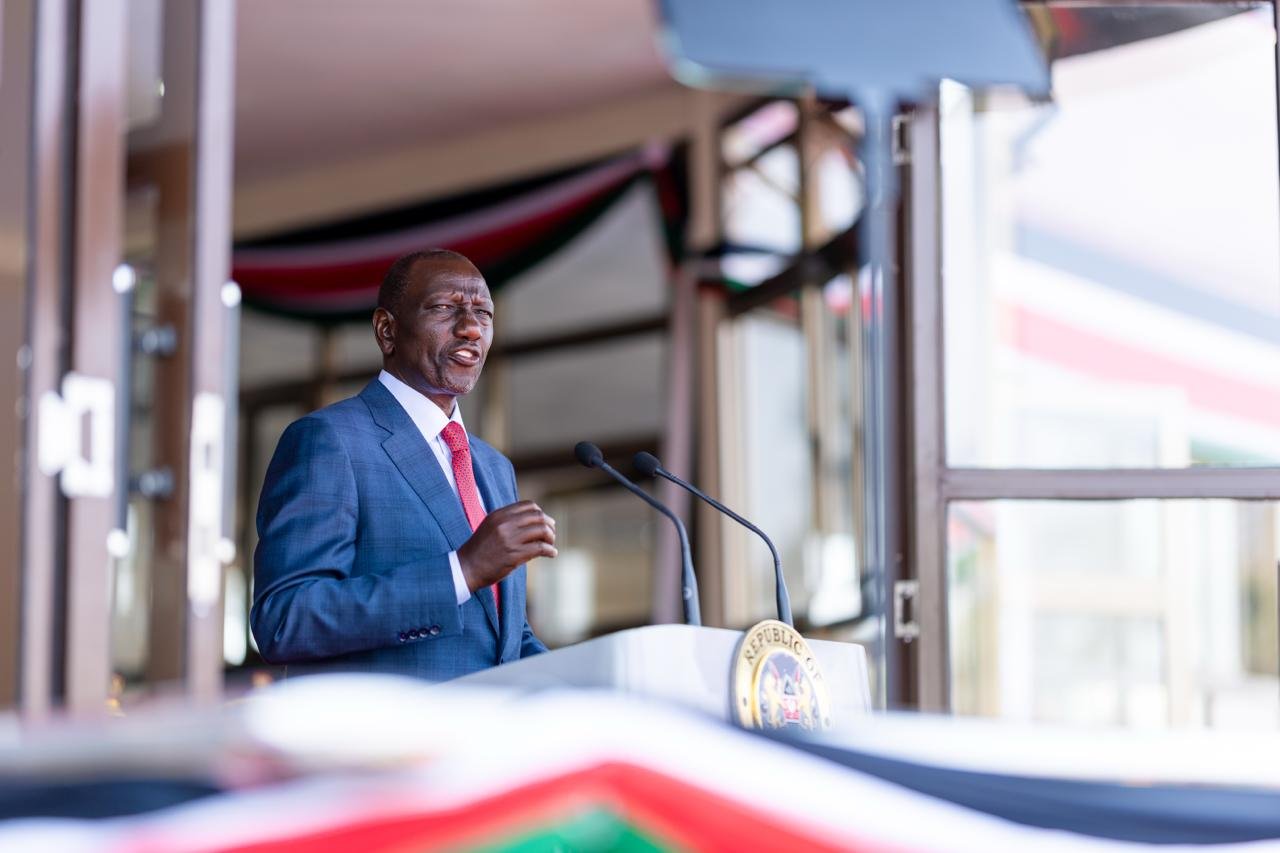
Ruto said on Friday that citizens had a right to question government decisions and expenditure, but insisted that such scrutiny should be based on evidence.
“We welcome scrutiny of every decision and every shilling spent,” Ruto said at the National Police College in Embakasi, Nairobi.
“Accountability is a constitutional obligation and must rest on facts, evidence and truth.”
His comments come days after the National Police Service (NPS) identified Bedi Investments Limited as the company awarded the contract to manufacture the new General Duty police uniforms.
The NPS has rejected reports that Nalitex Limited won the tender, saying the company did not feature in the procurement, development or manufacture of the uniforms. The service has maintained that Bedi Investments was lawfully awarded the contract through a competitive procurement process.
The clarification followed reports placing the value of the uniform contract at about Ksh2.8 billion to Ksh3 billion. Those figures have been reported in the media but should be distinguished from the NPS’s confirmed identification of Bedi Investments as the contractor.
That distinction has become central to the political debate.
The controversy is no longer simply about whether Kenyans like the new sky-blue and dark-blue uniform. It now involves questions about who received the contract, how the procurement was conducted and how much taxpayers will ultimately pay.
Ruto sought to place the uniform change within a much wider programme to reform the National Police Service.
“A uniform alone cannot transform policing, but professional identity and pride are part of building a modern, disciplined and effective Police Service,” he said.
The President said the reforms include police remuneration, welfare, housing, training, equipment, technology, infrastructure and institutional capacity.
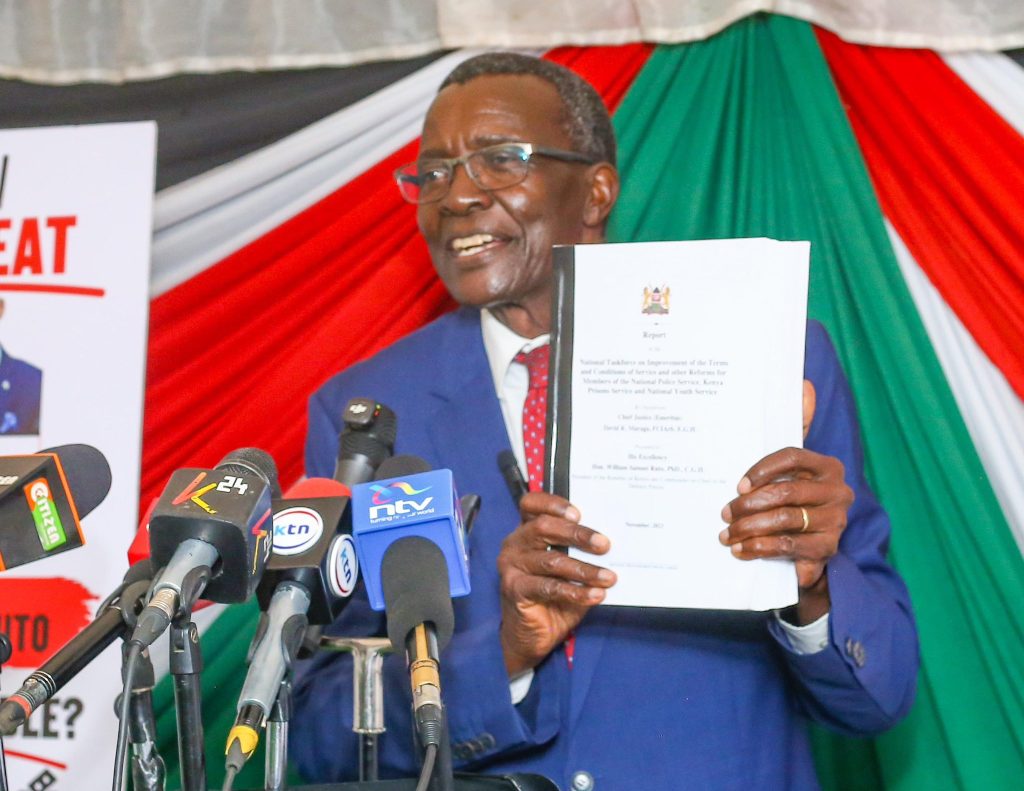
The government has previously said implementation of the police reform programme is based on recommendations of the taskforce chaired by retired Chief Justice David Maraga. In a separate statement on the implementation framework, Ruto’s administration estimated the full cost of implementing the taskforce’s recommendations at Ksh106 billion, including spending on officers’ compensation, equipment and welfare, and modernisation.
The uniform itself has also raised questions about how the government interpreted the taskforce’s recommendations.
Maraga’s bombshell
The Maraga taskforce recommended that the NPS revert to its previous uniform for three years while a process for designing a new uniform was undertaken. It also recommended that police officers and members of the public participate in the design process.
The recommendation followed complaints considered by the taskforce about the earlier uniform, including concerns over consultation, quality and supply. Reporting on the taskforce findings said some officers had been forced to buy their own fabric or hire tailors because of shortages.
The government has nevertheless proceeded with a new uniform, with the NPS saying the change forms part of the ongoing police reform programme.
Ruto did not dismiss public criticism of the reforms. Instead, he warned against turning questions about government spending into accusations unsupported by evidence.
“We must demand answers without prejudice, question decisions without condemning people unheard, and expose wrongdoing wherever it exists,” he said.
That position has placed the government under pressure to explain the procurement process in greater detail as political criticism grows.
Former Interior Cabinet Secretary Fred Matiang’i has separately questioned the cost and approach to the latest uniform change, contrasting it with the way the previous administration organised the production of police uniforms. Matiang’i has said the earlier process made use of existing public-sector capacity, including the National Youth Service, alongside private-sector facilities.
The NPS, however, has rejected claims that the current procurement was improperly awarded and has stood by Bedi Investments as the legitimate contractor.
For Ruto, the uniform is only one component of a larger attempt to modernise the police service.
He said the success of the reforms should ultimately be measured by what officers do rather than what they wear.
The President said the real test would be whether police officers respond when called, enforce the law without fear or favour, protect vulnerable people, respect human dignity and treat every Kenyan equally before the law.
The distinction matters because Kenya’s police reform debate extends well beyond uniforms. Ruto’s own implementation framework has acknowledged longstanding problems including poor working and living conditions, inadequate equipment, low pay and weakened public trust in security institutions.
Police uniform queries
The new uniforms have therefore become a highly visible symbol of a much larger reform programme.
But Ruto’s call for scrutiny has also sharpened the question facing his administration: whether it can provide enough information about the procurement, cost and implementation of the uniform change to satisfy the public demand for accountability.
For now, the NPS has identified Bedi Investments as the contractor and rejected claims linking Nalitex to the tender. The reported contract value remains a subject of public debate, while the government’s decision to introduce the new uniform continues to be weighed against the recommendations of the Maraga taskforce.
Ruto’s message is that Kenyans should keep asking questions.
But, as he put it, the answers must be tested against “facts, evidence and truth.”