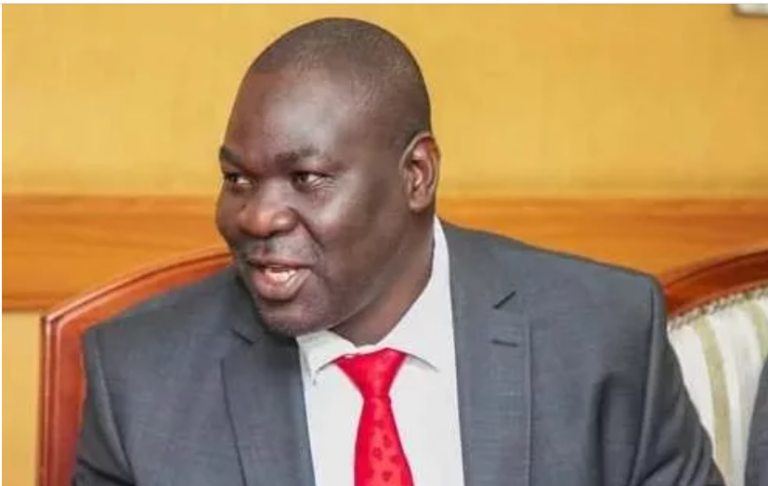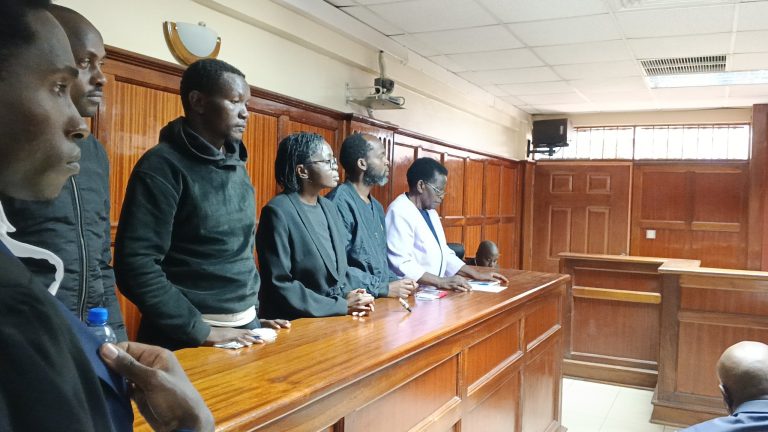

The death of a police officer who was expected to testify in the murder trial of Albert Ojwang has created a new evidentiary question for the prosecution: whether the matters he was expected to address can be established through other evidence, or through a statement he made before his death.
Stephen Maina Nderitu, a police officer attached to the Office of the Officer Commanding Station (OCS) at Nairobi’s Central Police Station during the period surrounding Ojwang’s death, died on Monday, September 7, 2026.
Nderitu died before giving evidence in the trial.
His death comes as prosecutors continue presenting evidence concerning Ojwang’s final hours at Central Police Station, where he died in police custody in June 2025.
The development does not automatically affect the continuation of the trial. The immediate issue is narrower: whether the evidence Nderitu was expected to give can still be placed before the High Court through other witnesses, exhibits or, if the court permits it, his earlier statement.
Why Nderitu mattered
Nderitu was among the witnesses expected to give evidence in the case, according to reports.
Citizen Digital reported that investigators had recorded a statement from Nderitu on May 18, 2025, and that his anticipated evidence concerned events at Central Police Station, including matters relating to the station’s CCTV system.
The Star reported that officials intended to apply for admission of the statement following his death.
The precise evidentiary role of the statement, however, will depend on what prosecutors ask the court to admit and the legal basis for that application.
It would therefore be premature to treat Nderitu’s statement as evidence already accepted by the court.
CCTV evidence remains
The prosecution’s case does not depend solely on Nderitu.
The High Court has already heard evidence concerning the Digital Video Recorder (DVR) at Central Police Station and allegations that recordings from the period surrounding Ojwang’s detention were deleted or otherwise made unavailable.
A protected witness identified as DAN previously told the court that he was asked to format the station’s DVR and that the work involved recordings from June 6 and 7, 2025. The witness said the DVR was formatted rather than individual recordings being selectively deleted.
The Standard has reported that the witness told the court the OCS, identified in the proceedings as Samson Talaam, was involved in the process and that the witness was paid Ksh3,000. Those are allegations and testimony forming part of the prosecution case; they have not been established as findings of the court.
A separate technician also testified about the condition of the DVR and the absence of recordings sought by investigators.
The prosecution has also presented recovered CCTV material.
Forensic investigator Joshua Mutua previously gave evidence concerning footage from Central Police Station and Mbagathi Hospital that prosecutors say helps reconstruct Ojwang’s movements during his final hours.
Reporting on the evidence presented in court says the footage showed Ojwang arriving at Central Police Station alive and later being removed while unresponsive.
These materials remain part of the evidence being considered in the trial.
The statement question
The more immediate legal question is what happens to a statement made by a person who has died before testifying.
Kenya’s Evidence Act provides exceptions under Section 33 for certain statements made by people who are dead, cannot be found, are incapable of giving evidence or whose attendance cannot reasonably be secured.
But Section 33 does not make every statement by a deceased person automatically admissible.
The provision lists specific circumstances in which such statements may be admitted, including certain statements concerning a person’s death, statements made in the ordinary course of business or professional duty, and statements that were against the maker’s financial or proprietary interests or could have exposed the maker to criminal proceedings.
That means prosecutors would need to establish the legal basis on which Nderitu’s particular statement should be admitted.
The court, rather than the prosecution or investigators, would ultimately determine whether the statutory requirements have been met.
Kenyan courts have previously considered applications to admit statements made by deceased witnesses under Section 33. The outcomes have depended on whether the particular statement satisfied the requirements of the law.
Nderitu’s absence also means that he will not be available for live examination and cross-examination in the trial.
That is significant because his statement, if the court admits it, would not be the same as testimony that the defence had an opportunity to test directly in the witness box.
The absence of cross-examination does not by itself establish that a statement by a deceased person is inadmissible. Section 33 creates specific exceptions to the ordinary evidentiary rules, while Section 166 of the Evidence Act provides a mechanism for testing matters contained in a statement that has been admitted under Sections 33 or 34.
The defence would therefore still be able to challenge the evidence in accordance with the applicable law.
The High Court would then determine what evidence is admissible and what weight, if any, should be attached to it.
What happens next
Nderitu’s death therefore does not necessarily leave prosecutors without evidence concerning the events at Central Police Station.
The trial has already included testimony concerning the CCTV system, the DVR, recovered footage and forensic examination.
The prosecution has also presented other witnesses in an effort to reconstruct what happened to Ojwang while he was in police custody.
The significance of Nderitu’s death will consequently depend on the particular facts prosecutors expected him to establish.
If those facts can independently be established through other admissible evidence, his absence may have a limited effect on that part of the case.
If his evidence was intended to establish a fact for which there is no comparable independent evidence, prosecutors may face a more significant evidentiary gap.
At this stage, the available reporting does not establish that either outcome has occurred.
The next significant development could be a formal application by the prosecution concerning Nderitu’s statement.
If such an application is made, the court may have to consider whether the statement falls within an exception under Section 33 of the Evidence Act, the circumstances in which it was made, what facts the prosecution seeks to establish through it, whether the defence has grounds to challenge its admission, and what weight should be given to the statement if it is admitted.
Those questions are separate from the question of how Nderitu died.
Reports have said that a postmortem attributed his death to acute ulcers, cardiac arrest and depression, and that his family accepted the findings.
There is no basis in the available reporting to state that his death was connected to the Ojwang case, and such a suggestion should not be made without evidence.
Nderitu’s death therefore creates an evidentiary challenge rather than an automatic setback or collapse of the prosecution’s case.
The central question is whether the prosecution can establish the relevant facts through evidence that remains available to the court.
That evidence includes CCTV and forensic material, testimony concerning the Central Police Station DVR and evidence from other witnesses.
If prosecutors seek to rely on Nderitu’s earlier statement, the High Court will have to determine whether it satisfies the requirements for admission under Kenyan law.
The six people charged in connection with Ojwang’s death have pleaded not guilty, and the allegations against them remain matters for determination by the court.
For the prosecution, the issue created by Nderitu’s death is therefore precise: can the facts he was expected to testify about be proved without his live evidence, and, if prosecutors rely on his earlier statement, will the court find that it can lawfully be admitted?
The answer will emerge as the trial continues.