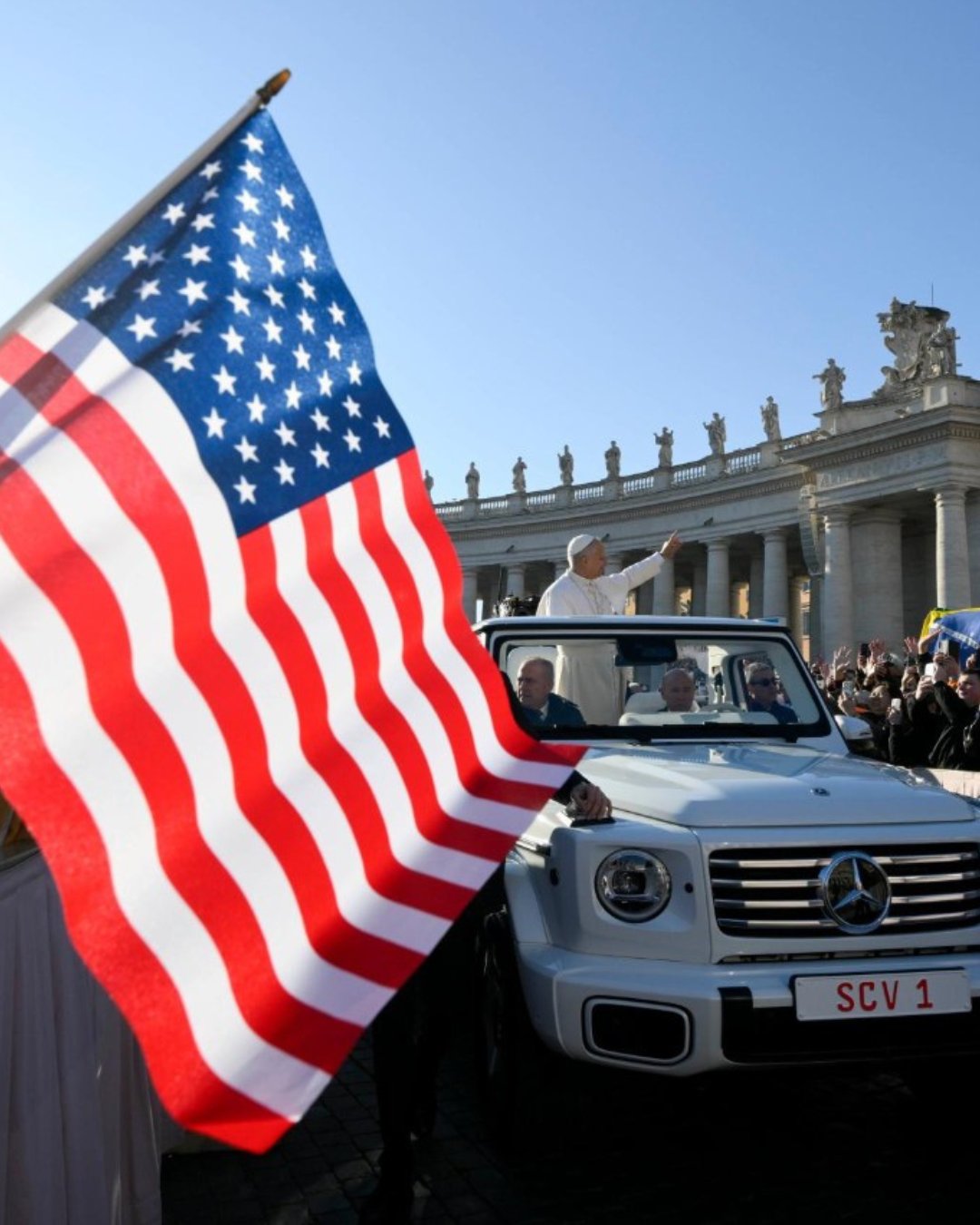
Pope Leo XIV has made history by becoming the first sitting pope known to have voted in a United States election after casting a mail-in ballot in his home state of Illinois ahead of the November 3 midterm elections.
The Vatican confirmed on Friday that the American-born pontiff, formerly known as Robert Francis Prevost, had exercised his constitutional right to vote as a U.S. citizen while serving as the leader of the Roman Catholic Church.
According to a statement from the Holy See Press Office, Pope Leo submitted his mail-in ballot in Chicago, marking an unprecedented moment in the history of the papacy and highlighting his continued connection to his country of birth.
” Pope Leo XIV has exercised his right to vote as a United States citizen, whenever he was eligible to do so,” the Vatican said.
The statement further confirmed that the pontiff had maintained his voting participation during his years living in Peru, where he served as a missionary and later as a bishop.
“The Holy Father expresses his belief in the right and the duty of citizens to participate in democratic processes,” the Vatican added.
Pope Leo XIV’s historic vote in Illinois
The Vatican’s confirmation followed reports by the Chicago Sun-Times that Pope Leo remained registered as a voter in Illinois despite his election as pontiff in May 2025.
According to the newspaper, the pope requested a mail-in ballot on October 3 through the Will County Clerk’s Office. An official from the office confirmed that Robert Francis Prevost appeared on the list of registered voters who had requested ballots for the upcoming election.
The Associated Press also reported that Illinois election records show Prevost had participated in several previous elections, including Democratic and Republican primary contests.
However, neither the Vatican nor the pope has disclosed which candidates or political positions he selected on his ballot.
The November 3 midterm elections will determine the composition of the U.S. House of Representatives and several Senate seats, alongside gubernatorial, state and local contests across the country.
Pope Leo’s participation is particularly notable because he is the first American-born pontiff in the history of the Catholic Church to occupy the papacy while retaining his U.S. citizenship.
Who is Pope Leo XIV?
Born Robert Francis Prevost on September 14, 1955, in Chicago, Illinois, Pope Leo XIV became the 267th successor to Saint Peter after being elected on May 8, 2025, following the death of Pope Francis.
Before becoming pope, Prevost spent decades serving the Catholic Church in Peru, where he worked as a missionary and held several senior ecclesiastical positions.
He later became prefect of the Dicastery for Bishops, one of the Vatican’s influential departments responsible for overseeing the selection of bishops worldwide.
His election marked several historic milestones, including becoming the first pope from the United States and the first Augustinian pope.
Despite his international responsibilities as head of the Catholic Church, Leo has maintained his American citizenship alongside his Peruvian citizenship.
Vatican emphasises citizens’ responsibility to vote
The Vatican’s announcement also drew attention to Pope Leo’s position on civic participation and democratic responsibility.
By confirming that the pontiff had voted whenever eligible, including during his years in Peru, the Holy See highlighted a longstanding personal practice rather than presenting his participation as a one-time political statement.
The pope’s decision comes as the United States prepares for a closely watched midterm election, with voters set to decide several important congressional and state-level races.
His ballot does not indicate an endorsement of any political party or candidate. The Vatican has not disclosed his voting preferences.
The development nevertheless creates a historic intersection between the papacy and American electoral democracy.
For Pope Leo XIV, the first American-born leader of the Catholic Church, the vote represents an exercise of citizenship that has attracted international attention while reinforcing his belief that participation in democratic processes is both a right and a responsibility.