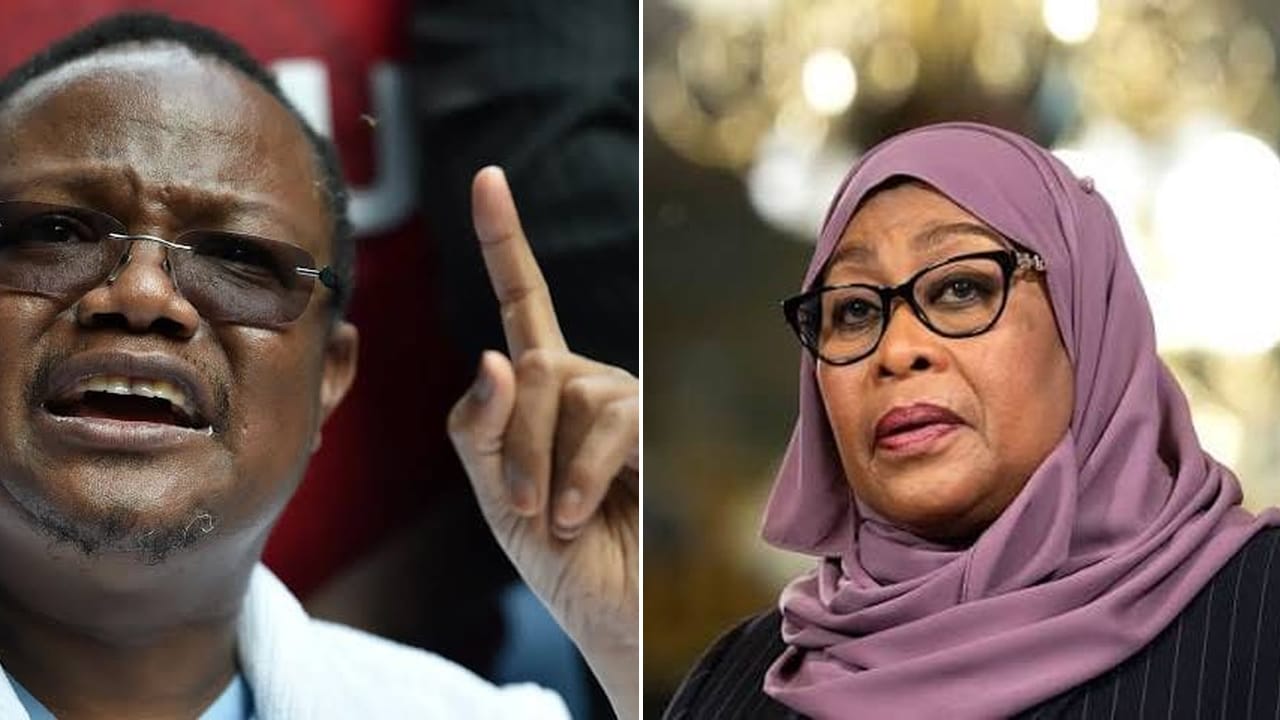
For Tundu Lissu, November 6 was supposed to be the day Tanzania’s courts determined whether he would walk free or face conviction in a treason case that has come to symbolise the country’s increasingly fraught relationship with political dissent.
Instead, the date has acquired a painful personal significance.
The imprisoned chairman of the opposition party Chadema must first confront the possibility of attending court on the same day his family is preparing to travel to his ancestral home for the burial of his elder brother, Alute Lissu Mughwai.
Mughwai, a lawyer, died at Selian Hospital in Arusha in the early hours of November 1 after a prolonged illness. His death has left the family organising funeral arrangements while Lissu remains in Ukonga Prison, awaiting judgment in a prosecution that could carry the death penalty.
According to Lissu’s younger brother, Ikota Lissu, the opposition leader instructed relatives to give the deceased a dignified send-off and pledged Ksh15 million towards funeral expenses.
“Mr Lissu’s main instruction is that the family should give the deceased a fitting send-off,” Ikota said, describing the instructions communicated by his imprisoned brother.
Another brother, Vincent Mughwai, said Lissu received the news with deep shock.
“Tundu wished he could leave prison to participate in the burial, particularly because he had not been able to care for his brother during his hospitalisation and might also miss the final farewell,” he said.
The family plans to attend the High Court proceedings in Dar es Salaam on November 6 before proceeding with memorial and burial arrangements in Singida Region.
The tragedy presents Tanzania’s President Samia Suluhu Hassan with a political and humanitarian dilemma at a particularly sensitive moment in her presidency.
It is not simply a question of whether an imprisoned opposition politician should be permitted to mourn a family member. It is about whether a government confronting accusations of political repression can demonstrate compassion, institutional restraint and respect for human dignity while pursuing a criminal case against one of its most prominent critics.
More significantly, Lissu’s personal circumstances are unfolding against the backdrop of a national crisis that has yet to be resolved: the killings surrounding Tanzania’s disputed October 2025 general election.
A treason trial with consequences beyond Lissu
Lissu’s arrest on April 9, 2025, followed his public campaign for electoral reforms under the slogan ‘No Reforms, No Election’.
Prosecutors subsequently accused him of attempting to threaten the government by encouraging citizens to prevent the October 2025 general election from taking place.
The opposition politician denied the allegations.
The prosecution argues that statements made during a Chadema meeting on April 3, 2025, and subsequently published online demonstrated an intention to mobilise rebellion and disrupt the electoral process.
State Attorney Nassoro Katuga told the three-judge High Court panel that testimony from 17 prosecution witnesses, alongside evidence from five defence witnesses, had established the charge beyond reasonable doubt.
“We submit that the Republic has proved the charge beyond reasonable doubt and ask the court to find that the accused committed the offence,” Katuga told the court.
Lissu, however, has challenged the prosecution’s interpretation of the evidence, arguing that the state failed to establish the necessary elements of the offence.
In his final submissions, he questioned the credibility and significance of the prosecution’s evidence, particularly the testimony of a witness associated with Jambo TV.
He also challenged the circumstances surrounding his continued detention.
“Honourable judges, this is not a chicken case; this is a case involving a person, and a person’s life is hanging by a thin thread,” Lissu told the court.
The judges, led by Justice Dunstan Ndunguru, are scheduled to deliver their judgment on November 6.
The stakes are considerable. A conviction could expose Lissu to capital punishment, although the prosecution has argued that the law allows the court discretion over sentencing.
The judgment will therefore be watched not only by Chadema supporters but also by regional governments, international human rights organisations and Tanzania’s diplomatic partners.
At its heart is a question with implications for the country’s democratic future: where does legitimate prosecution end and the criminalisation of political dissent begin?
That question cannot be answered simply by the political affiliations of the accused. It must be answered through the evidence, the law and the independence of the judiciary.
The 518 deaths that continue to haunt Samia’s presidency
The political significance of Lissu’s prosecution is inseparable from the violence that followed Tanzania’s October 29, 2025 general election.
The election was held amid the exclusion of major opposition figures and growing tensions over electoral reforms.
Chadema was barred from participating after failing to sign the electoral code of conduct, while Lissu remained in detention.
Protests erupted in several parts of the country, triggering a violent security response and a nationwide internet shutdown.
A presidential commission chaired by retired Chief Justice Mohamed Chande Othman subsequently established that at least 518 people died from unnatural causes during the election-related violence.
The figure included 490 men and 28 women, among them 21 children. The commission also recorded more than 2,000 injuries and attributed at least 197 deaths to gunshot wounds.
These figures represent the commission’s findings, not a definitive determination of criminal responsibility.
The inquiry attributed the unrest to organised violence, political grievances and other underlying factors. However, it did not conclusively establish who was responsible for individual deaths or determine whether the use of force by security personnel was lawful.
President Samia described the findings as deeply shocking and defended the security response as necessary to prevent anarchy.
Her government subsequently faced pressure to demonstrate that the inquiry would lead to meaningful accountability.
Human Rights Watch has criticised the investigation for failing to adequately scrutinise the conduct of security forces.
In an October 28, 2026 assessment marking one year since the violence, the organisation said no arrests had been made for human rights violations committed before and during the election.
Chadema, meanwhile, has disputed the official death toll, estimating that approximately 2,000 people were killed. That higher figure has not been independently verified by the United Nations.
The distinction matters. The official figure is already devastating, while the disagreement over the full scale of the killings has become another source of mistrust between the government and its critics.
For families who lost relatives, the central question is not merely how many people died. It is who shot them, who ordered the operations, why civilians were killed and whether those responsible will ever face justice.
In an October 28 investigation, families of victims continue to demand answers.
One bereaved relative, identified by a pseudonym for safety reasons, told the broadcaster: “The government should have asked for forgiveness for what happened. Even just offering condolences.”
That statement captures a problem confronting Samia’s administration: political reconciliation cannot be manufactured through official announcements while victims’ families feel abandoned.
The president’s credibility problem
Samia came to power in March 2021 following the death of President John Pombe Magufuli.
Her early presidency generated expectations of a political opening after years of restrictions on opposition activity, media freedom and public dissent.
She initiated discussions about political reforms and presented herself as a leader willing to pursue a more conciliatory approach.
However, the developments surrounding the 2025 election have severely complicated that political legacy.
The exclusion of opposition candidates, Lissu’s detention, reports of disappearances and the election killings have raised questions about whether the reformist image associated with her early presidency can survive the country’s current political reality.
The danger for Samia is that the government’s handling of the Lissu case could become a symbol of the wider failure to rebuild trust.
A government may defend its right to prosecute individuals accused of serious offences. But it must also demonstrate that its institutions are independent, its procedures fair and its treatment of political opponents consistent with constitutional protections.
A humanitarian accommodation for Lissu to attend his brother’s burial, if legally and practically possible, would not require the government to abandon its prosecution.
Nor would it predetermine the court’s judgment.
It would, however, demonstrate that the state can recognise a human tragedy without interpreting compassion as political surrender.
The distinction could matter enormously in a country struggling to restore confidence in its institutions.
Tanzania’s regional and international reputation at stake
Tanzania’s political crisis also carries consequences beyond its borders.
The country occupies a strategic position in East Africa, serving as an important trade and transport corridor for landlocked neighbours, including Rwanda, Burundi, Uganda and the Democratic Republic of Congo.
Its ports, energy infrastructure, investment environment and regional diplomatic influence make political stability a matter of wider economic and strategic interest.
Consequently, concerns about democratic governance and human rights are not merely domestic political arguments.
They affect investor confidence, diplomatic relationships and Tanzania’s standing within the East African Community and the African Union.
International scrutiny has already intensified.
In May 2026, the United States imposed sanctions on Tanzanian police chief Senior Assistant Commissioner Faustine Jackson Mafwele over alleged human rights violations. The decision followed allegations of torture involving Kenyan activist Boniface Mwangi and Ugandan activist Agather Atuhaire during their detention in Tanzania.
The sanctions reflected a deterioration in relations over human rights concerns.
More recently, the reported disappearance of Tanzanian opposition activist Twaha Mwaipaya near Nairobi has added another regional dimension to concerns about the safety of government critics, including those outside Tanzania.
Tanzania’s leadership has rejected the broader narrative that the country is systematically persecuting its opponents.
But the international credibility of that position will increasingly depend on transparent investigations, judicial independence and demonstrable accountability.
The government’s challenge is particularly difficult because it must address two different questions simultaneously: whether individuals accused of organising election violence should face prosecution, and whether security personnel who unlawfully killed civilians should also be held accountable.
Justice cannot be selective.
The November 6 crossroads
The convergence of Mughwai’s funeral arrangements and Lissu’s treason judgment makes November 6 an unusually consequential date for Tanzania.
For the Lissu family, it is a moment of bereavement complicated by the possibility that their imprisoned relative may not be present to say goodbye.
For Chadema, it is another test of the government’s willingness to accommodate political opposition.
For Samia, it is an opportunity to demonstrate that her administration can separate the exercise of state authority from the temptation to treat political criticism as a security threat.
The consequences of the court’s judgment will also be significant.
An acquittal would raise immediate questions about the justification for Lissu’s prolonged detention and the political environment in which the prosecution was initiated.
A conviction would likely intensify scrutiny of the country’s democratic credentials, particularly if the court imposes a severe sentence.
But neither outcome alone can resolve Tanzania’s deeper crisis.
That will require credible electoral reforms, an independent assessment of the election killings, answers for families of missing persons and a political environment in which opposition parties can participate without fear of arbitrary repression.
Samia has already acknowledged the scale of the national tragedy. The harder task is translating that acknowledgement into credible institutional change.
Lissu’s brother’s death now places a human face on a confrontation that has too often been reduced to competing political positions.
The question confronting the Tanzanian president is no longer simply how to manage an increasingly assertive opposition.
It is whether she can restore confidence in a political system whose legitimacy has been weakened by the exclusion of opponents, a disputed election and unresolved allegations of lethal state violence.
History may ultimately judge Samia not by how firmly she confronted her political opponents, but by whether she used the authority of the presidency to ensure that justice, human dignity and political competition could coexist.
For Tanzania, that is the real test of leadership.