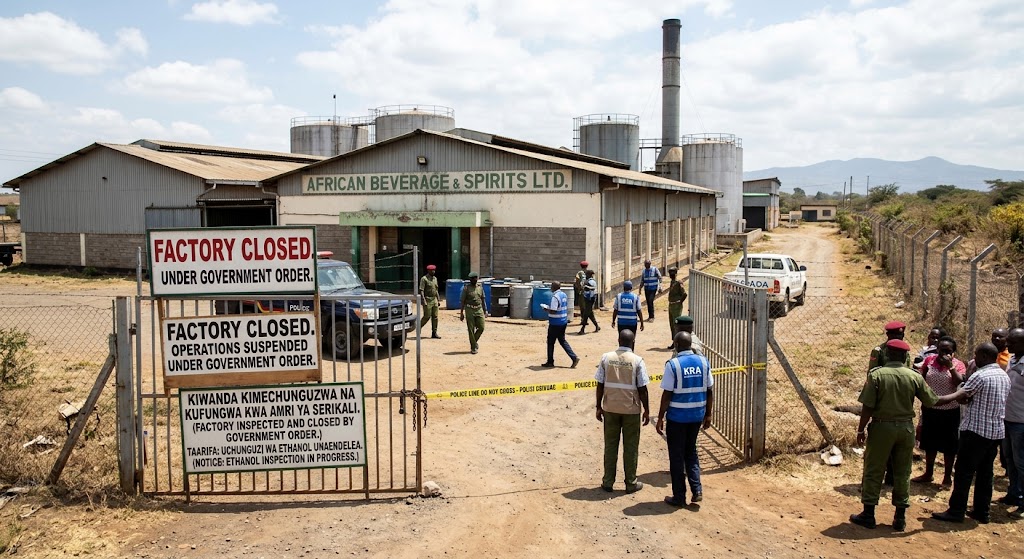
Alcohol factories across Kenya face closure, licence withdrawals and legal action against directors as the government intensifies a nationwide crackdown on adulterated and illicit drinks.
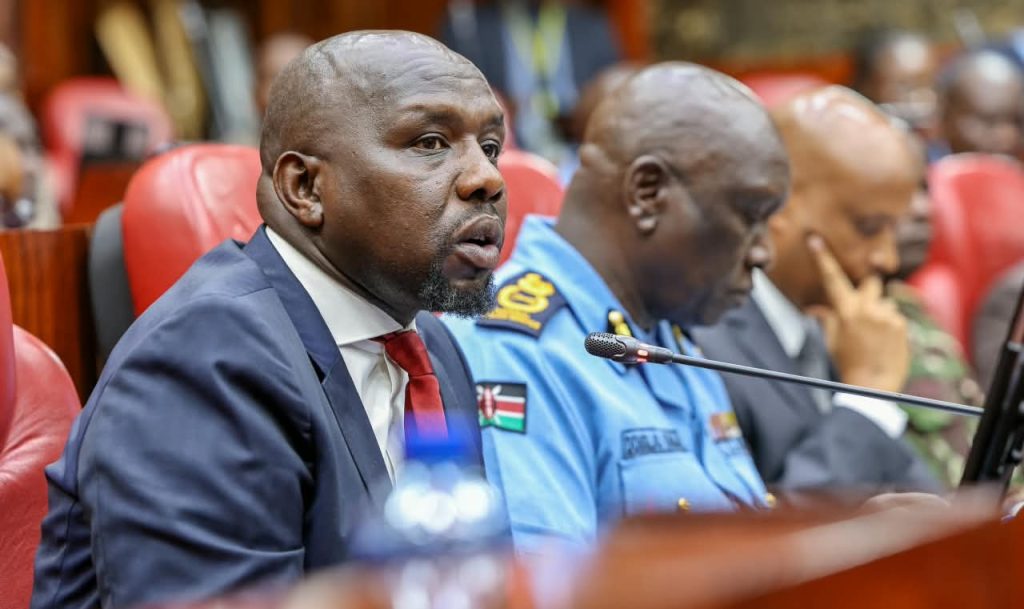
Interior Cabinet Secretary Kipchumba Murkomen told the National Assembly that the government had ordered the re-inspection of all alcoholic manufacturing factories countrywide. Those found non-compliant will be shut down.
“All non-compliant factories will be closed, licences withdrawn and appropriate legal actions taken against directors,” Murkomen said in a statement presented to Parliament.
The inspections are part of a 100-day Rapid Results Initiative launched by the Ministry of Interior and National Administration on August 31, 2026, to dismantle networks involved in manufacturing, distributing and selling adulterated alcohol.
Murkomen said the initiative had so far led to the seizure of more than 30,000 litres of illegal and uncustomed ethanol, arrests and prosecutions of suspected counterfeiters, and closure of non-compliant outlets, including bars.
The crackdown is coordinated by County Commissioners through County Security and Intelligence Committees. Enforcement is targeting not only retail outlets and illicit brewing dens but also manufacturers, suppliers, transporters, warehouses, distributors and financiers linked to the illegal trade.
The ministry said operations had led to seizures of uncustomed ethanol and arrests in Nairobi, Kiambu, Narok, Nyeri, Kirinyaga, Samburu, Kisumu, Kisii, Nandi, Busia, Meru and Nakuru.
A multi-agency committee under the National Alcohol Control Committee brings together the State Department for Internal Security and National Administration, the National Police Service, National Intelligence Service, NACADA, Kenya Revenue Authority, Kenya Bureau of Standards, Anti-Counterfeit Authority, Government Chemist and county governments.
Established under Gazette Notice 9775 of November 27, 2020, the committee is mandated to protect consumers from illicit and counterfeit alcoholic beverages.
Tackling illgal drugs menance
The government is tightening controls on the importation, transportation, storage and distribution of ethanol and other inputs used in illegal production. Agencies are sharing intelligence on trafficking routes, suppliers, production sites and distribution networks, while working with neighbouring countries to curb cross-border movement.
Regulators are working with intellectual property rights holders and licensed distillers to identify counterfeit brands and bottle-refilling schemes. They are also verifying consignments before entry into Kenya, checking excise stamps and safety standards, and conducting market surveillance through product sampling and laboratory tests.
The Kenya Revenue Authority is modernising its track-and-trace system to cover the supply chain up to the consumer. Murkomen said the current system tracks products only up to the manufacturing level.
The government is monitoring social media, online marketplaces and digital channels used to advertise or distribute illicit alcohol. Public campaigns urge consumers to buy from licensed outlets and check seals, labels, packaging, excise stamps and standardisation marks.
Murkomen said the Government Chemist’s operations had been strengthened, enabling it to acquire ISO certification.
He called on county governments to harmonise alcohol control laws, particularly on licensing, inspections, closure procedures and information-sharing. Inconsistent enforcement, he warned, could allow illegal operators to move to neighbouring counties with weaker controls.
He said enforcement must be supported by effective investigations and prosecutions, urging closer cooperation among investigators, prosecutors, forensic laboratories and the Judiciary to prevent cases arising from seizures and arrests from stalling.
The warning places manufacturers under renewed scrutiny as authorities widen the crackdown beyond bars and street-level sellers to the production and supply chains behind illicit drinks. However, the statement did not identify factories already marked for closure or give a timetable for completing the nationwide re-inspections.
For manufacturers, the test will be whether their facilities and products meet standards. The ministry has warned that factories found non-compliant face closure, licence withdrawal and possible legal action against their directors.