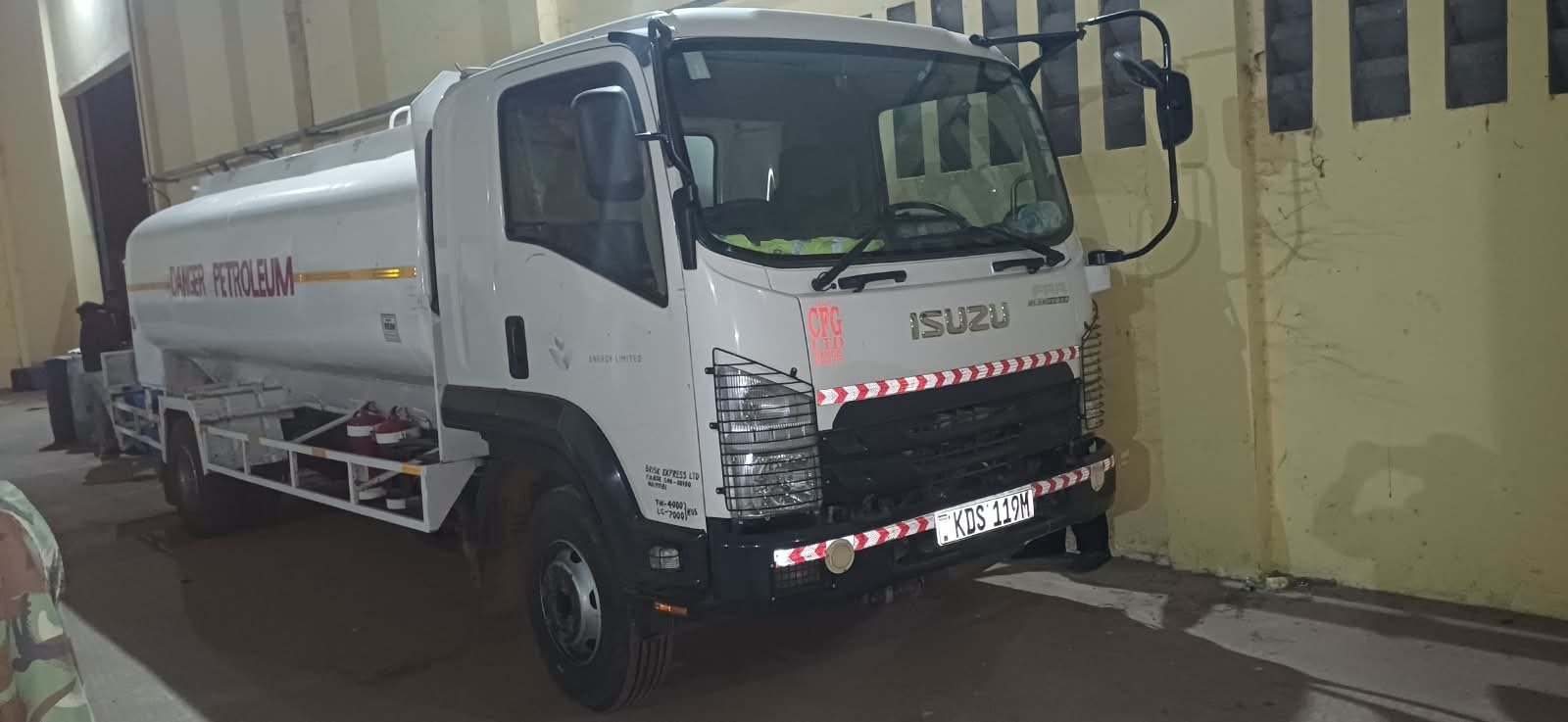
Police in Kiambu County have revealed how they intercepted a tanker allegedly carrying 10,000 litres of suspected industrial ethanol, arresting three people in an operation that has intensified the crackdown on illicit alcohol.
The tanker was intercepted along the Nairobi-Nakuru Highway by police officers from Lari Sub-County as they stepped up checks on vehicles suspected of transporting substances linked to the manufacture of illicit alcoholic drinks.
The three people found in the tanker were arrested as officers moved to establish the source of the consignment and where it was headed.
Police said the tanker was disguised as a fuel-transportation vehicle, raising suspicion over the nature of the consignment it was carrying. The substance was subsequently seized and samples taken to the Government Chemist for analysis.
Authorities are yet to conclusively establish the chemical composition of the liquid, meaning it remains officially described as suspected industrial ethanol pending laboratory confirmation.
Kiambu County Commissioner George Matundura said the consignment was believed to have been destined for Nairobi, where it could potentially have been used in the production of second-generation alcoholic drinks.
According to authorities, if the substance had been used to manufacture illicit alcohol, the resulting products could have had an estimated street value of about Ksh28 million.
The interception has now opened a wider investigation into the network behind the consignment, including its source, intended destination and the people involved in transporting it.
How police tightened checks on major routes
The tanker interception comes as police in Kiambu increase surveillance along major roads entering the county.
Kiambu County Police Commander Kennedy Samani has ordered the establishment of roadblocks on key routes, with officers expected to inspect vehicles and prevent the movement of illicit substances and alcoholic products.
The strategy is aimed at intercepting consignments before they reach production sites, distributors or retail outlets.
The Kiambu operation also comes against the backdrop of an intensified national crackdown on illicit and counterfeit alcohol, with enforcement agencies increasingly targeting the movement and distribution networks behind the trade.
Itumbi warns illicit alcohol dealers
Head of Presidential Special Projects and Programmes Dennis Itumbi has linked the Kiambu operation to the wider government campaign against illicit and counterfeit alcohol.
Itumbi has been involved in the ongoing crackdown in Kirinyaga, where authorities have introduced 24-hour roadblocks as part of a multi-agency operation targeting the manufacture, transportation and sale of illicit alcohol.
“Kirinyaga’s 24-hour roadblocks are disrupting the movement of illicit and counterfeit alcohol. Kiambu is tightening the net too,” Itumbi said.
He said the enforcement campaign would progressively target different counties and routes used by people involved in the trade.
“County by county. Route by route. Den by den,” he said.
Itumbi also issued a direct warning to those involved in the illicit alcohol trade.
“To the merchants of POISON, your circle is getting smaller,” he said.
The Kirinyaga operation involves multiple government agencies, including the police, National Government Administration Officers, NACADA, the Kenya Revenue Authority, the Kenya Bureau of Standards and the Anti-Counterfeit Authority.
The campaign is designed to identify manufacturers, distributors and retailers involved in illicit alcohol while tracing the supply chains used to move illegal products.
Investigation continues
In Kiambu, investigators are now expected to establish whether the intercepted liquid was indeed industrial ethanol and determine who owned the consignment and its intended recipient.
The laboratory results will be crucial in determining the next stage of the investigation, while the three arrested suspects could provide information on the wider network behind the transportation of the substance.
The tanker interception therefore represents more than a seizure of a single consignment. It gives police a potential entry point into a wider investigation into the movement of raw materials suspected of being used to produce illicit alcohol.
With roadblocks being expanded and vehicle checks intensified, authorities are seeking to intercept such consignments before they reach their intended destinations.