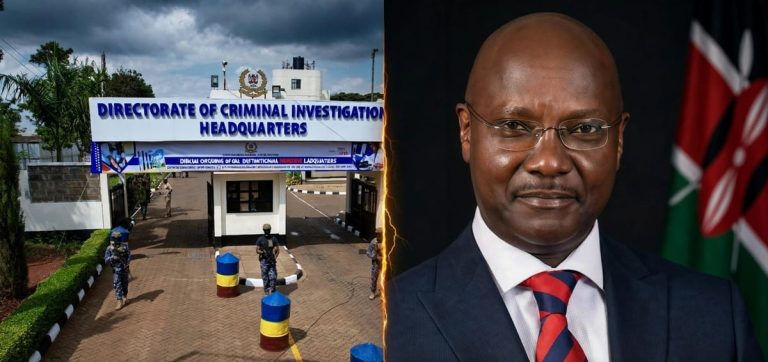
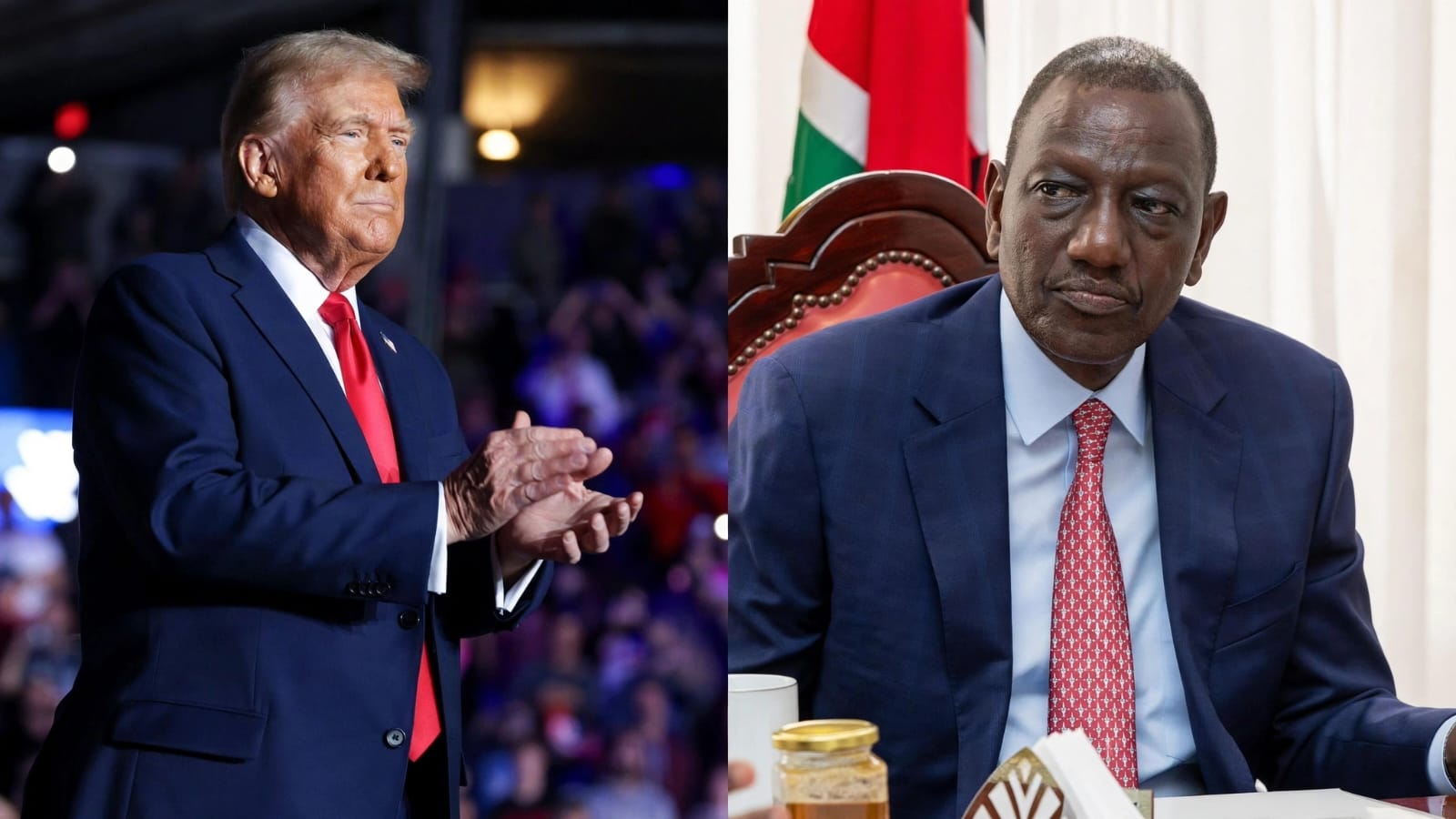
President William Ruto’s campaign for greater African representation in international security decision-making faces a fresh test of international confidence after the United States raised its travel advisory for Kenya, urging American citizens to reconsider travel amid health and security concerns.
The US Department of State upgraded Kenya’s advisory from Level 2, which advises travellers to exercise increased caution, to Level 3, meaning they should reconsider travel, on October 19.
But the distinction behind the decision matters. The department’s official advisory history attributes the change in level to health risks, as Kenya responds to an outbreak of Ebola Bundibugyo virus disease. The advisory separately identifies crime, kidnapping, terrorism, unrest and road safety as concerns for travellers.
The decision is therefore not evidence that Washington has formally downgraded Kenya’s standing as a regional security partner. Nor does it amount to a verdict on Ruto’s campaign to reform the United Nations Security Council.
It nevertheless places Kenya’s domestic preparedness and international reputation under renewed scrutiny at a time when the President is arguing that African countries deserve a greater role in shaping global responses to conflict and insecurity.
The question for Nairobi is whether its diplomatic ambitions can be matched by demonstrable progress in protecting the public, strengthening security institutions and ensuring accountability when those institutions abuse their powers.
Why Ruto’s UN reform campaign
Ruto has consistently argued that Africa’s exclusion from permanent membership of the UN Security Council undermines the credibility of an international system that makes decisions affecting the continent.
Addressing the UN General Assembly in New York on September 24, 2025, he said: “Africa’s exclusion is not only unacceptable, unfair, and grossly unjust; it also undermines the very credibility of the United Nations.”
The President called for changes that reflect contemporary geopolitical realities rather than the balance of power established when the UN was founded in 1945.
“The world must understand that reforming the Security Council is not a favour to Africa; it is a necessity for the UN’s own survival,” he said.
The remarks, published by the Kenyan Presidency, set out the government’s case that Africa’s 54 countries should have permanent representation on the Council, alongside additional non-permanent seats.
The demand is rooted in a broader debate over whether international institutions adequately represent countries in Africa, Asia and Latin America, and whether their decision-making structures reflect the distribution of global power today.
The US travel advisory does not determine that debate. Security Council reform requires agreement among UN member states and changes to the UN Charter, including ratification by the required states.
However, Kenya’s own experience with security challenges raises a related question: what does responsible international security leadership require beyond diplomatic representation?
Ebola, travel confidence and the limits of the US warning
The immediate trigger for the advisory upgrade is public health Kenya had confirmed eight Ebola cases by October 18, 2026, with no evidence of community transmission reported at that point. The cases were linked to the initial patient, a man who travelled from the Democratic Republic of the Congo through Uganda and later died in Nairobi.
The reported infections included relatives of the first patient and healthcare workers. Kenyan authorities had identified contacts for monitoring and placed most of them under quarantine.
The outbreak requires sustained contact tracing, infection prevention in healthcare facilities, border surveillance and clear communication about the risks.
The US advisory also warns travellers about possible terrorist attacks, kidnappings, armed robberies and violent unrest. It identifies specific locations where Americans are advised not to travel, including Eastleigh and Kibera in Nairobi and designated areas in northern and coastal Kenya.
Those geographical restrictions are important. The advisory does not say that every part of Kenya faces the same level of risk.
For tourism businesses, international conference organisers, airlines and investors, however, a Level 3 warning may lead to additional risk assessments. The eventual economic effect will depend on how long the advisory remains in place, how the outbreak develops and whether travellers change their plans.
It would be premature to claim that the advisory has already caused a measurable decline in tourism or investment.
CIVICUS raises a different question about Kenya’s security institutions
A wider assessment of Kenya’s security environment must look beyond terrorism and travel risks.
The CIVICUS Monitor, which tracks civic freedoms internationally, currently rates Kenya’s civic space as “Repressed”, with a score of 31 out of 100.
In its July 1, 2026, update, the organisation reported continuing pressure on online expression, media freedom, protesters, civil society organisations and opposition groups ahead of the 2027 elections.
The rating does not measure Kenya’s ability to prevent terrorist attacks, and it should not be confused with the US travel advisory. It does, however, provide an independent indicator of how the exercise of state power affects citizens’ ability to express themselves, organise and protest.
Human Rights Watch’s World Report 2026, covering events in 2025, documented killings during protests, alleged abductions and enforced disappearances, arbitrary arrests and limited accountability for abuses by security forces.
The report also highlighted concerns about attacks on journalists and restrictions on media coverage during demonstrations.
These findings are relevant to the broader question of security governance because public safety involves more than protecting borders, preventing attacks and maintaining order. It also requires law enforcement to operate within the law and provide remedies when rights are violated.
That distinction matters for Kenya’s international role. A country can contribute personnel to international security operations while still facing serious domestic questions about policing, accountability and the protection of civil liberties.
The CIVICUS and Human Rights Watch findings do not establish that Kenya is incapable of contributing to international peace and security. They show why an assessment of security institutions should include both their operational responsibilities and their accountability to the public.
Ruto’s own security message
Ruto has acknowledged that national security requires more than the use of force.
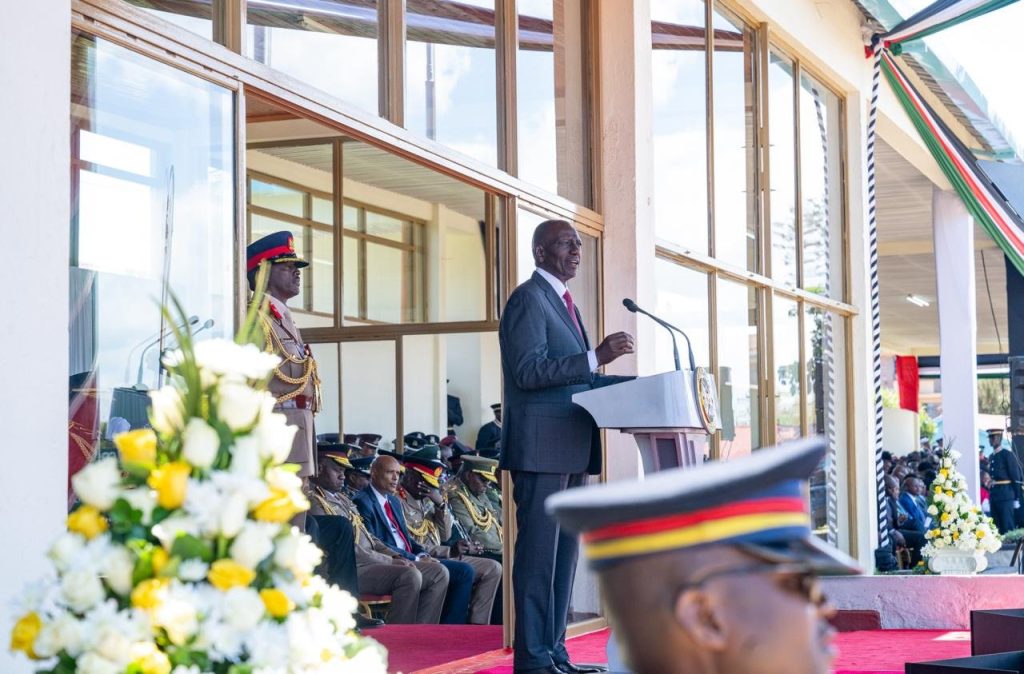
Speaking at the Kenya Military Academy in Lanet on April 16, 2025, he said: “True security is a shared duty, and every citizen is a stakeholder.”
The statement, published by the Kenyan Presidency, reflected his call for collective responsibility in safeguarding the country. He also highlighted the need to modernise the Kenya Defence Forces to respond to emerging threats, including digital warfare and transnational security challenges.
More recently, at the closing ceremony of the Mashariki Cooperation Conference in Diani on April 11, 2026, Ruto called for stronger African security cooperation.
“This requires deeper strategic alignment, stronger institutions, and deliberate investment in our collective preparedness,” he said.
He argued that intelligence cooperation across the continent was necessary because terrorism, violent extremism and other threats increasingly crossed national borders.
These statements provide a useful benchmark against which to assess the government’s response to the current situation. Preparedness, strong institutions and cooperation are relevant both to a public-health emergency and to the management of security threats.
The challenge is to translate those principles into verifiable results, including effective disease surveillance, transparent reporting, lawful policing and accountability for misconduct.
Kenya’s international security role is not without complications
Kenya’s involvement in international security operations provides another dimension to the debate.
In 2023, the UN Security Council authorised a multinational security support mission for Haiti under Resolution 2699. Kenya subsequently took a leading role in preparing and deploying police personnel to support the Haitian National Police against armed gangs.
The mission demonstrated Kenya’s willingness to contribute to international security efforts beyond its borders. It also faced challenges involving funding, equipment, logistics and the need for sustained international support.
The Haiti operation should not be confused with a conventional UN peacekeeping mission: it was a multinational security support mission authorised by the Security Council.
Its experience illustrates a broader point. International security commitments require not only personnel and political declarations but also adequate resources, clear mandates, operational capacity and safeguards against abuses.
The same principles apply to Kenya’s domestic institutions, although the legal mandates and operational circumstances are different.
For Nairobi, the argument for greater African representation is therefore strongest when presented alongside a practical commitment to effective institutions and transparent security governance. That is a policy challenge, not a test imposed by a single travel warning.
What the advisory means for Ruto and Kenya
The immediate priority is to contain the Ebola outbreak and address the health risks cited by Washington. Kenya must also continue responding to crime, terrorism and other threats identified in the advisory.
The diplomatic challenge is different. Ruto must continue making the case that Africa deserves a meaningful role in decisions on international peace and security while demonstrating that Kenya takes domestic security and institutional accountability seriously.
The advisory alone does not establish that international partners have lost confidence in Kenya, and there is no basis to claim that it weakens the country’s formal position on UN reform.
But it does underline the difference between securing a larger place at the international decision-making table and demonstrating effective governance at home.
Kenya’s ability to manage the Ebola outbreak, communicate risks accurately, protect its citizens and visitors, and uphold the law will shape how the country responds to this episode.
Ultimately, Africa’s demand for representation on the Security Council will be decided through international negotiations, not travel advisories. Kenya’s domestic record, however, remains relevant to the credibility of its broader argument for stronger, more accountable security institutions.
For Ruto, the task is to pursue both objectives without conflating them: press for a more representative international system while ensuring that the institutions responsible for security at home meet the standards of preparedness, legality and accountability that his own public statements have called for.