The death of a Catholic priest after a large crucifix fell on him during Mass has raised a question extending beyond the tragedy itself: could the accident prompt the Catholic Church to reconsider its rules on displaying crosses and crucifixes in places of worship?
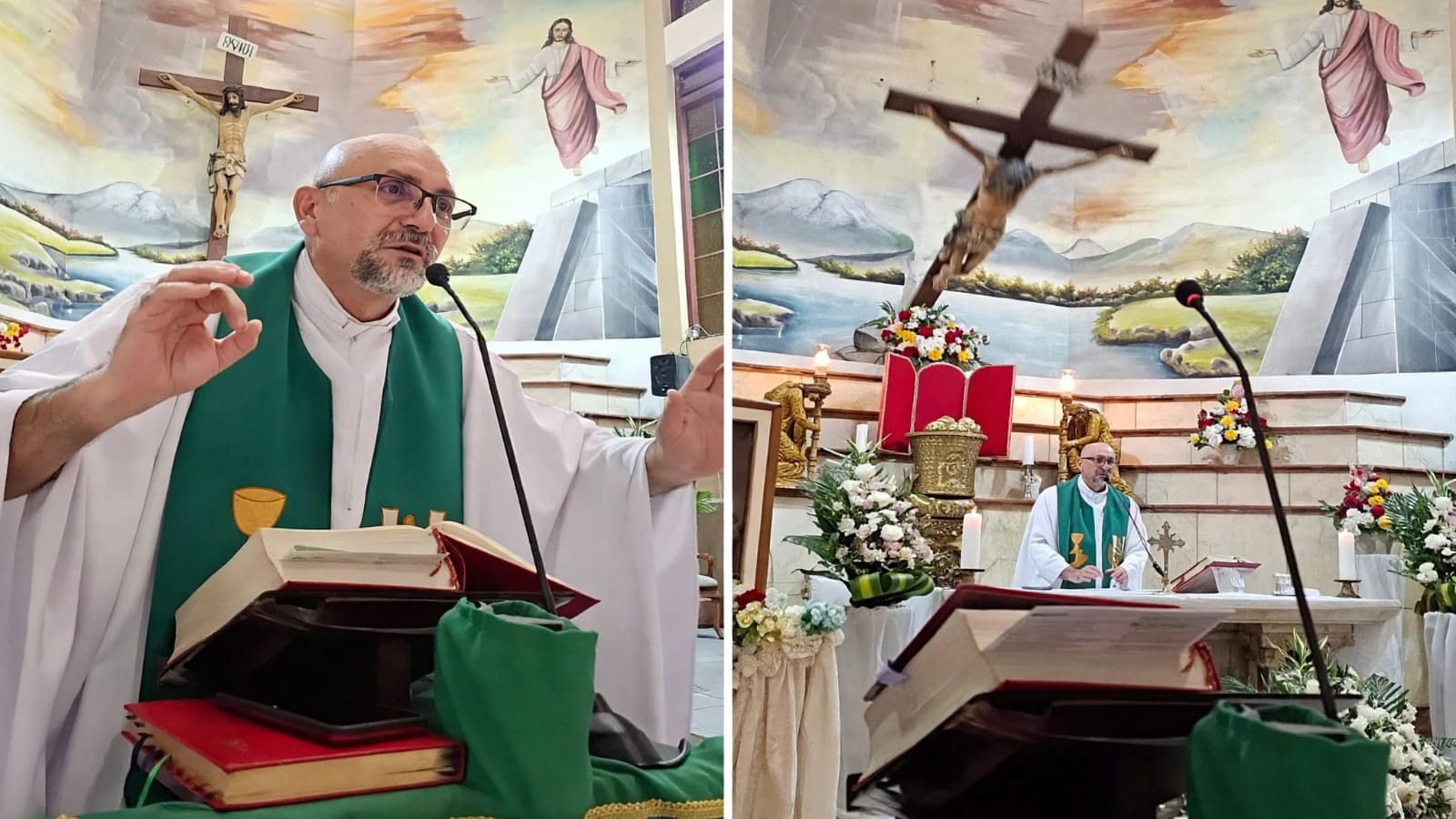
Father Patricio Alfredo Sánchez Molinari, a 53-year-old Redemptorist priest, died on October 17, 2026, after a large wooden crucifix fell from the wall behind him at Our Lady of Perpetual Help Church in Guayaquil, Ecuador.
The incident occurred during a livestreamed Mass and was confirmed by the Archdiocese of Guayaquil. The footage subsequently circulated widely online.
The incident has prompted questions about the safety of heavy religious objects installed above altars, but it does not establish that Catholic teaching on the cross is responsible for the accident or that the Church is preparing to change its doctrine.
The more immediate issue is whether the crucifix was securely installed and properly maintained. The cause of its fall has not been officially established in the available reporting.
That distinction matters because Catholic teaching gives the cross an important place in Christian worship, while the physical structure used to display it remains subject to ordinary safety considerations.
What Church rules say
The Catholic Church’s liturgical rules explicitly provide for a crucifix to be displayed during Mass.
Paragraph 308 of the General Instruction of the Roman Missal, the Vatican’s guide to celebrating Mass in the Roman Rite, states: “There is also to be a cross, with the figure of Christ crucified upon it, either on the altar or near it, where it is clearly visible to the assembled congregation.”
The same provision says it is appropriate for the cross to remain near the altar even outside liturgical celebrations.
The wording is significant. It requires a visible crucifix but permits more than one placement. It does not require every church to suspend a heavy wooden crucifix from the wall directly behind the altar.
Consequently, removing an unstable crucifix from a dangerous position would not necessarily require removing the cross from the church. A parish could instead secure the structure properly, relocate it or adopt another arrangement consistent with the liturgical rules.
The distinction between the religious symbol and the method used to display it is central to assessing whether the Ecuador tragedy could produce changes in Catholic practice.
For Catholics, the crucifix represents Jesus Christ’s crucifixion and the Christian belief that his death brought salvation. Its presence in churches is therefore rooted in religious meaning, not merely architectural tradition.
A change to the way crucifixes are installed would be a practical adjustment. A decision to abandon the requirement for a visible altar cross would be a different matter, involving liturgical policy at a much broader level.
No such change has been established in the reporting available as of October 20, 2026.
Safety before symbolism
The Catholic Church already has provisions addressing the maintenance and protection of sacred buildings.
Canon 1220 of the Code of Canon Law requires those responsible for churches to preserve their cleanliness and beauty and states that “ordinary care for preservation and fitting means of security are to be used to protect sacred and precious goods.”
Canon 1216 also requires church construction and repair to follow liturgical and sacred-art principles, with expert advice taken into account.
Although these provisions do not prescribe a specific engineering standard for every wall-mounted crucifix, they establish that the preservation of religious objects and church buildings is a responsibility, not an optional consideration.
The Ecuador incident makes the practical implications of that responsibility difficult to ignore. A heavy object positioned above a priest, congregation or altar can present a serious hazard if its supports fail.
However, the available evidence does not establish why the crucifix fell. It would be premature to attribute the accident to poor installation, neglected maintenance or a particular person’s negligence without technical findings.
A proper investigation would need to establish how the crucifix was attached to the wall, whether its supports were suitable for its weight, whether the surrounding structure was sound and whether previous inspections identified any problems.
Those findings would help determine whether the accident resulted from an isolated failure or revealed a wider maintenance concern.
There is also a broader question for church administrators: how frequently should heavy objects in places of worship be inspected, and who is responsible for confirming that they remain secure?
A review of such arrangements would not conflict with Catholic doctrine. Rather, it would address the practical responsibility of protecting clergy and worshippers while preserving the religious character of church buildings.
What changes are possible
The most plausible response to the priest’s death would be a review of safety practices rather than a change in Catholic teaching about the cross.
Dioceses could examine how heavy crucifixes, statues, chandeliers and other suspended objects are installed and maintained. Where necessary, they could seek assessments from qualified engineers and introduce more systematic inspections.
Such measures would not require the Vatican to abandon the crucifix as a central symbol of Catholic worship.
The priest’s final recorded homily also provides a reminder of the religious significance surrounding the tragedy. According to a transcript reported by the Guayaquil newspaper El Universo and cited by America magazine, Sánchez told his congregation: “God should come first: before money, before work, and before the activities of our family and our home.”
The words were part of his homily before the fatal accident. They should not be interpreted as a statement about church safety or as evidence that he anticipated what would happen.
Following his death, the Archdiocese of Guayaquil announced his passing in a statement that described him as having “departed to the House of the Father to enjoy his presence and glory.”
The statements reflect the Church’s response to the loss of a priest. They do not indicate that the archdiocese or the Vatican has announced a review of crucifix regulations.
Any claim that the incident has already led to a church-wide policy change would therefore be premature.
There is also insufficient evidence to conclude that crucifixes in Catholic churches generally pose an unusual danger. Establishing whether the Ecuador accident reflects a broader problem would require information about similar incidents, inspection records and the condition of comparable installations.
The central question is therefore not whether the Catholic Church should abandon the cross, but whether the way it is displayed can be made safer. Existing liturgical rules already permit flexibility in its placement, while canon law recognises responsibilities for maintaining and securing church property.
Father Sánchez’s death could lead to renewed scrutiny of those responsibilities. Whether it produces new diocesan guidance or wider Vatican recommendations will depend on the investigation and subsequent decisions by church authorities.
For now, the evidence supports a clear distinction: the tragedy has raised legitimate questions about safety, but there is no verified indication that it will change Catholic doctrine on the cross.