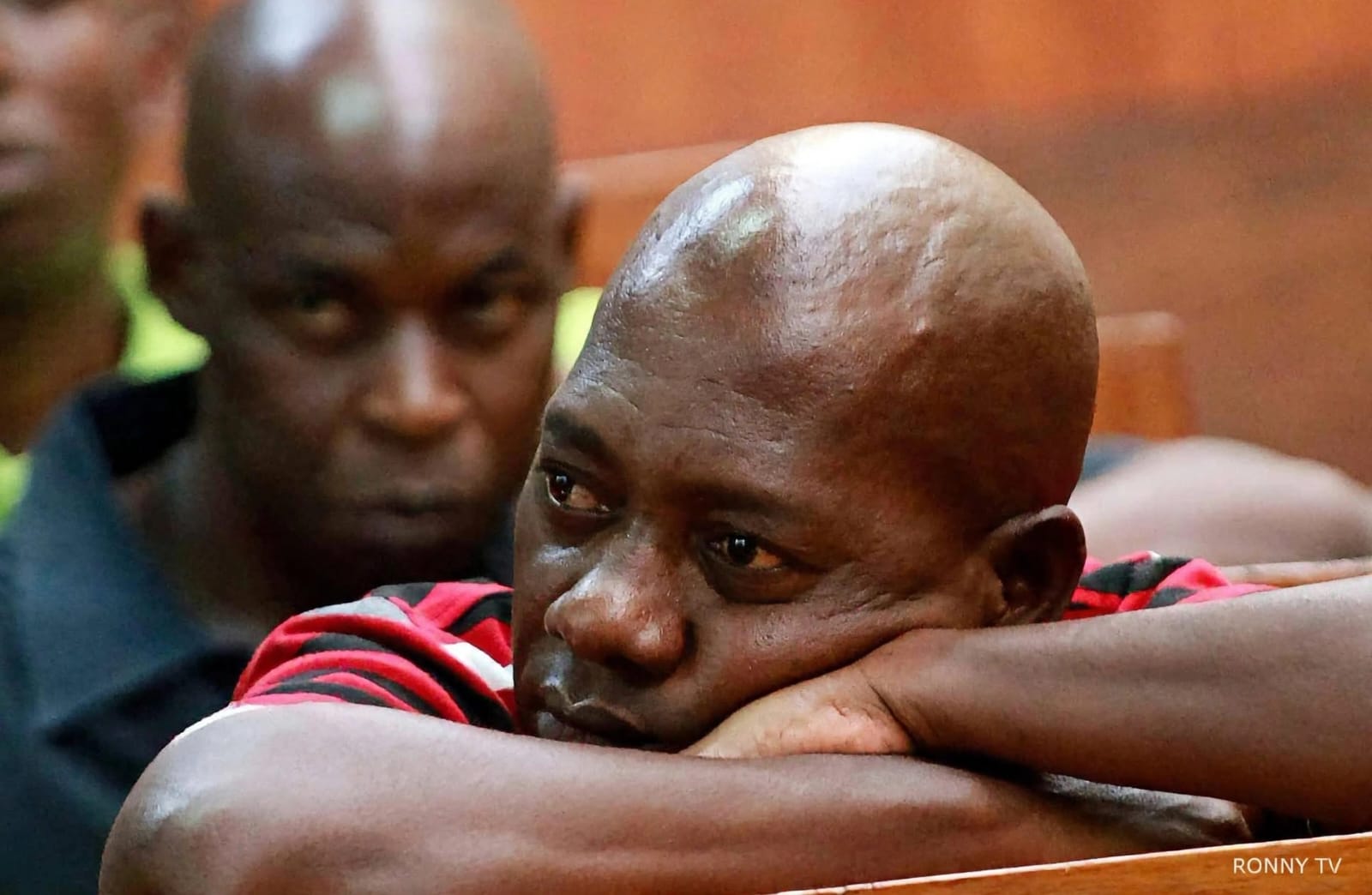
Paul Nthenge Mackenzie is a Kenyan preacher whose journey from street trader and taxi driver to founder of Good News International Church ended in one of the country’s most devastating criminal cases.
Convicted of 191 murders in October 2026, Mackenzie became internationally known after more than 400 bodies were recovered from Shakahola Forest in Kilifi County.
Paul Mackenzie’s early life and background
Paul Nthenge Mackenzie was born in Kwale County, southeastern Kenya. His exact birth year has been disputed: records examined by a parliamentary committee reportedly listed both 1973 and 1976.
According to a Kenyan parliamentary report, Mackenzie completed his primary education in 1990 and secondary education in 1994, obtaining a mean grade of C-minus in the Kenya Certificate of Secondary Education.
He subsequently moved to the coastal region, where he worked in different occupations, including street trading and taxi driving.
In 2023 that Mackenzie moved to Malindi in the early 1990s and became increasingly interested in religion. He initially attended a Baptist church before establishing his own ministry.
His former colleague Japheth Charo told Reuters that Mackenzie’s preaching became increasingly confrontational towards other religious groups.
“He started attacking other faiths like Muslims and Catholics. His preaching started becoming extreme,” Charo said.
The account offered an early glimpse into the religious direction Mackenzie would later take, although the precise development of his beliefs remains difficult to reconstruct independently.
Founding Good News International Church
Mackenzie established Good News International Church in Malindi in 2003. His ministry grew around biblical prophecy, salvation and warnings about the end of the world.
He later expanded his reach through television evangelism and digital platforms. In 2012, he registered Good News Media Limited, and by 2015, he was broadcasting religious teachings through television and social media.
His sermons increasingly focused on apocalyptic predictions and the need for believers to prepare for the return of Jesus Christ.
A March 2023 YouTube video captured Mackenzie describing his decision to stop preaching. He said: “I heard the voice of Christ telling me that the work I gave you to preach end-time messages for nine years has come to an end.”
The statement illustrated the central role he attributed to divine instructions in directing his ministry.
However, his teachings also attracted concern because of his reported opposition to formal education, medical treatment and certain government initiatives.
Previous encounters with Kenyan authorities
Mackenzie’s legal troubles began years before the Shakahola discoveries.
In March 2017, police searched his compound in Malindi and found 43 children who were reportedly living there without attending school. He faced proceedings relating to operating an unregistered educational facility.
His activities continued, and authorities later ordered his church to close in 2019. Mackenzie subsequently moved his operations and followers to Shakahola Forest.
He also attracted scrutiny over his opposition to government efforts to register national identification numbers, which he reportedly portrayed as contrary to his religious beliefs.
These earlier encounters would later become central to public debate about whether Kenyan authorities could have intervened more effectively before the deaths occurred.
How Mackenzie built his following
Mackenzie’s influence extended beyond conventional church services. Through television broadcasts, YouTube videos, messaging groups and personal religious networks, he reached followers across different parts of Kenya.
Investigators and former members described a community increasingly separated from mainstream institutions.
Prosecutors alleged that followers were encouraged to abandon schooling, reject healthcare and prepare for the end of the world through extreme fasting.
Some families reportedly sold property or travelled to Shakahola after hearing promises of affordable agricultural land.
The prosecution argued that the combination of religious authority, isolation and strict obedience made followers vulnerable to coercion.
The Shakahola tragedy and criminal convictions
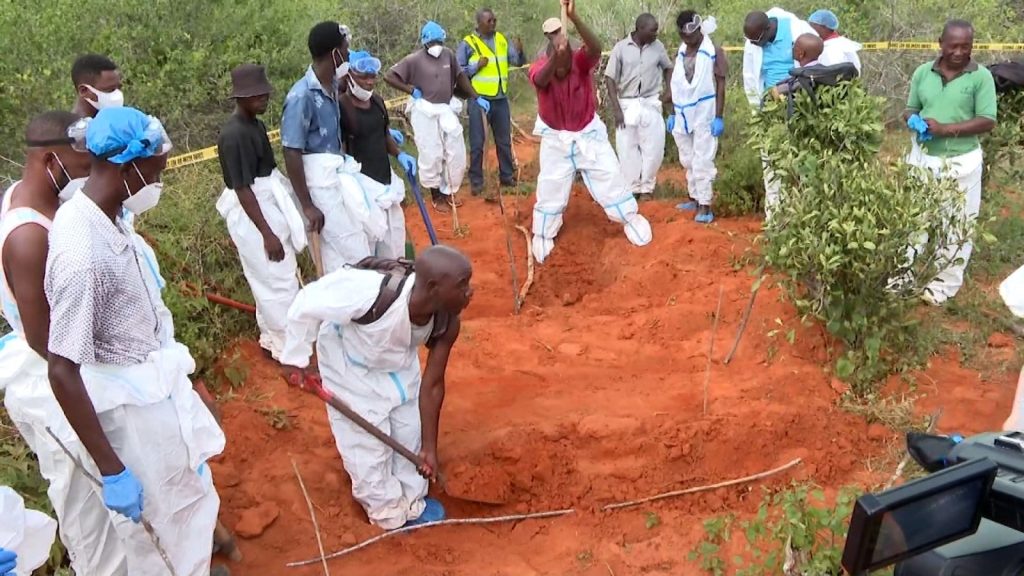
In April 2023, Kenyan authorities began uncovering mass graves in Shakahola Forest, near Malindi in Kilifi County. The investigation eventually led to the recovery of more than 400 bodies.
Forensic findings indicated that starvation accounted for many deaths, while some victims died from other forms of violence.
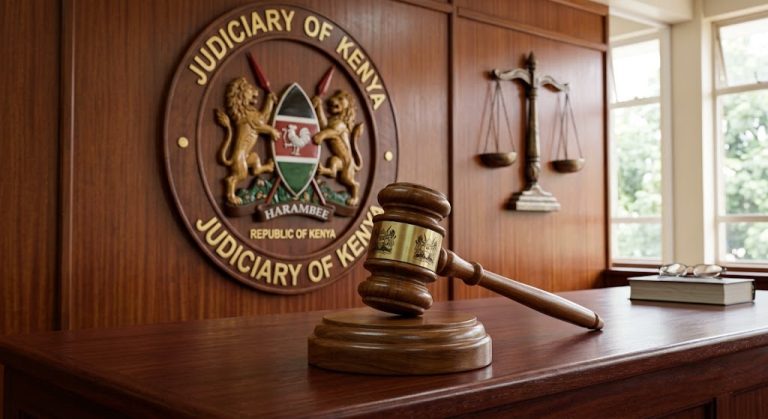
On October 19, 2026, a Kenyan court convicted Mackenzie and 28 co-defendants of 191 murders involving 190 children and one adult.
The Associated Press reported that Justice Diana Kavedza described how healthcare had been presented to followers as incompatible with their religious beliefs, stating that “medical treatment was presented as an instrument of Satan.”
Mackenzie denied forcing his followers to fast. He faces separate proceedings connected to additional deaths discovered in Kwa Binzaro, and those allegations must be distinguished from the convictions already delivered.
Paul Mackenzie’s family and personal life
Publicly available biographical information about Mackenzie’s private life is limited.
A Kenyan parliamentary report records that he married three times and had children with all three wives. According to the report, his first wife died in 2009 and his second wife in 2018. He married his third wife in 2019.
Beyond these details, reliable information about his upbringing, family relationships and personal experiences remains limited compared with the extensive reporting on his ministry and criminal proceedings.

What Paul Mackenzie’s story reveals about Kenya
Mackenzie’s rise and the Shakahola tragedy have forced Kenya to confront difficult questions about religious freedom, child protection and the regulation of religious organisations.
The case also raised questions about institutional accountability, particularly why earlier encounters with law enforcement did not prevent the deaths.
For victims’ families, the convictions mark an important step towards justice. For the country, the wider challenge is to protect people from exploitation without criminalising legitimate religious belief.
Paul Mackenzie’s story is therefore not simply the biography of a preacher. It is an account of how religious influence expanded, how warnings emerged, and how a remote settlement became the centre of a national tragedy.