
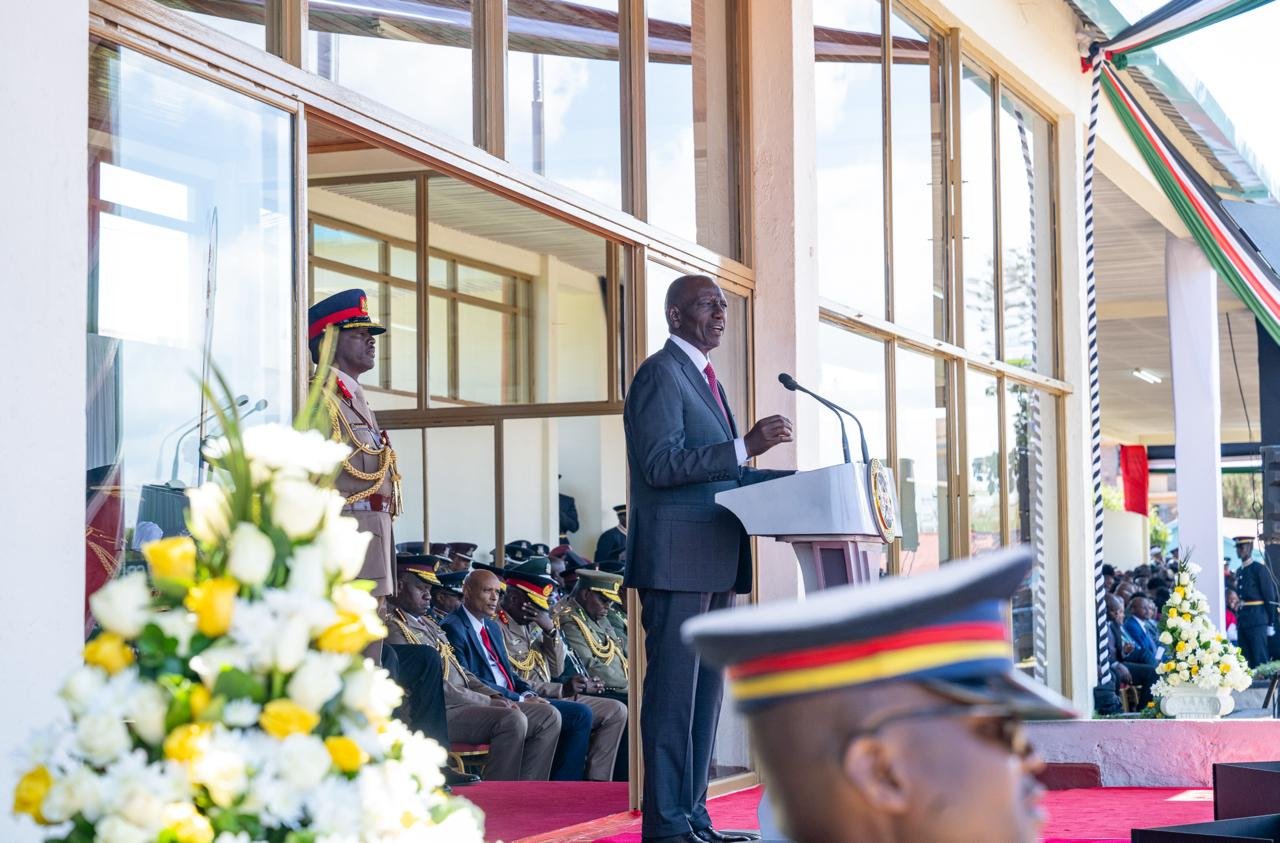
Activist Davies Okombo has warned that Kenya risks entering a dangerous 2027 election period unless President William Ruto’s administration takes decisive action against political goonism and implements long-delayed police reforms outlined in a report by former Chief Justice David Maraga.
Okombo said the recent emergence of groups accused of disrupting political meetings and attacking government critics, coupled with what he described as weak accountability in the security sector, should concern Kenyans ahead of the next general election.
His warning comes after Maraga made public the report of the Presidential Task Force on Police Reforms, nearly three years after it was submitted to Ruto, saying failure to implement its recommendations could leave Kenya with a partisan police service and increase the risk of post-election violence.
“What we are seeing about goonism is not good for this country,” Okombo said, drawing parallels with the political violence that followed the disputed 2007 presidential election.
Kenya’s 2007/08 post-election violence left more than 1,000 people dead and displaced hundreds of thousands, prompting investigations and prosecutions that included cases before the International Criminal Court.
Okombo said the recent incidents should therefore not be dismissed as isolated confrontations, warning that political violence could escalate as the 2027 election approaches.
“If we fail to see these issues seriously, then we may end up preparing Kenya for a very difficult period in 2027,” he said.
Maraga report puts police under scrutiny
Maraga, who chaired the task force that handed its report to Ruto in November 2023, has argued that reforms to the National Police Service (NPS) are critical to preventing political interference and strengthening accountability.
The former Chief Justice said a partisan police force was one of the factors behind the violence of 2007/08 and warned that Kenya risked repeating past mistakes if the recommendations were ignored.
“A partisan police force was a root cause of the slaughter of 2007/2008,” Maraga said, arguing that the Constitution’s safeguards on independent institutions were shaped by the country’s experience of political violence.
The task force recommended measures including transparent recruitment of the Inspector-General of Police, Deputy Inspectors-General and Director of Criminal Investigations (DCI); fresh vetting of senior officers; improved remuneration; fairer transfers and reforms to recruitment and promotion.
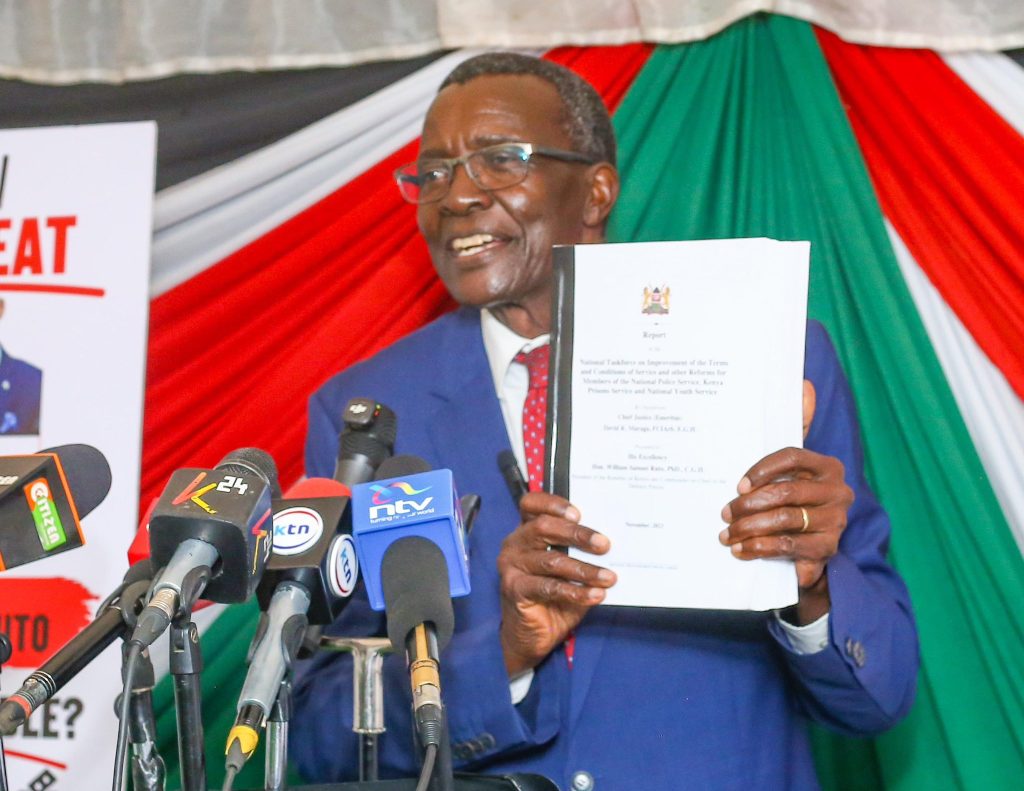
Maraga has also criticised changes introduced through the Security Laws (Miscellaneous Amendments) Act of 2014, arguing that they weakened constitutional safeguards protecting the independence of the police.
“The central finding in the report is the constitutional command. The National Police Service must be independent,” he said.
The task force estimated that most of its recommendations could have been implemented within two years, although some measures, including legislative changes, would require longer.
Okombo questions security response
Okombo said responsibility for addressing political goonism should not be placed solely on Interior Cabinet Secretary Kipchumba Murkomen, arguing that Kenya’s wider security leadership must account for what is happening.
Under Article 240 of the Constitution, the National Security Council is chaired by the President and includes senior officials responsible for interior, foreign affairs, defence and justice, as well as the heads of key security agencies.
Okombo said the council should explain what intelligence it has on groups accused of political violence and why government warnings have not appeared to deter them.
“It is high time we stop blaming CS Murkomen alone. People must go to the entire National Security Council,” he said.
He questioned why groups accused of operating as political goons appeared increasingly confident despite repeated government statements promising to deal with them.
“The President and the CS for Interior have repeatedly said that they would take charge. There would be no more goons, and so on and so forth. And the next day, the goons actually become more bold,” Okombo said.
Okombo also questioned who was financing or supporting the groups, saying Kenyans deserved answers from the country’s senior security officials.
His comments followed a series of reported confrontations at political gatherings in parts of Kenya, including incidents in Meru, Migori and Homa Bay. The allegations and circumstances surrounding individual incidents remain matters for investigation and accountability by the relevant authorities.
Trust in security agencies
Okombo said the controversy surrounding political violence was also exposing what he described as declining public confidence in Kenya’s security institutions.
He cited Maraga’s criticism of the appointment and tenure of senior police commanders as evidence of broader concerns about the independence of the National Police Service.
Maraga has argued that the recruitment of senior police commanders should be transparent and consistent with the Constitution. He also questioned the continued tenure of senior security officials whose appointments have attracted public debate over retirement rules and the legal basis for extensions.

The former Chief Justice has called for implementation of the task force recommendations to restore confidence in the police and reduce the risk of political interference.
Okombo said government assurances would only restore public confidence if they were followed by visible action.
“The President needs to know that Kenyans do not believe that he has the will to end goonism in this country,” he said.
He argued that presidential directives against political violence should translate into action by security agencies rather than remain public statements.
2027 election security test
The dispute over goonism comes as Kenya approaches a politically sensitive period ahead of the 2027 general election.
Okombo also pointed to travel advisories issued by the United States, United Kingdom and Canada, saying international concerns about insecurity could have consequences for Kenya’s tourism sector and wider economy.
He argued that political violence was not only an electoral issue but could also damage Kenya’s international reputation.
The debate has placed renewed attention on whether the government will implement the Maraga task force recommendations before the next election and whether the National Police Service can maintain the independence required by the Constitution.
For Maraga, the solution lies in restoring constitutional safeguards and insulating national security institutions from political interests.
For Okombo, the test will be whether the government can turn its repeated promises to confront goonism into concrete action before political competition intensifies.
With 2027 approaching, the unresolved question is whether Kenya’s security institutions will be sufficiently independent and accountable to prevent political violence from escalating into a wider national crisis.