
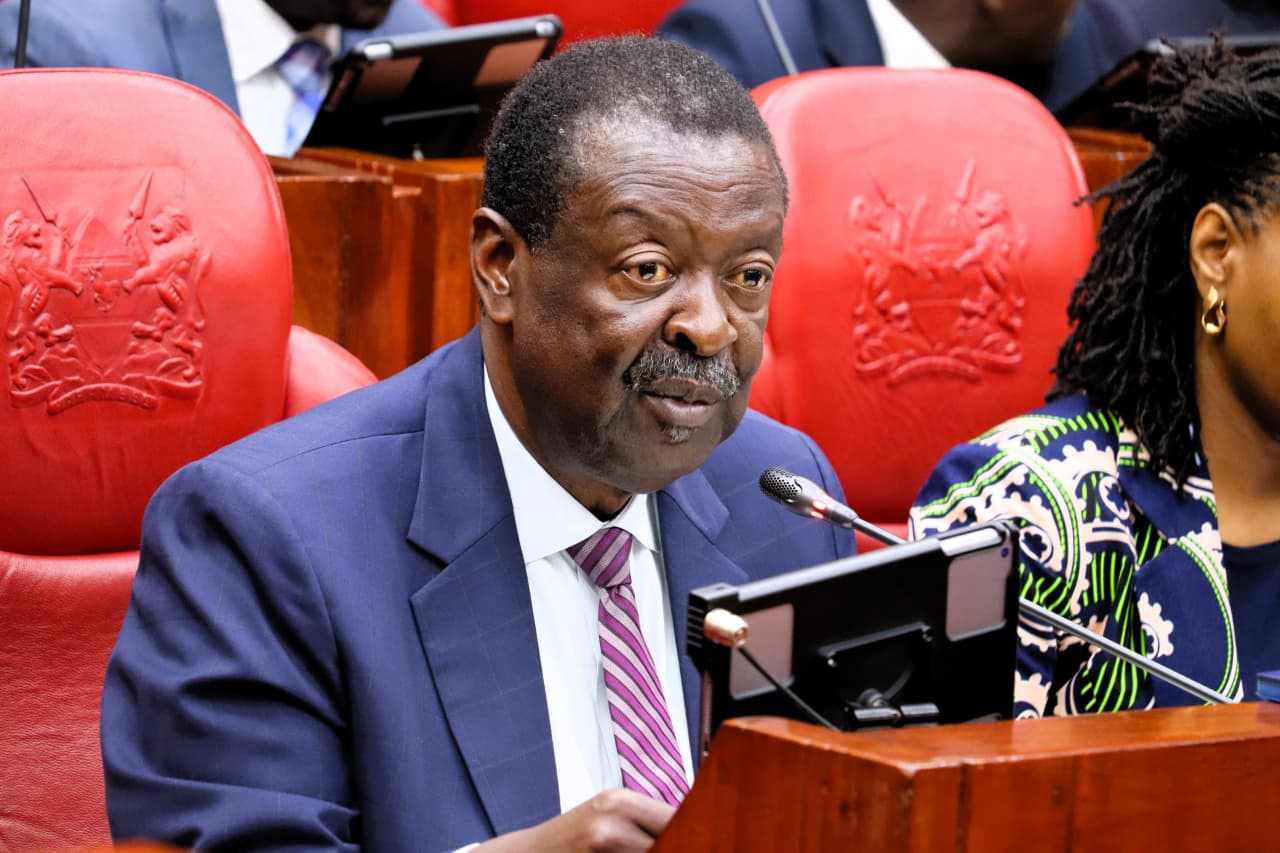
Prime Cabinet Secretary Musalia Mudavadi heads to Moscow on Monday amid mounting questions over the fate of Kenyans recruited to fight in Russia’s war against Ukraine, with government records showing 84 nationals classified as killed or missing in action.
Mudavadi, who also serves as Cabinet Secretary for Foreign and Diaspora Affairs, is expected to hold bilateral talks with Russian Foreign Minister Sergey Lavrov on the sidelines of the Third Russia-Africa Summit and accompanying Economic and Humanitarian Forum, scheduled for October 28-30.
But beyond discussions on trade, investment and diplomatic cooperation, the visit places renewed focus on a growing humanitarian concern: Kenyans whose families have lost contact with them after they travelled to Russia, in some cases after reportedly being promised lucrative employment.
The Ministry of Foreign and Diaspora Affairs told Parliament on October 8 that it had recorded 354 Kenyans connected to the Russia-Ukraine conflict. Of these, 84 had been classified as killed or missing in action, 52 were in unknown or unclassified locations, and 77 were believed to be on the front lines.
Another 38 were in military camps, 34 were hospitalised, 62 had been repatriated, five were prisoners of war in Ukraine, one was in detention, and another had completed a military contract, according to Mudavadi’s parliamentary briefing.
The figures have raised questions about how many Kenyans remain exposed to the conflict and whether the government can account for all those who travelled to Russia through recruitment networks.
Questions over missing Kenyans
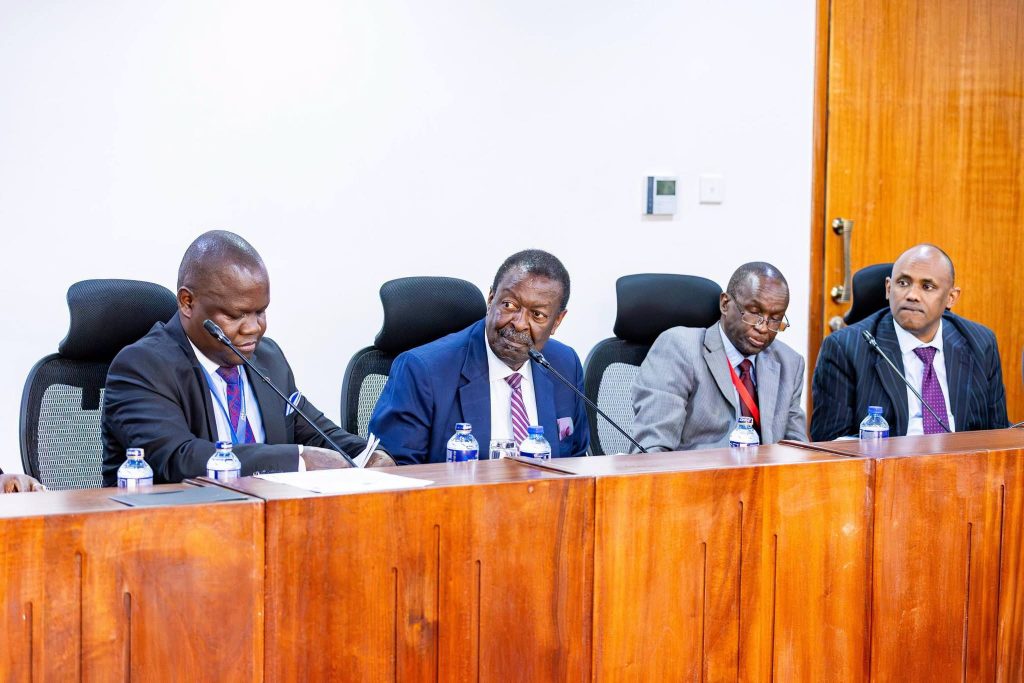
Mudavadi’s Moscow visit comes less than a month after he disclosed the government’s latest figures to senators examining the recruitment of Kenyans into the Russian military and the detention of Kenyans in Ukraine.
“The Ministry has records of 354 Kenyan nationals involved in the Russian-Ukraine crisis,” Mudavadi told lawmakers.
He said the government had identified 52 Kenyans whose locations were unknown or unclassified, while 84 were recorded as killed or missing in action.
The categories are distinct: the 84 figure combines those classified as killed with those missing in action, while the 52 are separately listed as having unknown or unclassified locations. The figures should not be added together as if they represent an independently verified total of missing Kenyans.
The government’s records have also been challenged by families and petitioners seeking information about their relatives.
During the October 8 Senate proceedings, petitioner Peter Kamau presented a list containing approximately 841 names of Kenyans he said had been recruited to fight in the conflict, substantially higher than the government’s verified figure.

Kamau told senators: “There is enough information that is available to prove that the numbers from the Ministry of Foreign Affairs are grossly understated.”
Mudavadi said the list had not been provided to his office before the hearing and could not immediately be verified. Senators directed that the documents be formally submitted to the ministry for comparison with records held by Kenyan diplomatic missions.
The discrepancy leaves a critical question for the government: how many Kenyans have been recruited, how many remain unaccounted for, and how quickly can their status be established?
For families who have lost contact with relatives, the difference between a missing person, a confirmed casualty and a prisoner of war is not merely a statistical matter. It determines whether they should continue searching, prepare for a possible death notification or pursue the return of a relative held in detention.
Moscow had already promised to halt recruitment
The latest visit follows Mudavadi’s March 2026 trip to Moscow, during which Kenya announced an agreement intended to stop further enlistment of its citizens into Russian military operations in Ukraine.
After talks with Lavrov on March 16, Mudavadi said Kenya had secured the country’s inclusion on a Russian military recruitment “Stop List”.
In his October parliamentary briefing, he said the Kenyan Embassy in Moscow had confirmed that no additional Kenyan nationals had been enlisted into the military operation following implementation of the measure.
“The Embassy of Kenya in Moscow has since confirmed that no additional Kenyan nationals have been enlisted in the Special Military Operation following the implementation of the Stop List,” Mudavadi said.
The agreement was an important diplomatic step, but it has not resolved the situation of Kenyans who had already signed military contracts or travelled to Russia before the restrictions took effect.
Mudavadi told lawmakers that requests by Kenyans seeking to terminate their military contracts were being considered on a case-by-case basis by individual military unit commanders.
That leaves the government facing a different challenge from preventing fresh recruitment: securing information about those already serving, helping those who want to leave and establishing the fate of those who have disappeared or died.
The Moscow talks therefore offer an opportunity to press Russian authorities for updated information on affected Kenyan nationals, clarify the status of military contracts and seek practical arrangements for their safe return.
Recruitment networks under scrutiny
The recruitment crisis first drew widespread public attention in February, when Parliament was presented with intelligence findings indicating that more than 1,000 Kenyans may have been recruited to fight for Russia.
Investigations and accounts from affected families and survivors have pointed to recruitment networks that allegedly used promises of well-paying civilian jobs, attractive salaries and signing bonuses to draw Kenyans to Russia.
Some recruits reportedly discovered that the jobs they expected were connected to military service, with some subsequently deployed to the front lines.
A report by the United States Department of State in 2026 also raised allegations that some Kenyan officials colluded with recruitment agencies and Russian government officials in fraudulent recruitment. Such allegations require careful attribution and should not be treated as proof of criminal liability by every individual or institution named in the wider debate.
Russia’s position has differed from allegations that recruits were unlawfully channelled into military service. During the March diplomatic engagement, Russian Foreign Minister Lavrov maintained that Kenyan citizens had voluntarily signed military contracts, according to Reuters.
The competing accounts underscore the need for case-by-case investigations into how individual Kenyans were recruited, what contracts they signed and whether they understood the nature of the work they were undertaking.
Kenya has also argued that some of the circumstances could amount to human trafficking, particularly where individuals were allegedly deceived by promises of employment.
Mudavadi told Parliament that the government wanted Kenyans held as prisoners of war in Ukraine to be considered as possible victims of international human trafficking, which could affect the assistance available to them.
Five Kenyans held in Ukraine
The humanitarian consequences extend beyond those still serving with Russian forces.
The government has confirmed five Kenyans as prisoners of war in Ukraine and said it is pursuing their release through diplomatic channels, including possible prisoner exchanges.
Kenya is also working with Ukrainian authorities over the identification and repatriation of the remains of Kenyans reported to have died during the conflict.
Mudavadi told Parliament that Russian authorities had indicated that Russia’s Defence Ministry could not meet the cost of repatriating the remains of deceased Kenyans. Arrangements for burial, cremation or repatriation are consequently being handled on a case-by-case basis.
The government has said that identifying remains can be difficult, particularly where deaths occurred in areas affected by intense fighting or where access is limited. DNA testing may be necessary in some cases.
The situation places additional pressure on families who may have received little information about their relatives’ last movements and are waiting for confirmation of whether they are alive or dead.
Kenya has also acknowledged challenges in tracing people who travelled without informing their families or government authorities. Mudavadi has urged families to report cases as soon as communication with relatives in Russia is disrupted so that the State Department for Diaspora Affairs can collect identification and travel details and refer the cases to the Kenyan Embassy in Moscow for verification.
Trade agenda puts diplomatic ties in focus
Despite the recruitment crisis, Kenya’s official agenda for the Moscow summit is centred on expanding economic cooperation with Russia.
In a press release issued on Monday, the Office of the Prime Cabinet Secretary said Kenya would pursue greater access to the Russian market for tea, coffee and horticultural produce, alongside investment and partnerships in agriculture, energy, manufacturing, science and technology.
“Kenya and the Russian Federation enjoy cordial diplomatic relations,” the statement said.
It added that Mudavadi would hold bilateral talks with Lavrov on “the state of bilateral relations, regional and international developments, and opportunities to deepen economic and political cooperation”.
The government also plans to explore cooperation in education, skills development, tourism and technology transfer, saying the engagement reflects its commitment to diversifying international partnerships and strengthening Kenya’s economic competitiveness.
These are significant priorities for a country seeking wider markets for its agricultural exports and new sources of investment. But the summit also presents a test of whether diplomatic ties can produce measurable results for Kenyan citizens whose lives have been affected by the war.
The Foreign Affairs ministry’s October 26 announcement did not specifically mention missing Kenyans, military recruitment or the repatriation of remains among the stated objectives of the visit.
It remains to be established whether those matters will feature in the bilateral talks or in separate engagements with Russian officials.
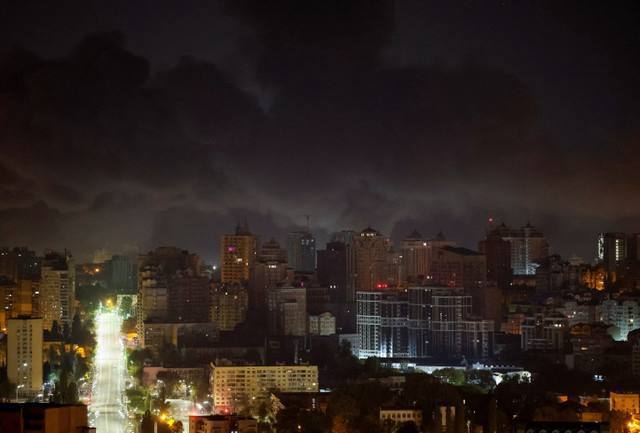
The questions awaiting Mudavadi in Moscow
The immediate test for the Kenyan delegation is whether the existing diplomatic commitments can be translated into a clearer accounting of affected nationals and concrete assistance for families.
Will Kenya obtain updated information on the 52 nationals whose locations were recorded as unknown or unclassified? Can Russian authorities help establish the status of Kenyans listed as killed or missing in action? What progress has been made in helping recruits who wish to terminate their contracts and return home?
The government also faces pressure to reconcile its records with the list presented by petitioners, while continuing efforts to secure the release of Kenyans held in Ukraine and arrange the return or identification of remains.
Mudavadi’s March visit produced an agreement intended to halt further enlistment. The October trip now raises the question of what further steps can be secured for those already caught up in the conflict.
For families waiting for answers, the measure of success will not be the number of meetings held or agreements announced, but whether they receive reliable information about their relatives and whether those who can be brought home are able to return safely.
As Kenya pursues economic opportunities in Moscow, the fate of its missing citizens remains an unresolved test of the country’s diplomatic engagement with Russia.