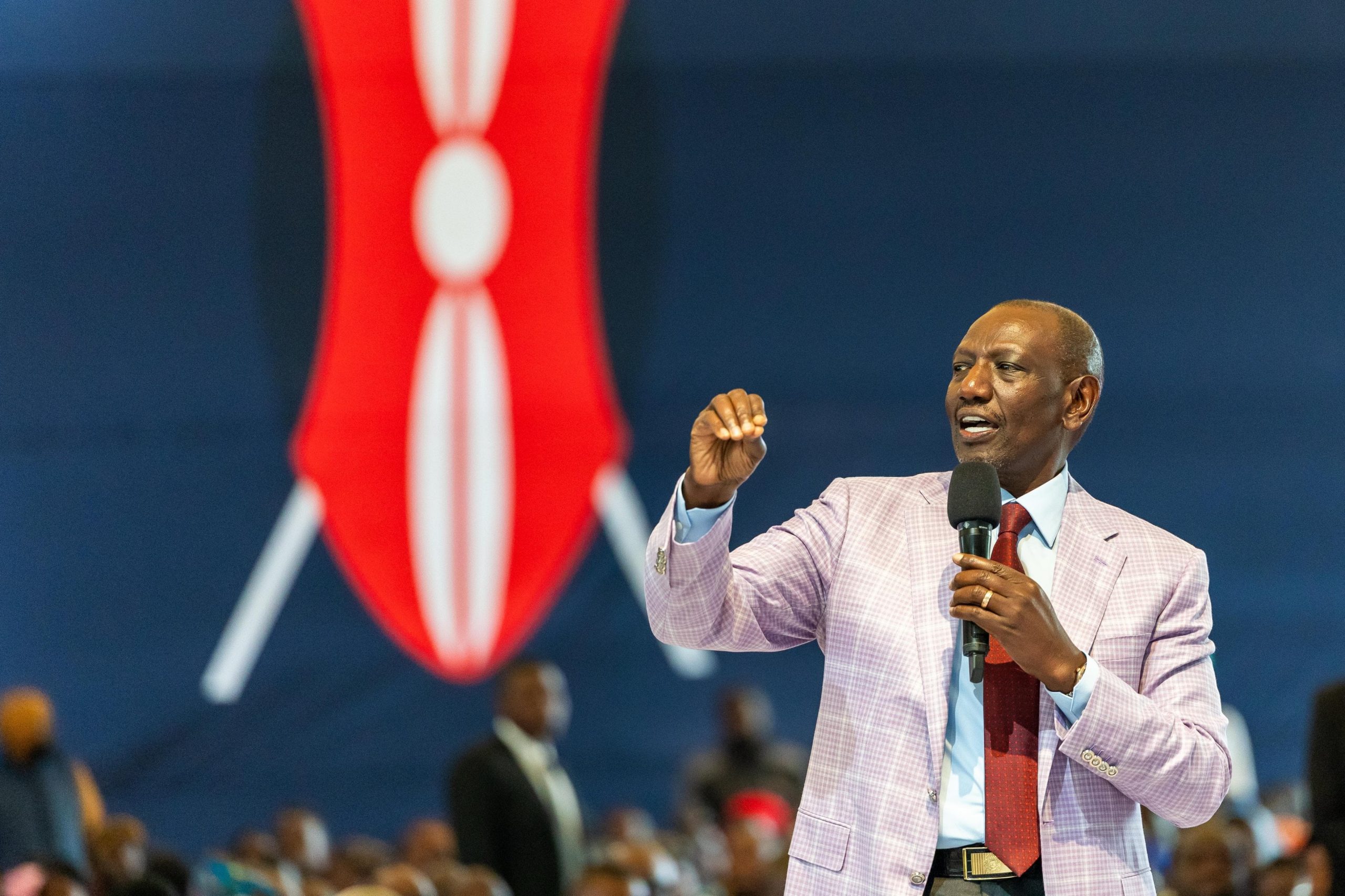
Educationist Davies Okombo has criticised President William Ruto’s university funding model, warning that inadequate financing and weak policy planning could undermine access to quality education in Kenya.
Okombo’s concerns come as more than 150,000 first-year university students have applied for scholarships under the government’s Student-Centred Funding Model, highlighting the growing demand for state support as universities enrol a new cohort.
Universities Fund chief executive Edwin Wanyonyi said 159,551 students had completed their Higher Education Financing (HEF) Portal applications by August 20. Of these, 150,403 applications included a scholarship component, while 9,148 students applied for loans without scholarships.
The figures come amid continuing debate over how Kenya should finance higher education, with universities facing financial pressures and students adjusting to changes in the government’s university funding model.

Education is a right
Okombo said education should be treated as a constitutional responsibility rather than a benefit granted at the discretion of the government.
“Education is not a privilege that the government grants to us,” he said, referring to Article 53 of the Constitution, which provides for every child’s right to free and compulsory basic education.
He also urged students, university lecturers and other education stakeholders to participate in parliamentary discussions on six education-related Bills currently before the Parliamentary Education Committee.
Okombo cited Article 118 of the Constitution, which provides for public participation in parliamentary proceedings, and urged Kenyans to scrutinise the proposed legislation and submit their views.
“We can’t let Parliament do that work on their own,” he said.
The educationist said the wider education sector was already facing financial difficulties, including what he described as inadequate capitation for schools and severe funding challenges in universities.
He estimated the university sector’s funding deficit at about Sh100 billion, saying the financial pressure had contributed to liquidity problems, delayed payments and difficulties meeting institutional obligations.
“As we speak tonight, we have a crisis in our education sector,” Okombo said.
He argued that inadequate resources were also affecting research in Kenyan universities, with institutions struggling to allocate sufficient funds to academic research and development.
Ruto funding model
Okombo questioned the timing of changes to the university funding framework, arguing that major policy decisions were being announced too close to the start of the academic year.
He said the government’s approach risked leaving students and universities uncertain about how their education would be financed.
“Just one month before the students, the first years could join the university, and then the president makes a very serious announcement about a funding model,” Okombo said.
“That shows clearly lack of policy coherence, and we seem to be managing our affairs by crisis.”
Under the Student-Centred Funding Model, students can receive government scholarships and Higher Education Loans Board financing, while household contributions may also form part of the funding package. The level of support is determined using a means-testing system intended to assess students’ financial circumstances.
The government has said the model is designed to direct greater assistance to students from financially disadvantaged households while expanding access to higher education.
However, the model has faced legal and policy challenges since its introduction, adding uncertainty for students and universities during the transition between funding frameworks.
Universities under pressure
The latest university funding debate comes as the number of students seeking government assistance continues to increase.
Universities Fund data showed that 437,648 students from three earlier cohorts were being funded under the system, while the government has projected about 608,879 beneficiaries for the 2026/27 financial year.
The rising number of beneficiaries has increased pressure on public funding.
Government scholarship allocations have remained below projected requirements in recent financial years. For 2026/27, the government allocated Sh30.1 billion against a projected requirement of about Sh37 billion, according to figures provided by the Universities Fund.
Okombo said the consequences of funding constraints were being felt inside universities through difficulties with payments, pending bills and limited resources for research.
He said sustainable university funding was necessary if higher education was to provide students with the skills and opportunities needed to compete in the economy.
The issue is particularly significant as universities admit a new cohort under a funding system that has generated considerable public debate.

CBE faces challenges
Okombo also linked the university funding debate to broader challenges facing Kenya’s education system, including the implementation of Competency-Based Education.
He said the pioneer Grade 10 cohort had experienced challenges involving textbooks, capitation and infrastructure, raising concerns about the ability of the government to implement the new curriculum as planned.
“The whole idea about CBC that was later renamed CBE had a clear structure, but we lack the political will to ensure that it could be delivered as it was planned,” he said.
Okombo argued that education policy required long-term planning rather than frequent responses to emerging problems.
He said Kenya needed a system capable of planning for learners’ education and welfare over the long term, rather than making major decisions only when problems had already emerged.
The educationist called on policymakers to prioritise predictable and adequate education financing, saying students should not bear the consequences of policy uncertainty or funding shortfalls.
“We call upon the policymakers to take the issues of our learners very seriously and ensure that they deliver a free, affordable education to all children in Kenya,” Okombo said.
The debate over the Ruto funding model is expected to continue as universities process new students, the government expands scholarship support and policymakers consider further changes to Kenya’s education financing system.