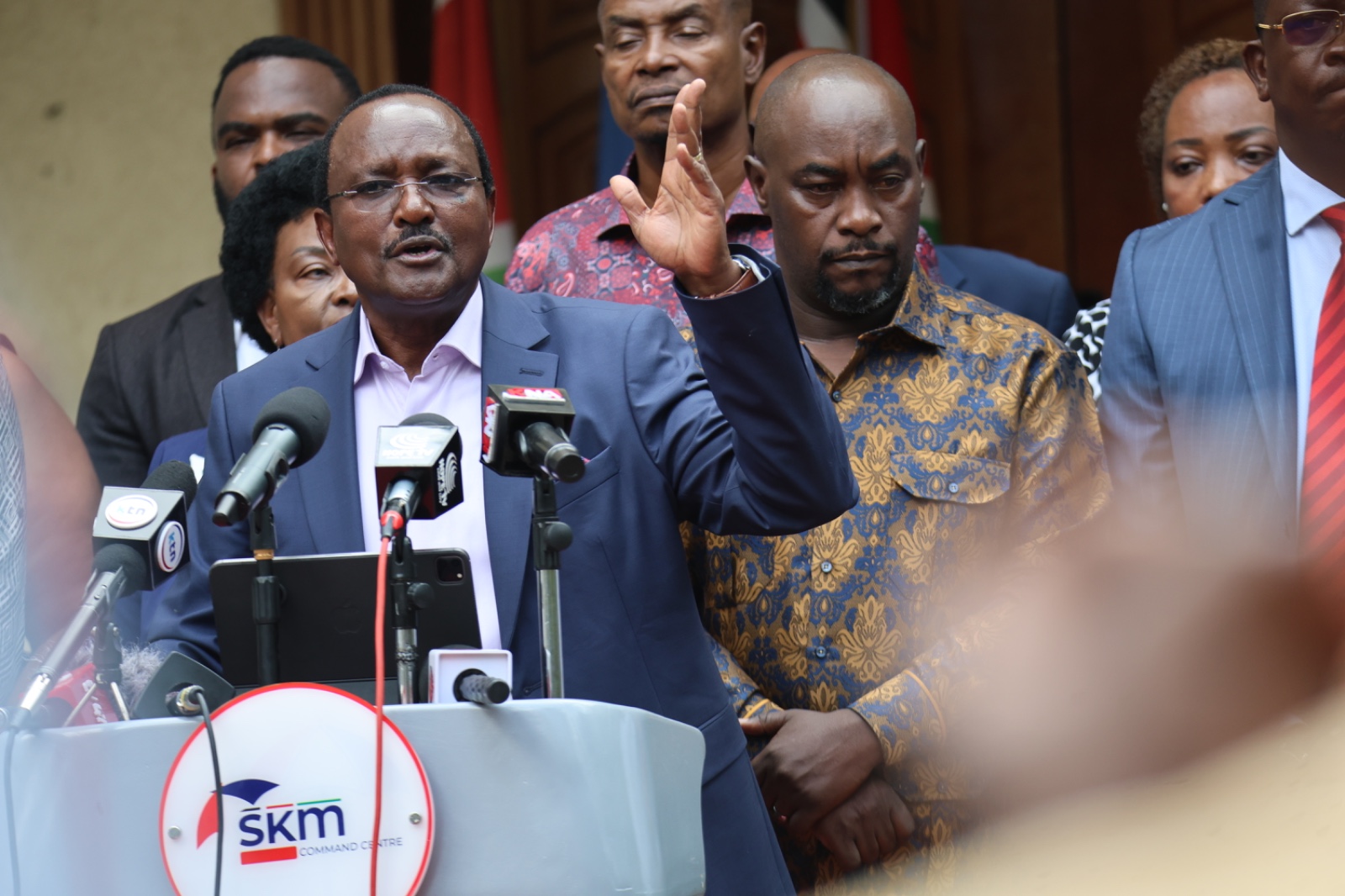
Wiper Patriotic Front leader Stephen Kalonzo Musyoka has declared that Raila Odinga’s political mission remains unfinished, using his Mashujaa Day message to challenge Kenya’s leadership, defend constitutional accountability and mobilise voters ahead of the August 10, 2027 General Election.
In a statement titled “We Have Not Arrived But We Have Not Turned Back,” Kalonzo said the country had yet to realise the aspirations associated with Raila’s promise of Canaan, while insisting that supporters of political change must continue the struggle.
“What I said in Bondo holds true: Raila is not finished, and neither is Kenya,” Kalonzo declared.
“He promised us Canaan; we have not yet arrived, but we have not turned back.”
The message, issued on Monday ahead of Mashujaa Day on Tuesday, October 20, places Raila’s legacy, the constitutional rights of citizens and the economic struggles of ordinary Kenyans at the centre of Kalonzo’s political appeal.
It also comes as preparations for the 2027 General Election gather pace, with the Independent Electoral and Boundaries Commission identifying August 10, 2027, as election day.
Kalonzo doubles down on Raila’s unfinished Canaan mission
Kalonzo’s declaration reinforces his public commitment to carrying forward the political ideals associated with the late former Prime Minister.
During the first anniversary commemoration of Raila’s death in Bondo, Siaya County, on October 15, Kalonzo similarly maintained that the journey to Canaan would continue.
In his Mashujaa Day statement on Monday, October 19, 2026, the Wiper leader returned to that message, linking the promise of Canaan to the struggle for a Kenya where constitutional rights are respected and citizens can demand accountability.
His language presents the pursuit of political change as an unfinished national project rather than a campaign confined to a single election.
However, Kalonzo’s statement does not announce a new electoral alliance or set out a detailed coalition agreement. Its central message is that the political ideals associated with Raila should continue to shape Kenya’s future.
‘Predator regime’: Kalonzo renews constitutional challenge
The Wiper leader also used the national holiday to criticise what he described as the “predator regime”, promising to insist on compliance with the Constitution.
“The Constitution that gave us this holiday is the one we will insist is obeyed, whatever the predator regime may think,” he said.
Kalonzo further linked the historical struggle against colonial rule to present-day constitutional disputes.
“The forest that sheltered Kimathi is the one we are defending in court today,” he declared, referring to freedom fighter Dedan Kimathi and the legal battles he says continue to define Kenya’s democratic struggle.
The statement does not identify the specific court cases behind that remark. His description of the government and the disputes should therefore be understood as his political position, not an independently established finding.
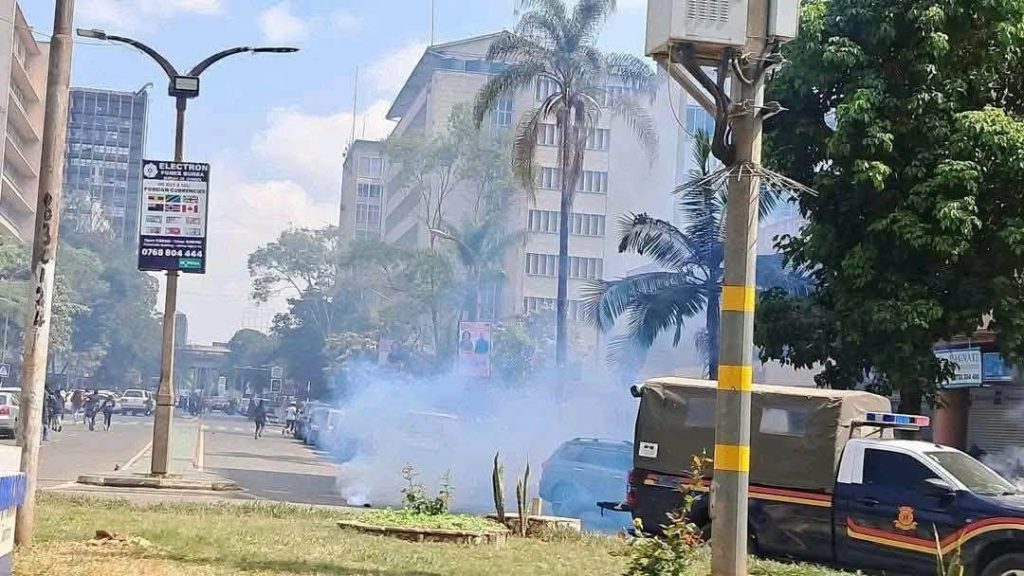
Gen Z protesters, struggling workers named among Kenya’s heroes
Kalonzo expanded the meaning of Mashujaa Day beyond the country’s celebrated historical figures, arguing that ordinary citizens also deserve recognition for their sacrifices.
He singled out nurses who continue working despite salary delays, boda boda riders struggling with loan repayments and mama mboga traders who extend credit to neighbours even when they are behind on rent.
He also recognised young people who took to the streets on June 25 carrying national flags, water bottles and mobile phones, as well as parents whose children did not return home after standing up for what they believed the Constitution had promised them.
“The young people who fear for their future are the very ones who will carry us the rest of the way,” he said.
The reference places youth concerns, economic hardship and constitutional rights within Kalonzo’s wider argument about the country’s unfinished democratic journey.
His statement does not provide figures for the workers facing salary delays or the protest-related deaths referenced, and those details would require separate verification.

Kalonzo urges Kenyans to prepare for August 10, 2027
Beyond commemorating national heroes, Kalonzo issued a direct call for electoral participation, urging young people to obtain national identity cards and eligible citizens to register as voters.
He also encouraged registered voters to verify their details and keep their voter cards ready ahead of the next General Election.
“On the 10th of August 2027, stand in that queue, however long it is, and vote for the Kenya you want to inherit and hand on to your children,” he said.
He described a free and fair election as a shared act of heroism available to every eligible citizen.
“A free and fair vote is the one act of heroism all of us can perform, on the same day, with our own hands,” Kalonzo added.
The appeal aligns with the electoral preparations under way. The IEBC has said it is targeting at least 28.5 million registered voters for the 2027 election and has emphasised the importance of an accurate, verifiable register.
Kalonzo’s statement does not provide a new voter-registration deadline, so citizens should consult the IEBC for current registration requirements and dates.
Why Kalonzo invoked Mekatilili, Kimathi and Wangari Maathai
The Wiper leader grounded his political message in Kenya’s history, reminding citizens that Mashujaa Day was established under the 2010 Constitution to recognise heroes and heroines from across the country.
He cited Mekatilili wa Menza at the Coast, Koitalel arap Samoei in Nandi, Moraa wa Ngiti among the Abagusii, Elijah Masinde in Bungoma, Syokimau and Muindi Mbingu in Ukambani, Dedan Kimathi in the Aberdare forest, and environmentalist Wangari Maathai.
He also invoked Jaramogi Oginga Odinga, Tom Mboya and Raila Odinga, placing political organising, independence, environmental activism and constitutional reform within a shared national history.
“Kenya was not built by one man, or by one community,” he said.
The message is an appeal for national unity, but it also carries a political challenge: Kalonzo argues that the sacrifices of earlier generations should compel present-day leaders and citizens to defend constitutional principles.
‘Kenyans are tired and angry’: Kalonzo reflects on public mood
Drawing on visits to churches, rallies and town halls in Mombasa, Kakamega, Garissa, Tana River and Siaya, Kalonzo said his encounters with citizens had strengthened his belief that frustration had not extinguished their determination.
“I went to listen, and I did not find despair. Kenyans are tired and angry, but they keep showing up,” he said.
He added: “That gives me hope, because a people who can be this tired and still show up cannot be defeated.”
The remarks present civic participation as a source of hope amid economic and political concerns. They are Kalonzo’s assessment of the public mood, rather than findings from a representative national survey.
What Kalonzo’s Mashujaa Day message signals ahead of 2027
Three themes dominate Kalonzo’s statement: continuing Raila Odinga’s political legacy, demanding constitutional accountability and encouraging citizens to exercise their electoral rights.
The message strengthens his public association with Raila’s Canaan vision and places the next election within a broader argument about the country’s democratic direction.
It does not, however, establish what coalition arrangements will emerge or whether Kalonzo will secure the political support needed to turn that message into an electoral victory.
For now, his appeal is clear: he wants Kenyans to see the 2027 election not simply as a contest between candidates, but as an opportunity to determine the country they will pass on to future generations.
He concluded with a call for unity and political resolve:
“Heri ya Mashujaa, Kenya. Together we shall Komboa Kenya.”