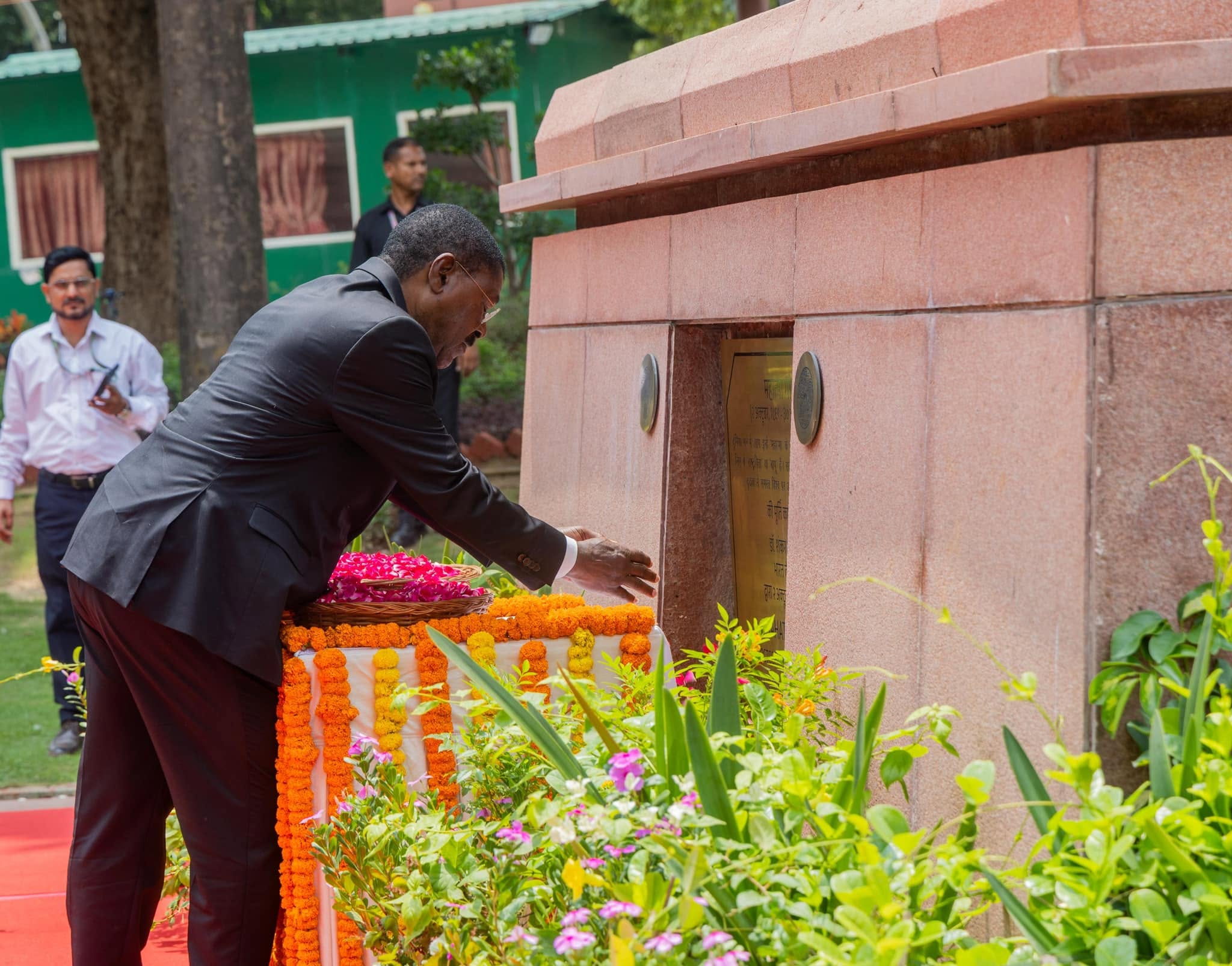
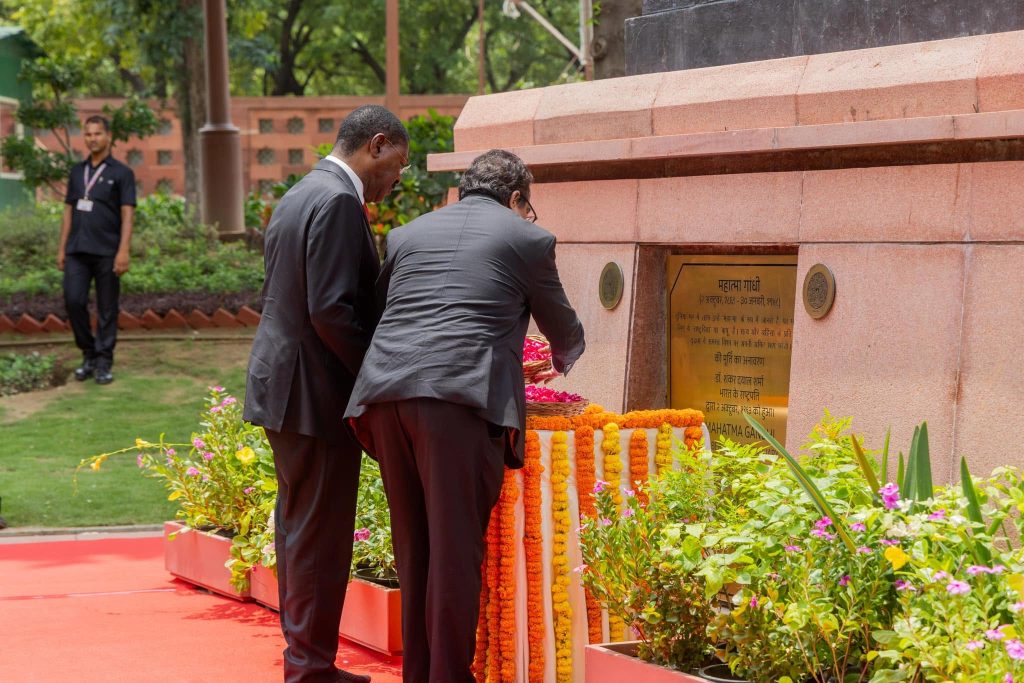
National Assembly Speaker Moses Wetang’ula has paid tribute to Mahatma Gandhi during his working visit to New Delhi, describing the Indian independence icon as an enduring symbol of truth, peace and service.
Wetang’ula visited the Statue of Mahatma Gandhi on Thursday, August 13, where he laid flowers in honour of the late leader.
The Speaker said Gandhi’s legacy had helped shape the democratic and internationalist ideals that continue to influence relations between Kenya and India.
“Laying flowers at Gandhi’s statue was a moment of deep honour and reflection,” Wetang’ula said.
He added that Gandhi’s commitment to truth and service remained relevant to leaders in Kenya, India and beyond.
The tribute came as Wetang’ula led a Kenyan parliamentary delegation on a working tour of India aimed at strengthening relations between the two countries.
India and Kenya have maintained longstanding diplomatic and people-to-people ties, with parliamentary engagement forming part of the broader relationship.
During a meeting in New Delhi, India’s Lok Sabha Speaker Om Birla also highlighted the historical links between the two countries and Gandhi’s influence on Kenya’s freedom struggle.
Kenya India ties
Wetang’ula said the relationship between Kenya and India had deep historical roots and continued to expand through cooperation in areas including democracy, trade, and development.
He also highlighted the contribution of people of Indian origin to Kenya’s development and their participation in public life.
During the talks, Wetang’ula backed India’s push for permanent membership of the United Nations Security Council, arguing that reform would make the global institution more representative.
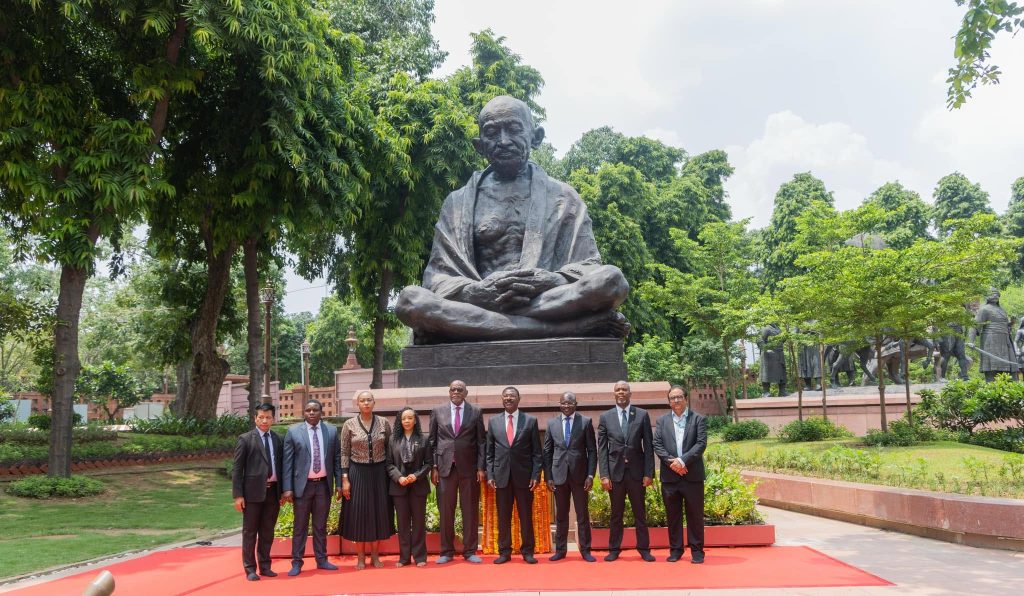
The visit also comes as the two parliaments seek to deepen cooperation, including through exchanges between legislators and sharing of parliamentary expertise. India has offered to share its experience in using technology and artificial intelligence to improve parliamentary operations.
Who was Gandhi?
Mahatma Gandhi, born Mohandas Karamchand Gandhi in 1869, was an Indian lawyer and leading figure in the struggle for independence from British rule.
He became internationally known for his philosophy of nonviolent resistance and civil disobedience. Gandhi developed and used the principles of Satyagraha during his years in South Africa before returning to India in 1915.
He went on to become one of the most influential leaders of India’s independence movement, using nonviolent campaigns to mobilise millions of people against colonial rule.
Gandhi was assassinated in New Delhi in 1948, but his ideas on nonviolence, truth and political resistance have continued to influence movements around the world.