Kenya’s dairy sector is producing more milk and earning more from exports, but consumers are still facing shortages and higher prices, exposing a supply-chain gap between farm output and milk reaching formal markets.
Deputy President Kithure Kindiki said on Wednesday that milk production had increased from 4.6 billion litres to 5.2 billion litres, while dairy export value had risen from Ksh4.9 billion to Ksh9.4 billion.
“In the dairy sector, the guaranteed minimum return for milk has increased from 37 shillings to 50 shillings per litre, while milk production has increased from 4.6 billion litres to 5.2 billion litres,” Kindiki said while opening the Agriculture and Food Security Transformation Summit at Jamhuri Park in Nairobi.
“From this, the dairy export value has shot up from 4.9 billion shillings to 9.4 billion shillings.”
The export figure represents an increase of about 92 per cent, meaning the value nearly doubled over the period cited by Kindiki.
But the latest national data reveal why higher production has not necessarily translated into reliable supplies for consumers.

Output versus supply
The Kenya National Bureau of Statistics (KNBS) reported that national milk production increased 3.5 per cent to 5.5 billion litres in 2025, from 5.3 billion litres in 2024.
However, the volume of marketed milk rose 11.5 per cent to about 1.0 billion litres. Marketed milk refers to milk entering the recorded marketed channel and should not be interpreted as the amount of milk consumed nationally.
The distinction is critical to understanding Kenya’s current dairy shortage.
While farms can produce billions of litres annually, milk still has to be collected, cooled, transported and processed before it reaches supermarkets as packaged milk.
That formal supply chain is currently under pressure.
Formal milk deliveries to processors have fallen amid difficult production conditions. The government has attributed the shortage partly to prolonged dry conditions that have reduced pasture and animal feed.
Agriculture Cabinet Secretary Mutahi Kagwe has also identified another problem: farmers are selling milk to brokers who offer better prices than cooperatives, diverting supplies away from processors.
“There is a shortage of animal feed in areas where cows normally graze on green pasture. A well-fed cow is not the same as one that isn’t, and therefore there is a reduction in the quantity of milk,” Kagwe said.
He said milk that would normally reach processing companies was increasingly being bought by brokers, leaving some supermarkets short of supplies even as milk remained available through informal rural markets.

Kenya turns to Uganda
The supply problem has become significant enough for Kenya to import milk from neighbouring countries.
Trade Cabinet Secretary Lee Kinyanjui said in September that Kenya was unable to meet domestic demand and was importing milk, including from Uganda.
“Locally, we are not able to meet our demand, so we are actually importing from our neighbouring countries like Uganda,” Kinyanjui said.
That creates the central paradox for Kenya’s dairy industry: national production is rising, yet the formal market can still experience shortages when milk is diverted through informal channels or production is disrupted by weather and feed constraints.
The pressure is also reaching consumers.
KNBS data for September showed the average price of 500ml UHT long-life milk increased from Ksh57.08 in August to Ksh61.64 in September. Fresh packeted cow milk rose 6.0 per cent during the month, while fresh unpacketed cow milk increased 5.8 per cent.
Food and non-alcoholic beverage prices rose 0.9 per cent in September, with annual food inflation reaching 9.5 per cent, compared with overall inflation of 6.8 per cent.
The price increases mean households are paying more at the same time the government is reporting higher farm production and stronger dairy export earnings.
Kindiki said the broader objective of the agricultural reforms was to improve returns to farmers.
“We have made coffee, tea, maize, milk and fish farming more beneficial to farmers,” he said.
The challenge now extends beyond producing more milk. Kenya needs to ensure that a greater share of that production moves efficiently through collection centres, cold-chain infrastructure, processors and formal retail markets.
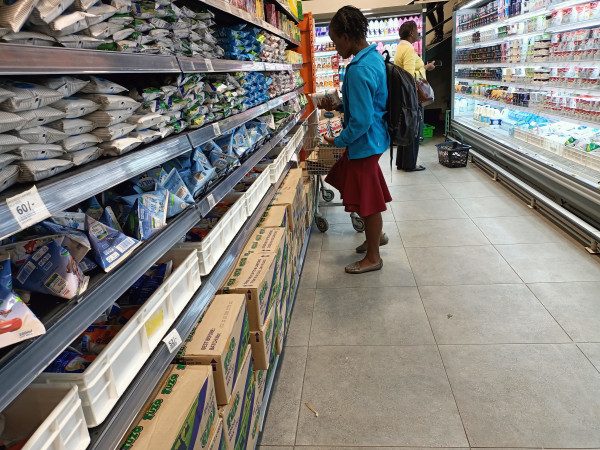
Until that happens, the country can continue recording billions of litres in annual milk production while consumers face a very different reality: higher prices and empty supermarket shelves.