An eight-year-old girl has been rescued in Dandora, Nairobi, after her 32-year-old mother was allegedly caught subjecting her to female genital mutilation (FGM) using a surgical blade.
According to DCI statement on October 8, 2026, the incident occurred in Dandora Phase 2 Estate after neighbours reportedly raised the alarm and confronted the woman as she allegedly carried out the act on her daughter.
Police officers from Dandora Police Station, accompanied by the Sub-County Children Officer, responded to the scene and confirmed the incident.
The suspect, who had reportedly been restrained by members of the public, was handed over to police for further investigations.
Girl taken to hospital
The traumatised girl was immediately rescued and taken to Dandora Phase 3 Health Centre, where she received medical attention.
She was later discharged in stable condition and placed in a safe home as investigations continued and measures were taken to protect her from further harm.
The suspect is being held at Dandora Police Station and is expected to face charges under the Prohibition of FGM Act, 2011, alongside charges relating to cruelty to a child under the Children Act.
Police said investigations were ongoing before the suspect is presented in court.
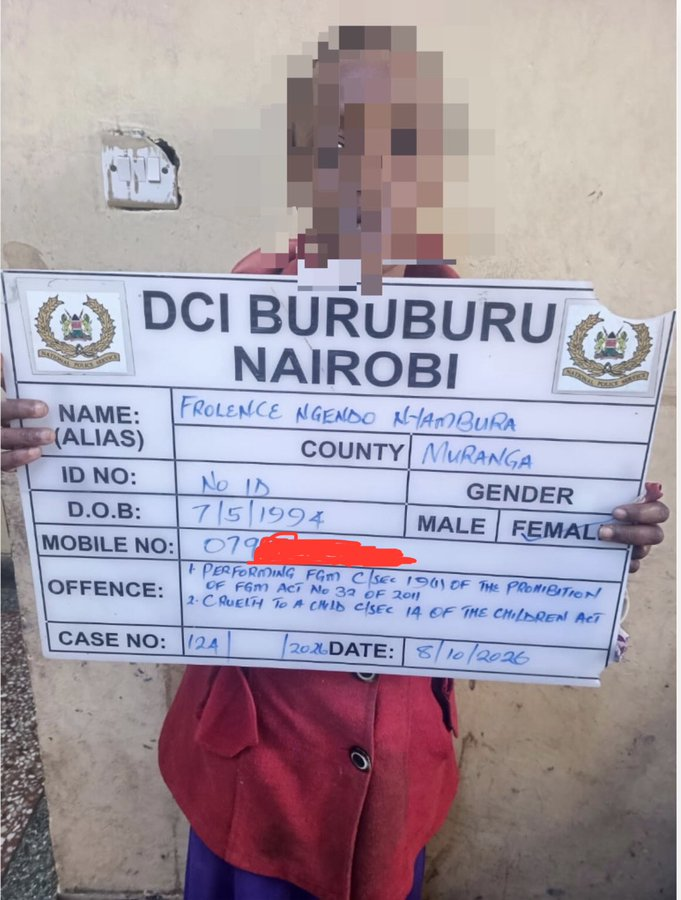
The National Police Service urged members of the public to report suspected cases of FGM and other forms of child abuse to authorities.
4.5 million girls at risk of FGM in 2026
The incident comes amid renewed concerns over the continued threat posed by FGM, particularly to girls in vulnerable communities.
The World Health Organisation (WHO) estimates that at least 4.5 million girls are at risk of undergoing FGM in 2026, with many of those at risk being under the age of five.
“Did you know? This year alone, 4.5 million girls — many under the age of five — are at risk of undergoing female genital mutilation (FGM),” WHO said in February 2026.

The global health agency described FGM as a severe violation of human rights, warning that it can cause lifelong physical and emotional harm.
WHO estimates that more than 230 million girls and women globally are living with the consequences of FGM.
FGM refers to procedures involving the partial or total removal of the external female genitalia or other injury to female genital organs for non-medical reasons.
The practice has no health benefits and can cause severe bleeding, problems urinating, infections, cysts and menstrual complications.
Women who have undergone FGM can also face complications during childbirth, while the practice has been associated with an increased risk of newborn deaths.
The Nairobi incident highlights the continued need for vigilance and early intervention by families, communities and authorities to protect children from the practice.