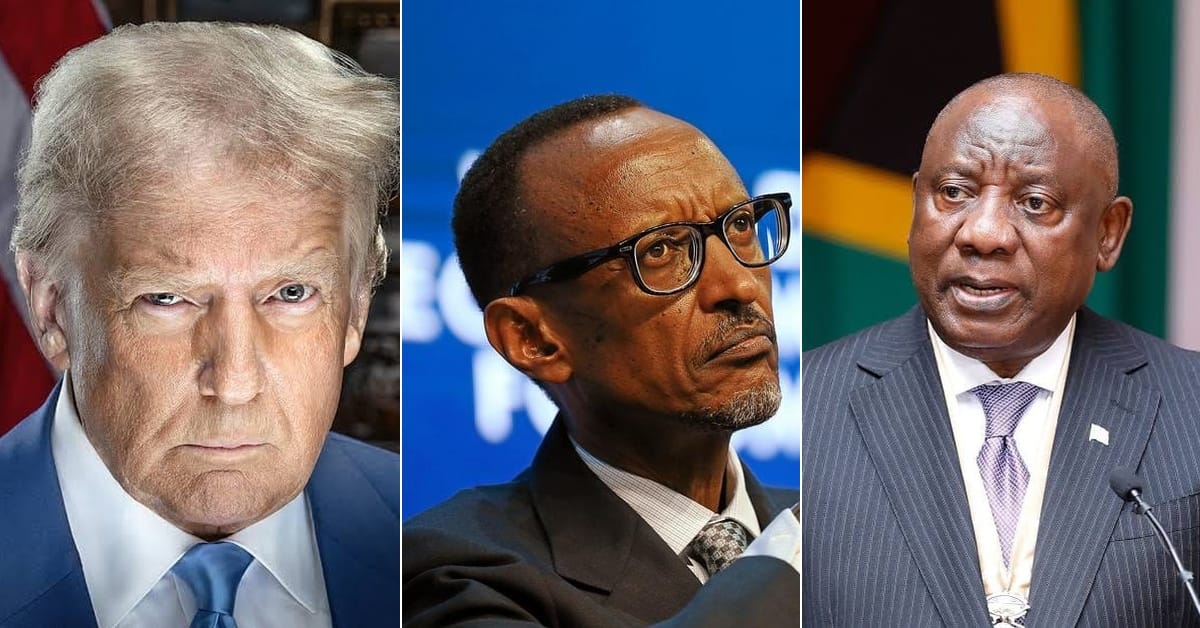
US President Donald Trump has moved to remove Rwanda and South Africa from the African Growth and Opportunity Act (AGOA), escalating tensions with two influential African governments and raising questions about the future of US-Africa trade relations.
US Trade Representative Jamieson Greer announced on November 2 that Trump had notified Congress of his intention to terminate the two countries’ eligibility from January 1, 2027.
AGOA allows eligible sub-Saharan African countries to export thousands of products to the United States duty-free. The programme, established in 2000, is designed to promote trade, investment and economic development.
Washington said an annual review found that Rwanda and South Africa were engaging in practices inconsistent with the programme’s eligibility requirements, citing trade barriers, investment restrictions and concerns involving American national security and foreign policy.
“The Trump administration is working to ensure our African partners take the necessary steps to meet the eligibility criteria,” Greer said.
The decision comes amid strained relations between Washington and both countries, although the underlying disputes are different.
For Rwanda, the latest move adds economic pressure to an escalating confrontation over the conflict in eastern Democratic Republic of Congo (DRC). For South Africa, it deepens disagreements over trade, domestic policies and international diplomacy.
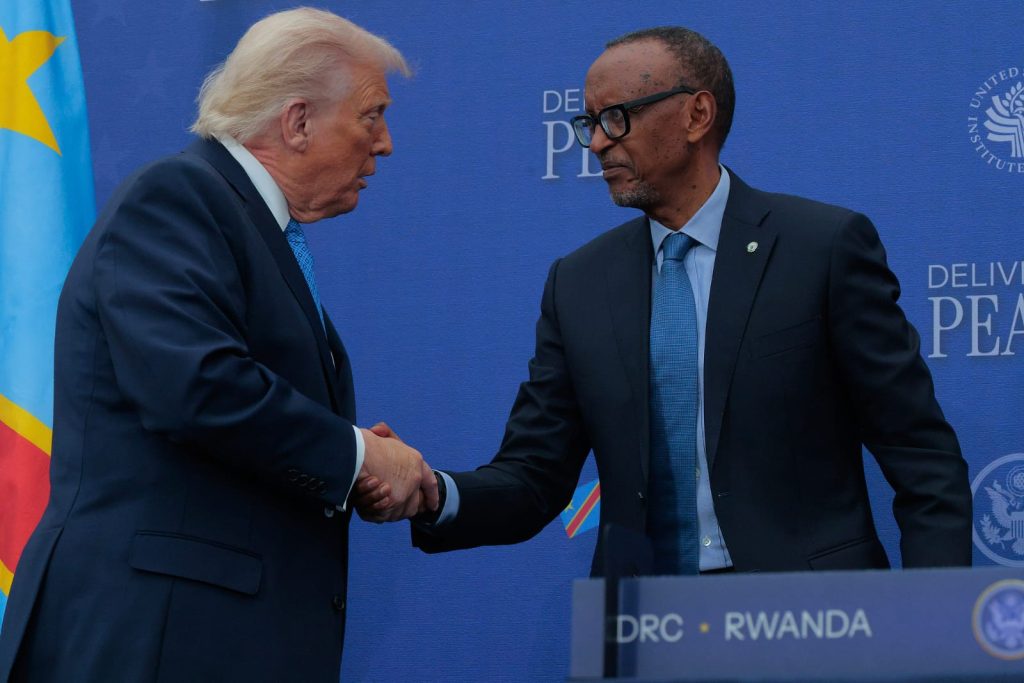
Rwanda: AGOA pressure compounds eastern Congo dispute
For President Paul Kagame’s government, the threatened loss of preferential trade access comes barely a week after Washington imposed sanctions on Rwanda’s Ministry of Defence over its alleged involvement in the eastern DRC conflict.
On October 28, the US Treasury accused Rwanda’s defence establishment of directing thousands of troops into eastern Congo to support the March 23 Movement (M23), providing weapons, equipment, logistics and training.
Washington also accused Kigali of undermining the December 2025 Washington Accords, signed by Rwanda and the DRC to establish a framework for ending the conflict.
Rwanda disputes the allegations, arguing that its security concerns are linked to the continued presence of the Democratic Forces for the Liberation of Rwanda (FDLR), an armed group rooted in the aftermath of the 1994 Genocide against the Tutsi.
Rwandan government spokesperson Yolande Makolo has maintained that Kigali remains committed to the Washington Accords but insists that the DRC must also fulfil its security obligations.
The latest AGOA decision adds another dimension to the diplomatic confrontation. Washington has also cited concerns about human rights, political pluralism, the rule of law and workers’ rights in Rwanda.
Economically, the impact could be more limited than in South Africa because Rwanda has a smaller export relationship with the US and already faces restrictions affecting apparel exports under AGOA.
Nevertheless, the decision could increase uncertainty for investors and exporters as Rwanda seeks to strengthen its position as a regional business, logistics and investment hub.
For Kagame, the challenge is managing American pressure over eastern Congo while protecting Rwanda’s international economic relationships.
South Africa: Trump-Ramaphosa tensions threaten exporters
South Africa faces potentially greater direct economic exposure because it has been one of AGOA’s largest beneficiaries.
Its exports to the US include automotive products, citrus fruit, wine and manufactured goods. According to Reuters, South Africa exported approximately $1.7 billion worth of goods to the American market under AGOA in 2025.
Losing preferential access could increase costs for exporters, potentially affecting manufacturers, farmers, supply chains and jobs.
South African Trade, Industry and Competition Minister Parks Tau described the decision as “unfortunate”, arguing that Washington was raising new issues that had not featured in trade negotiations between the countries, which began in 2025.
“We will continue to accelerate the diversification of South Africa’s export markets to protect jobs,” Tau said.
However, US Ambassador to South Africa Leo Brent Bozell III defended Washington’s position, blaming Pretoria for the outcome.
“This was a predictable and preventable outcome resulting from the rejection by South Africa’s government of real concerns raised by the US,” he wrote on X.
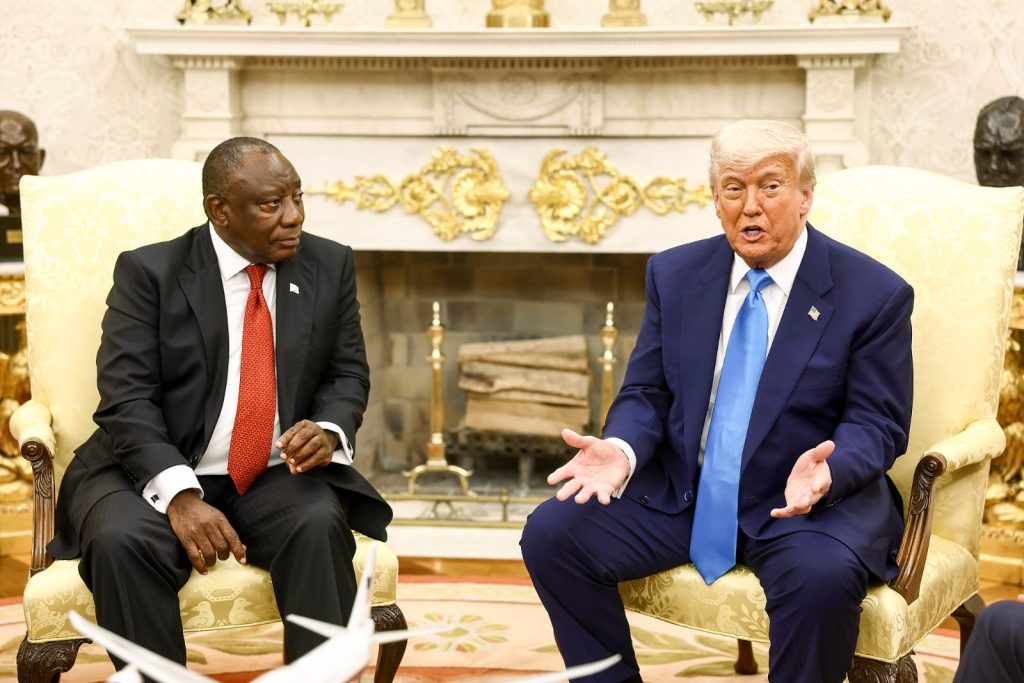
The disagreement reflects wider tensions between Trump and South African President Cyril Ramaphosa.
Relations deteriorated further after Trump accused South Africa of white genocide during Ramaphosa’s 2025 White House visit, an allegation Pretoria rejected. Washington has also criticised South Africa’s land reform policies, affirmative action and foreign policy positions, including its genocide case against Israel at the International Court of Justice.
Pretoria maintains that its foreign policy is guided by international law and its constitutional principles.
The AGOA dispute therefore represents more than a disagreement over tariffs. It exposes competing views about economic partnership, national sovereignty and Washington’s expectations of African governments.
Could China benefit from US-Africa trade tensions?
The proposed exclusions could encourage both countries to accelerate trade diversification.
China is already an important commercial partner for Rwanda and South Africa, while the European Union, India and African markets offer additional opportunities.
South Africa could deepen its commercial relationships through BRICS, while Rwanda could strengthen regional trade through the East African Community and the African Continental Free Trade Area (AfCFTA).
However, replacing access to the American market will not be straightforward. Alternative markets have different consumer demands, tariff arrangements and regulatory requirements.
Importantly, AGOA removal does not mean that Rwandan or South African products will be banned from entering the United States. They can still be exported under applicable ordinary tariff arrangements, potentially at higher costs.
There is also uncertainty over AGOA’s future because its current congressional authorisation runs only until December 31, 2026. Congress must decide whether to renew or revise the programme.
What happens next?
For Pretoria, the immediate priority will be protecting export industries, maintaining negotiations with Washington and finding alternative markets.
For Kigali, the dispute is likely to remain closely connected to developments in eastern Congo and implementation of the Washington Accords.
The two governments may continue diplomatic engagement in an effort to address Washington’s concerns, although the issues involved extend well beyond conventional trade negotiations.
Ultimately, Trump’s AGOA decision highlights a changing US-Africa relationship in which trade preferences are increasingly intertwined with security, governance and foreign policy.
For Rwanda, the challenge is navigating American pressure over eastern Congo. For South Africa, it is balancing access to the US market with its domestic and foreign policy independence.
The wider question is whether Washington’s economic pressure will produce policy changes in Kigali and Pretoria or accelerate their efforts to diversify away from American markets.