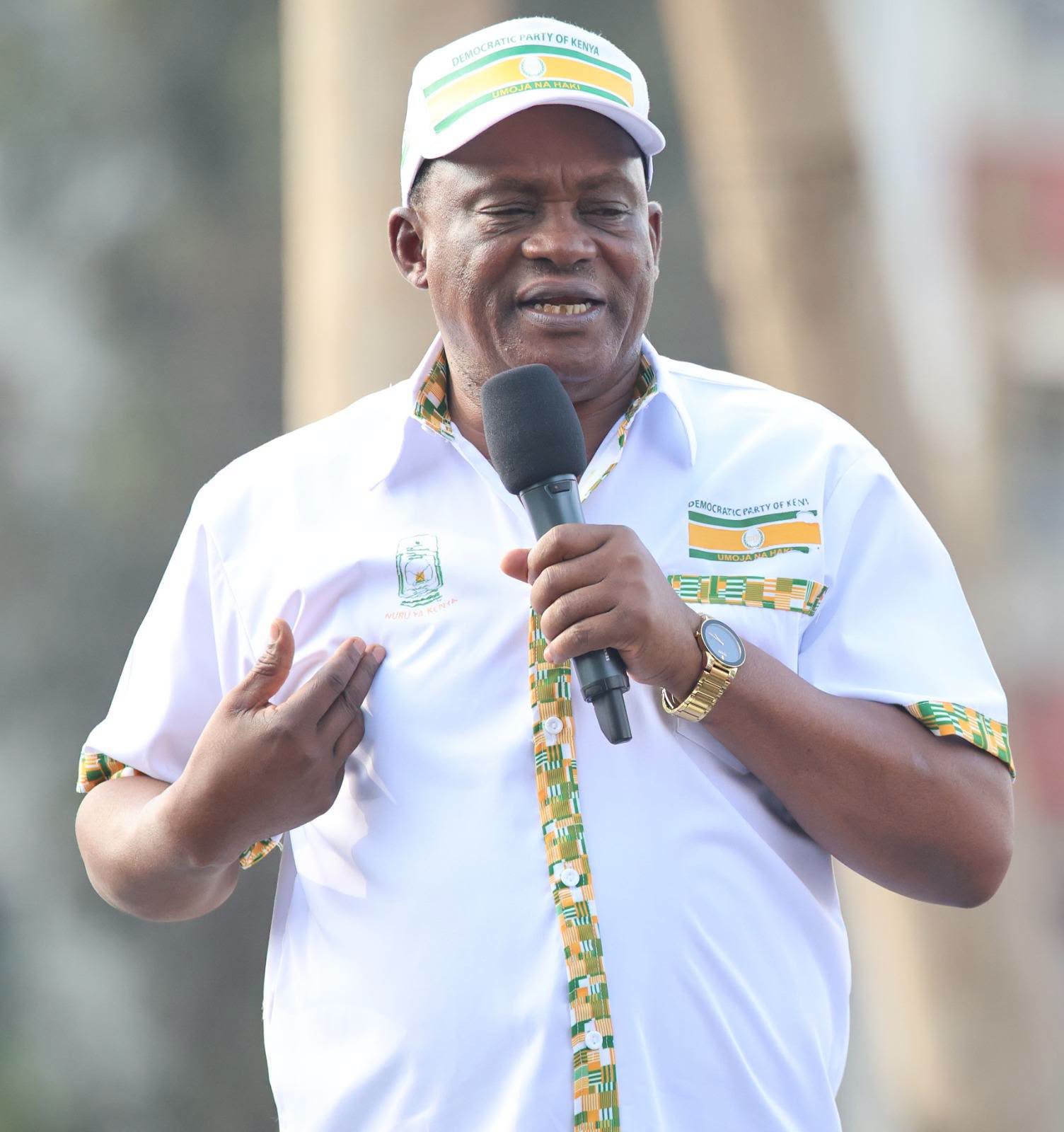
Democratic Party leader Justin Muturi has accused former Deputy President Rigathi Gachagua of political bullying and intimidation, warning that his approach to coalition-building could undermine efforts to unite the opposition ahead of the 2027 General Election.
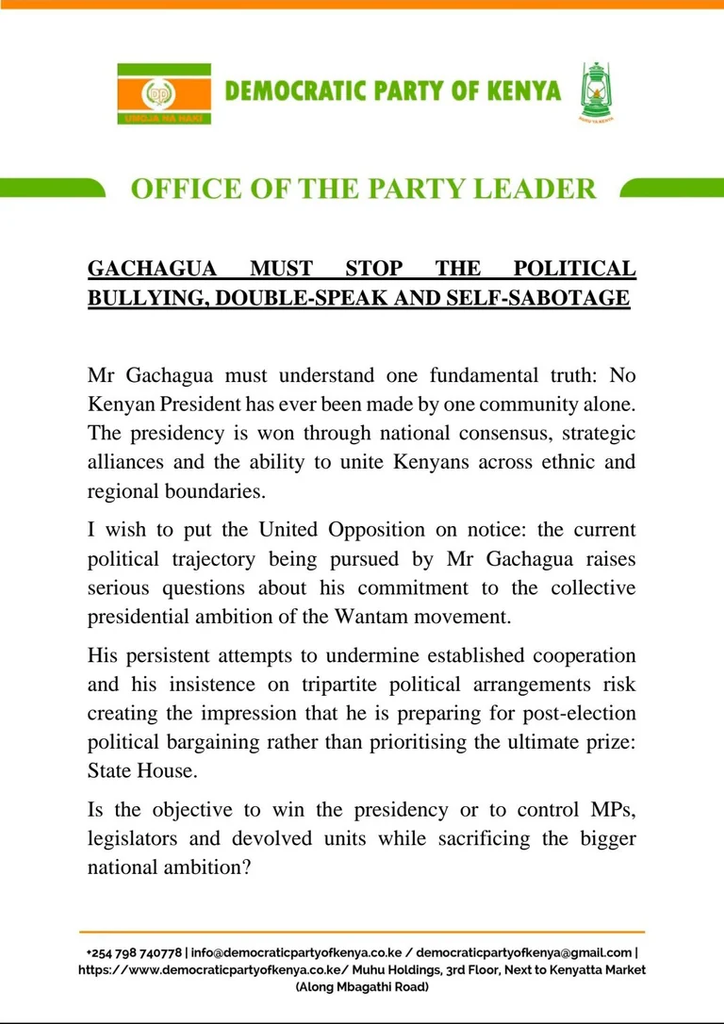
In a statement issued on Monday, November 2, 2026, Muturi challenged Gachagua to clarify whether he was committed to the opposition’s collective presidential ambitions or more interested in controlling parliamentary and county-level political positions.
He argued that no individual or community could claim ownership of the opposition or assume it had a monopoly on the presidency, saying a national election required broad alliances and support across the country.
“Mr Gachagua must understand one fundamental truth: No Kenyan President has ever been made by one community alone. The presidency is won through national consensus, strategic alliances and the ability to unite Kenyans across ethnic and regional boundaries,” Muturi said.
He questioned whether opposition leaders were prioritising the race for State House or competing for control of other elective positions.
“Is the objective to win the presidency or to control MPs, legislators and devolved units while sacrificing the bigger national ambition?” he posed.
Muturi challenges Gachagua over tripartite plan
He said coalition-building required consultation, compromise and respect for partner parties rather than ultimatums or attempts by individual leaders to dictate the terms of engagement.
“A tripartite arrangement is not a magic formula for State House. Fragmenting an opposition that needs unity raises serious questions about the political direction being pursued,” he said.
The Democratic Party leader insisted that no single politician should dominate coalition negotiations or determine the political direction of other parties.
“Let it be clear: No individual owns the United Opposition, and no community has a monopoly on Kenya’s presidency. Political partnerships must be built on mutual respect, not ultimatums, political bullying or supremacy contests,” he added.
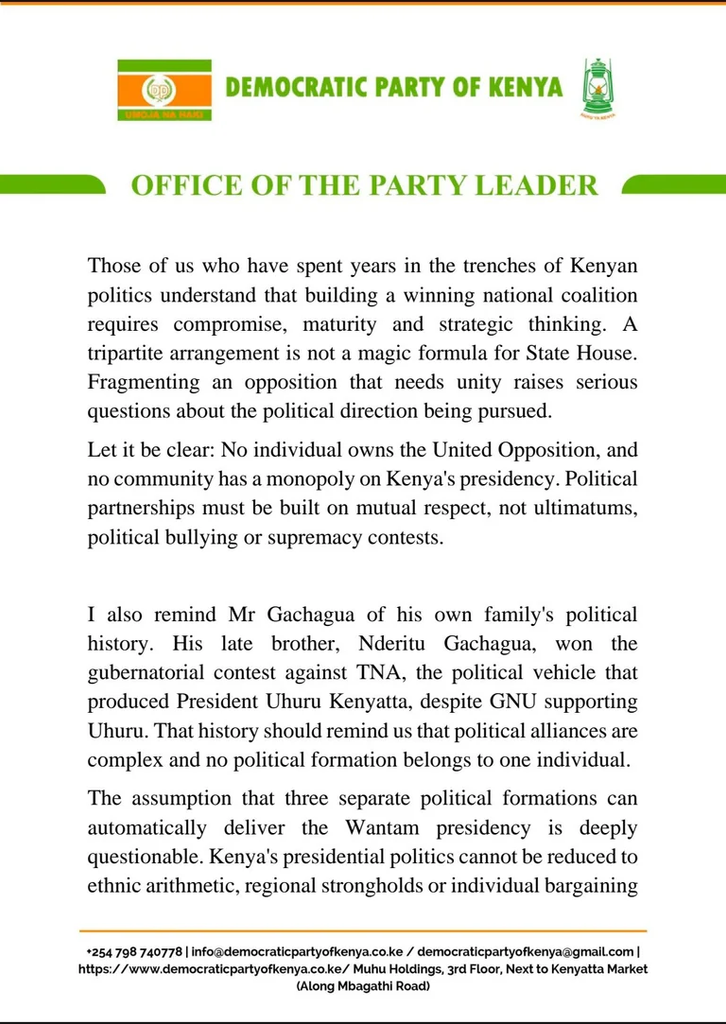
Muturi also invoked the political history of Gachagua’s late brother, former Nyeri Governor Nderitu Gachagua, recalling that he won the gubernatorial contest against TNA despite GNU’s support for former President Uhuru Kenyatta’s political formation at the time.
He cited the contest as an example of how political alliances do not guarantee permanent control of a region’s support.
Dispute over DCP and smaller opposition parties
The latest exchange comes amid disagreements over the organisation of opposition parties and their participation in a possible coalition against President William Ruto.
The leaders argued that opposition cooperation should not require parties to surrender their identities or independence. They called for partnerships based on equality, trust and mutual respect.
Gachagua, meanwhile, had argued that parties seeking a place in opposition negotiations should demonstrate their grassroots strength and presented DCP as a vehicle capable of fielding candidates across the country.
The disagreement has exposed differences over how smaller parties should participate in coalition negotiations and whether they should retain independent political structures.
Muturi and his allies have maintained that their criticism does not amount to abandoning opposition cooperation.
Gachagua, Kalonzo pursue opposition unity
The dispute comes as opposition leaders face pressure to agree on a joint strategy and a process for selecting a presidential candidate ahead of the August 10, 2027 General Election.
Following the meeting, the two leaders reiterated their commitment to supporting one presidential candidate. Gachagua said the opposition would make the necessary sacrifices to agree on a single flagbearer.
The engagement followed another meeting involving Gachagua and Nairobi Senator Edwin Sifuna, whose Linda Mwananchi movement has also been engaging opposition figures.
The discussions have brought into focus several unresolved questions within the opposition: how to select a presidential candidate, how political responsibilities should be shared and how parties can accommodate competing ambitions without weakening their cooperation.