A police CCTV surveillance network covering Nairobi’s central business district was not operational when protester Rex Kanyike Masai was shot during demonstrations against Kenya’s Finance Bill in June 2024, an inquest has heard.
Andrew Limo, a senior police officer, told the court that National Police Service (NPS) surveillance cameras were not functioning on June 20, 2024, when Masai was fatally wounded.
The disclosure is significant because investigators have struggled to establish exactly where Masai was shot and reconstruct the events surrounding his death. It has also left private CCTV recordings as an important source of evidence in an inquiry examining whether police used unlawful or excessive force.
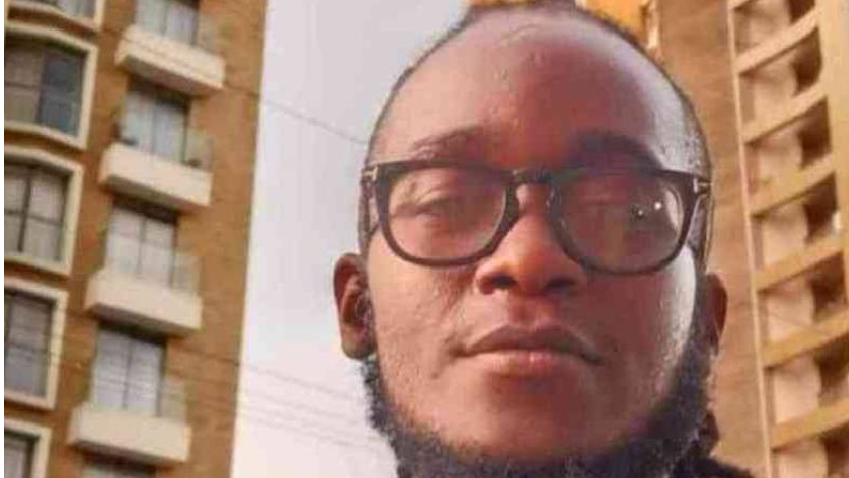
Masai, 24, was shot during protests in Nairobi on June 20, 2024. He was taken to Bliss Healthcare Centre, where he died from blood loss.
The inquest is seeking to establish the circumstances of his death, including who fired the shot that killed him.
Police surveillance unavailable
Limo’s evidence adds to previous testimony about difficulties investigators faced in obtaining CCTV footage from Nairobi’s CBD.
The court has heard that the surveillance system at Jogoo House was also unavailable because of a faulty fibre connection linking the building to other surveillance points and roads.
The loss of police footage has become particularly important because investigators have examined several possible locations where Masai may have been shot, including Moi Avenue, Kenyatta Avenue, Parliament Road, City Hall Way, Standard Street and Harambee Avenue.
Investigators interviewed security guards and other witnesses in an effort to determine the precise location of the shooting, but the absence of functioning police surveillance has complicated that reconstruction.
The evidence does not establish that the CCTV failure was deliberate, nor does it by itself determine who shot Masai.
But it raises questions about how investigators were able to reconstruct a fatal shooting in the middle of a heavily monitored part of Nairobi when the police network was unavailable.
Private CCTV becomes key evidence
Investigators subsequently obtained footage from private premises, including Absa Bank along Mama Ngina Street.
In March 2026, Independent Policing Oversight Authority (IPOA) forensic investigator Joshua Mutua told the court that the Absa footage was authentic and had not been altered.
“The footage has in no way been modified, altered or interfered with,” Mutua told the court.
The footage covered events around the time of the shooting and was analysed using forensic video investigation tools, the court heard.
According to Mutua, the recording showed a group of people moving along the street before a man moved towards the crowd and gunfire was discharged at about 7.11 pm.
Mutua also testified that photographs and videos taken earlier during the protests showed a man wearing a black cap, black shirt, blue jeans and white sports shoes, while carrying what appeared to be police communication equipment and a riot baton.
“After examination of the photos and videos, I formed the opinion that the same man appears in all the photos and videos,” Mutua said.
The testimony is significant but does not, by itself, establish that the person seen firing in the Absa footage fired the bullet that killed Masai.
Identity remains contested
The identity of the man captured in the evidence has also been disputed.
Police Constable Isaiah Murangiri Ndumba has previously denied being the person shown in photographs and videos presented to the court. He told the inquest that he was not the man depicted in the images.
That dispute is likely to remain central as the court considers the photographic, video, witness and forensic evidence.
The Absa footage nevertheless gives investigators a recorded sequence of events that was unavailable from the police CCTV network.
The court heard that the Absa footage covered the period from 7 pm to 7.17 pm on June 20, providing investigators with material they could use to track movements around the time of the shooting.
For Masai’s family and the wider public, the CCTV gap leaves a crucial question unanswered: what happened in the moments between the protest and the fatal shooting, and why was the state’s own surveillance network unable to provide a record?
The inquest continues, with the court expected to weigh the available CCTV, photographic, forensic and witness evidence as it seeks to determine what happened to Masai and whether any police officer acted unlawfully.