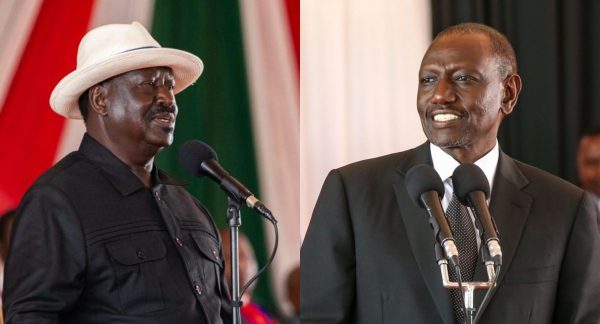
Former Prime Minister Raila Odinga believed President William Ruto was sincere in their unlikely political partnership, Energy and Petroleum Cabinet Secretary Opiyo Wandayi has revealed, offering a rare glimpse into why the veteran opposition leader embraced a relationship with his longtime political rival.
Wandayi said Odinga had personally told him that, after decades of political alliances and collaborations, he regarded his relationship with Ruto differently.
“He told me many times that for the first time he has seen sincerity,” Wandayi said on Wednesday, October 7, 2026, during the handover and dedication of the Raila Odinga Mausoleum at Kang’o Ka Jaramogi in Bondo.
According to Wandayi, Odinga did not regard the partnership with Ruto as another short-lived political arrangement. Instead, he believed the President had approached their relationship with genuine intentions.
“He told me that he has been in very many political associations, political alliances, political collaborations, but this one that he has with you is genuine, and I believed him,” Wandayi said.
The revelation offers an insight into the thinking behind one of Kenya’s most consequential political realignments. Ruto and Odinga had spent years as fierce political opponents, including during the 2022 presidential contest, before their relationship shifted towards dialogue and cooperation.
That rapprochement eventually produced the National Dialogue Committee (NADCO) process and a broader political agreement covering a 10-point reform agenda.
For Wandayi, however, the relationship was rooted in more than political arithmetic.
“He was genuine in his friendship with you, Your Excellency,” Wandayi told Ruto.
The NADCO gimmicks
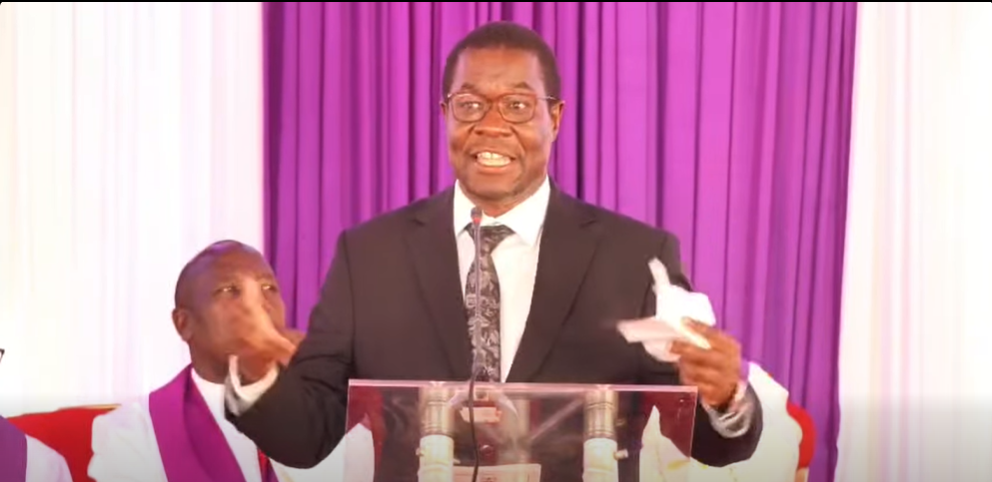
The Energy CS also recalled his own involvement in the NADCO process, saying he and Dr Adams Oloo insisted that a report be produced despite the walkout of one of the members.
“I and Dr. Adams Oloo here, we insisted that we have to find a report,” Wandayi said.
The NADCO process was established after the political tensions and protests that followed the 2022 election. Its recommendations addressed issues including electoral reforms, governance, the cost of living, political parties and institutional reforms. Parliament adopted the NADCO report in February 2024.
The subsequent implementation of the reforms, however, exposed the political fault lines surrounding the Ruto-Odinga understanding. ODM Secretary-General Edwin Sifuna emerged as one of the most persistent critics of the implementation process, arguing that key commitments had not been delivered.
In February 2026, Sifuna accused the committee overseeing the 10-point agenda and NADCO implementation of making little progress and demanded that it produce its final report by March 7. He also said the deadline could not simply be extended.

The disagreement deepened in March after the committee presented its assessment of implementation. The committee said progress had been made, while Sifuna and a faction of ODM leaders rejected the assessment and accused the government of failing to honour commitments made under the Ruto-Odinga agreement.
Sifuna has also insisted that the political agreement should not be interpreted as an automatic commitment by ODM to support Ruto in the 2027 election, drawing a distinction between the dialogue process and the party’s future electoral position.
That unresolved dispute now forms part of the complicated legacy of Raila’s final political partnership: the former opposition leader, according to Wandayi, believed Ruto had demonstrated a sincerity he had not encountered in previous alliances, while some of his political allies later questioned whether the commitments arising from that relationship were being honoured.
Wandayi nevertheless presented Raila’s decision as one grounded in his belief in Kenya rather than ordinary political convenience.
“The fact is that today we are celebrating the life of a serious nationalist, a nationalist that truly believes in Kenya,” he said.