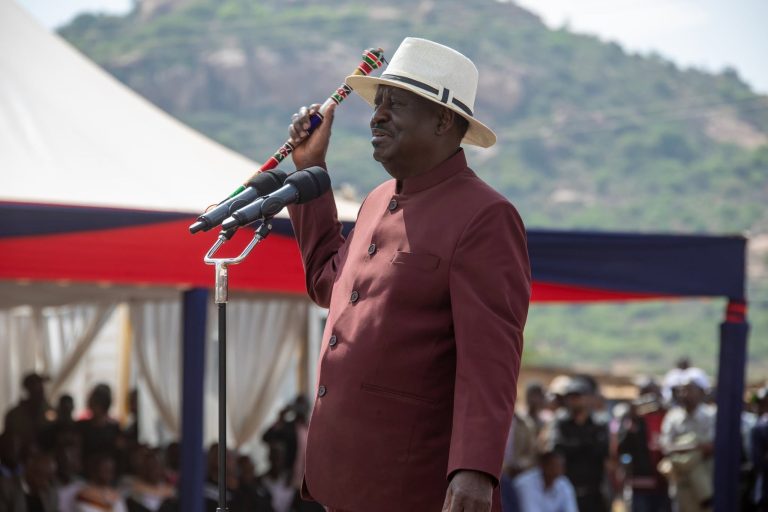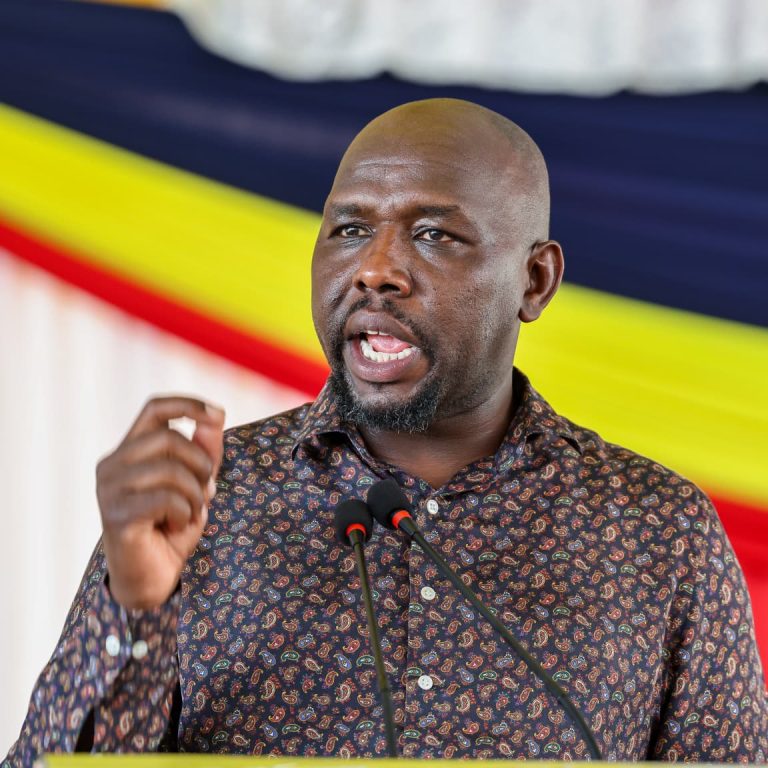
Former Interior Cabinet Secretary Fred Matiang’i has challenged President William Ruto’s foreign-policy record, arguing that Kenya’s treatment of political opponents from neighbouring countries does not always reflect the democratic values Nairobi promotes abroad.
Matiang’i spoke at the burial of Mwalimu Jackson Karua in Gichugu, Kirinyaga County, on Saturday, October 3, 2026, in the presence of retired President Uhuru Kenyatta.
His remarks come as Ruto seeks to project Kenya as a leading Pan-African voice, defender of the rule of law and advocate for stronger African representation in global institutions.
Matiang’i recalled his time as Interior Cabinet Secretary under Kenyatta, saying the former president resisted pressure to arrest opposition figures from neighbouring countries who visited Kenya.
“When President Kenyatta was in office, and I had the privilege of serving as his Minister for Interior, hawa viongozi wa CHADEMA wakati mwingine, tulisukumwa sana na serikali wakati huo, kukamata wengine wakati wanakuja matibabu na vitu vingine,” Matiang’i said.

He said Kenyatta rejected the idea of detaining foreign political leaders because of their political views.
“Mimi Mheshimiwa Rais, hata hawa kama hawajakushukuru, nataka kukushukuru for standing firm kusema ushenzi kama huo hatuwezi kufanya, kukamata majirani wetu kwa maneno sisi hatuelewi,” he said.
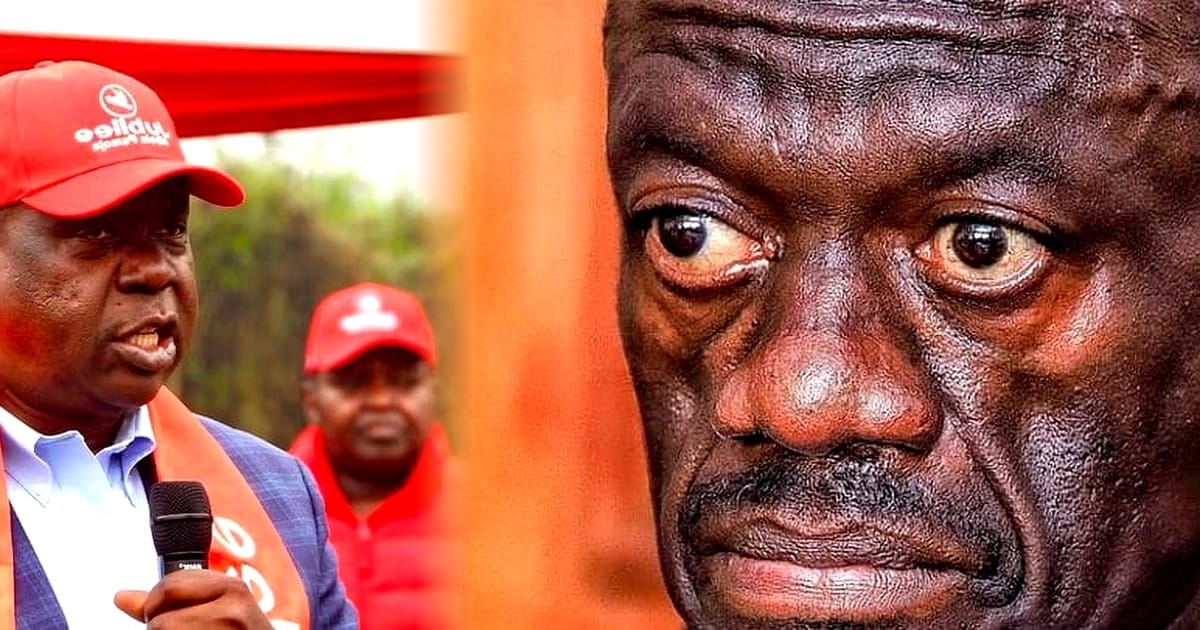
Matiang’i then invoked the controversial case of Ugandan opposition leader Kizza Besigye.
“Ukiona vile kama Kissa Besigye alishikwa na kupelekwa huko, hiyo sio matakwa ya Wakenya. Kenyans don’t believe like that. Hiyo sio Wakenya wanataka wenzetu wadhulumiwa namna hiyo,” he said.
Besigye disappeared in Nairobi in November 2024 while visiting Kenya and later appeared before a Ugandan military court. Kenya said it was investigating the circumstances of his disappearance and denied authorising his transfer, while Uganda said it had been in contact with Kenya over the arrest.
For Matiang’i, the episode raises a broader question about Kenya’s democratic identity and its responsibilities towards political actors from neighbouring states.

Ruto’s Pan-African message
The criticism comes against the backdrop of Ruto’s strong Pan-African foreign-policy messaging.
Addressing the Pan-African Parliament in 2023, Ruto said: “It is the people who decide their leaders and we must continue to defer to them.”
He has also linked Pan-Africanism to African sovereignty.
“The Pan-African movement has always been about sovereignty,” Ruto said in 2023.
His administration has similarly presented Kenya as a champion of peace, regional cooperation, multilateralism and the rule of law.
Matiang’i’s argument, however, puts Kenya’s domestic and regional conduct at the centre of that narrative. The question is whether Nairobi’s democratic principles are applied consistently when dealing with political figures from neighbouring countries.
Burundi tests regional diplomacy
Kenya’s relationship with Burundi has provided another test.
In September 2026, Ruto directed authorities to close businesses operated by foreign traders without the required work permits after protests by Kenyan traders.
The enforcement operation caused concern among Burundians living and working in Kenya, with hundreds seeking travel documents at the Burundian embassy amid fears of possible deportations.
Kenya later announced an amnesty giving undocumented East African nationals time to regularise their status. The government also said it had zero tolerance for xenophobia and harassment.
Officials maintained that the measures were aimed at enforcing immigration and work-permit laws rather than targeting specific nationalities.
Even so, the episode demonstrated how domestic economic and political pressures can quickly develop into regional diplomatic problems.
Sudan complicates Kenya’s mediator role
Kenya’s handling of Sudan has presented another challenge to its diplomatic image.
In February 2025, Nairobi hosted senior representatives of Sudan’s Rapid Support Forces as the paramilitary group pursued plans for a rival government.
Sudan’s army-backed authorities condemned the meeting, while Kenya defended its role as a facilitator of dialogue.
The controversy created a difficult balancing act for Nairobi, which has also sought recognition as a mediator in Sudan’s conflict.
Professor Macharia Munene criticised the approach, arguing that Kenya’s foreign policy was increasingly shaped by the President’s personal diplomacy and warning that Nairobi risked damaging its traditional diplomatic standing.
The episode raised a fundamental question about Kenya’s mediation efforts: can Nairobi remain a trusted intermediary if one side believes it has offered political space and legitimacy to its rival?
Ruto’s UN push
The debate is significant because Ruto has made reform of global institutions a major part of Kenya’s foreign-policy agenda.
Kenya supports the African Union position that the continent should have permanent representation on the United Nations Security Council.
“Africa cannot be permanently excluded from permanent representation on the Security Council,” Ruto has said.
His campaign reflects a wider argument that African countries deserve a greater voice in decisions affecting global peace and security.
But that ambition also places Kenya’s own diplomatic conduct under greater scrutiny.
A country demanding a stronger African voice in global institutions must also demonstrate that its treatment of African neighbours and political actors reflects the democratic principles it advocates internationally.
Haiti and Kenya’s global role
Ruto has further sought to demonstrate Kenya’s international responsibilities through its participation in the UN-backed multinational security mission in Haiti.
“We have undertaken this mission owing to our strong commitment to Pan-Africanism,” Ruto said while announcing Kenya’s participation.
The mission has nevertheless faced operational, financial and logistical challenges, highlighting the difficulties of matching Kenya’s diplomatic ambitions with the capacity to deliver on international commitments.
None of these episodes, taken individually, proves that Kenya has abandoned Pan-Africanism or multilateral diplomacy. Nor does Matiang’i’s criticism establish that Nairobi was responsible for Besigye’s transfer to Uganda.
What his intervention does is sharpen a political debate over the consistency of Kenya’s foreign policy.
Ruto wants Kenya to speak more forcefully for Africa, defend a rules-based international order and campaign for greater African representation in global institutions.
Matiang’i is effectively asking whether those principles are being upheld closer to home.
His reference to Kenyatta’s treatment of neighbouring opposition figures, followed by his invocation of Besigye, gives that challenge a particularly pointed regional dimension.
For Ruto, the test is therefore not only whether Kenya can persuade the world that Africa deserves a bigger seat at the table.
It is whether Nairobi’s conduct towards its neighbours, political opponents and regional conflicts strengthens, or weakens, the democratic, Pan-African and rule-of-law principles it champions abroad.