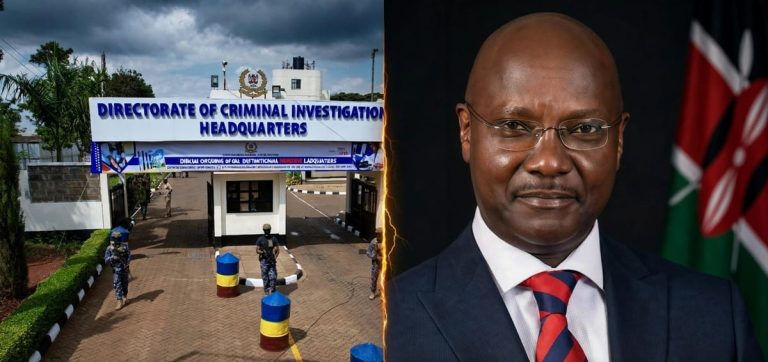

Kenya’s fight against human trafficking is facing questions over the enforcement of its laws after a new US report highlighted alleged recruitment networks sending Kenyans to Russia, a sharp decline in convictions and concerns about the involvement of public officials.
The 2026 Trafficking in Persons Report by the US Department of State found that Kenya made progress in identifying trafficking victims and helping survivors return home, but weaknesses in prosecution and accountability continued to undermine its response.
One of the report’s most serious findings concerns more than 1,000 Kenyan men allegedly recruited to fight for Russia after being promised civilian employment.
“Officials reported some Kenyan officials colluded with recruitment agencies and government officials from Russia to facilitate the fraudulent recruitment of more than 1,000 Kenyan men to fight for the Russian military in the Russia-Ukraine war,” the report stated.
The findings raise five questions about the recruitment of Kenyans abroad, the handling of trafficking cases and the government’s efforts to protect vulnerable workers.

Who facilitated recruitment to Russia?
The report said some Kenyan men travelled abroad expecting to secure well-paid jobs in security or construction before allegedly being pressured into signing contracts with Russia’s Ministry of Defence.
It also highlighted reports of young African women, including Kenyans aged between 18 and 22, who were recruited under the promise of vocational training but subsequently placed in Russian military drone production facilities.
According to the report, media organisations and non-governmental organisations documented concerns about hazardous working environments, surveillance, unpaid or disputed wages, working-hour violations and changes to employment contracts.
Workers were also reportedly required to pay recruitment fees, practices the report identified as indicators of potential trafficking and labour exploitation.

However, the document does not identify all the officials allegedly involved or establish the final outcome of investigations into the recruitment arrangements.
This leaves questions about the individuals and agencies that organised the recruitment, the evidence gathered by Kenyan investigators and whether those suspected of wrongdoing have faced prosecution.
Why did convictions decline?
Kenya recorded six convictions under the Counter-Trafficking in Persons Act of 2010 in 2025, compared with 21 the previous year.
The number of investigations remained broadly stable, rising from 42 in 2024 to 43 in 2025. Prosecutions, however, dropped from 44 to 14.
“The government decreased anti-trafficking law enforcement efforts,” the report stated.
Of the six people convicted, five were found guilty of sex trafficking and one of labour trafficking.
Two sex traffickers received 30-year prison terms, while three others were sentenced to 20 years. The person convicted of labour trafficking received a 10-year sentence.
The figures raise questions about the ability of investigators and prosecutors to turn reported trafficking offences into successful court cases.
The report does not explain the decline through a single cause, and the annual figures alone cannot establish why fewer convictions were recorded.
It nevertheless identifies corruption and official complicity as persistent obstacles to enforcement.
Have implicated officials faced action?
The report disclosed that the government investigated three Ministry of Labour officials over allegations that they accepted bribes to facilitate potential trafficking crimes involving migrant workers travelling to the Middle East.
It also raised concerns about recruitment agencies reportedly owned by government employees and allegedly involved in trafficking offences.
According to the report, authorities had not reported action against these agencies. It further noted that some cases were handled through lesser offences, such as operating an unregistered recruitment company.
The findings put the spotlight on the oversight of recruitment firms that connect Kenyan job seekers with foreign employers.

Investigators must establish whether recruiters used deception or coercion to exploit workers, while regulators must determine whether agencies complied with licensing requirements.
The report does not establish the guilt of the officials or agencies mentioned in its findings.
Clarification is needed on the outcomes of the three officials’ investigations and whether any recruitment agencies have subsequently faced suspension, prosecution or other sanctions.
Are trafficking survivors receiving adequate support?
The report recorded an increase in identified victims, with Kenyan authorities identifying 271 people in the latest reporting period, compared with 195 previously.
The victims included 260 people subjected to forced labour and 11 subjected to sex trafficking.
Authorities also identified 1,021 potential victims and referred 44 victims to services, while non-governmental organisations working with the government assisted 483 victims, up from 321.
Despite the progress, access to shelter remained a concern, particularly for adult men returning from exploitation.
“Shelter access for adult male victims was extremely limited,” the report stated.
It noted that some male survivors were sent to homeless shelters while others had nowhere to stay.
Plans to expand the government’s dedicated trafficking shelter to accommodate up to 60 people were delayed by insufficient funding.
The government also allocated KSh9.27 million for direct victim assistance through the National Assistance Trust Fund for Victims of Trafficking, down from KSh20 million in the previous year.
The figures raise questions about whether survivors can access safe accommodation, counselling and other support needed to rebuild their lives and participate in legal proceedings.

Why is the law amendment still pending?
The report also highlighted delays in changing Kenya’s anti-trafficking law to remove the option of imposing a fine instead of imprisonment for sex trafficking.
The proposed amendment had remained unapproved for the fifth consecutive reporting period.
The law provides for penalties ranging from 30 years to life imprisonment, a fine of at least KSh30 million, or both. However, the US report argued that allowing a fine instead of imprisonment for sex trafficking creates a disparity with penalties for other serious crimes, including rape.
The delay raises questions about the progress of the proposed changes and when lawmakers expect to conclude the process.
What the report means for Kenya
Kenya retained its Tier 2 ranking, meaning the US government considers it to be making significant efforts to combat trafficking but not fully meeting the minimum standards for eliminating it.
The report acknowledged improvements in victim identification, assistance and the repatriation of Kenyans exploited in overseas online scam operations, particularly in Southeast Asia.
However, the fall in convictions and concerns about recruitment practices, official complicity and shelter shortages point to continuing enforcement and protection gaps.
The report does not establish that the alleged Russia recruitment network caused the decline in convictions. Its findings instead present several challenges facing Kenya’s broader anti-trafficking response.
The next test will be whether investigations into suspected recruitment networks produce verifiable outcomes and whether increased victim identification is matched by effective prosecutions and sustained support for survivors.