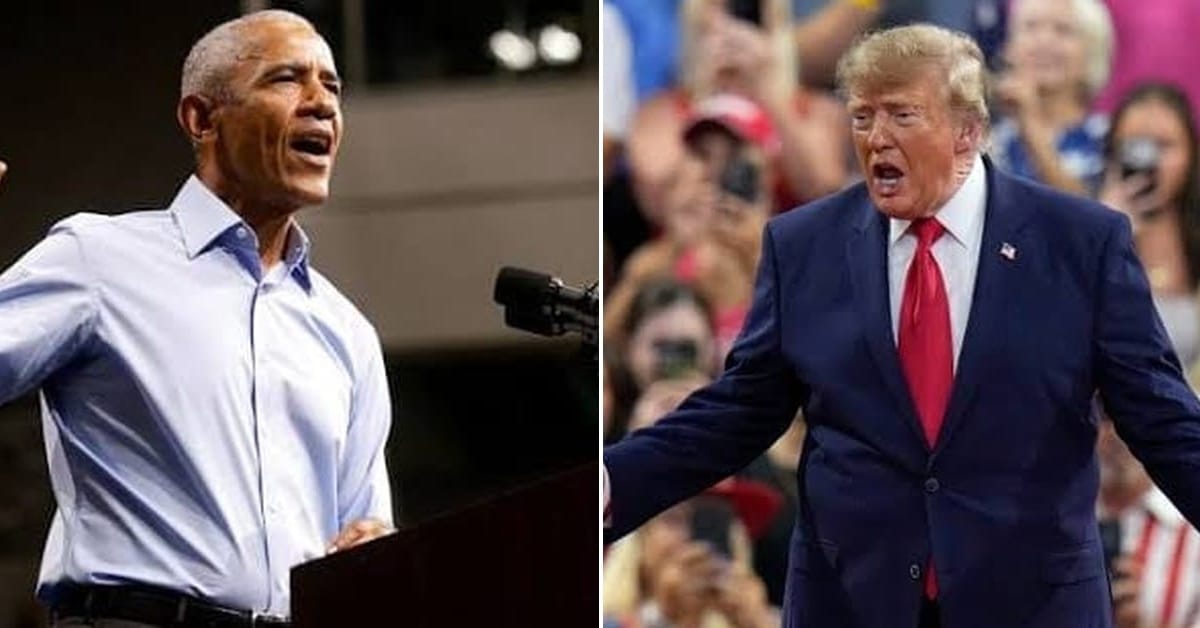
Obama says Trump’s Iran strategy has strengthened Tehran’s leverage over a critical oil shipping route, raising questions about US military objectives, energy security and the November 3 midterm elections.
Former US president Barack Obama has turned President Donald Trump’s war with Iran into a central issue in the final days of the US midterm election campaign, warning that the conflict could carry consequences far beyond the Middle East.
Speaking at Democratic campaign rallies in Ohio and Michigan on October 24, Obama questioned whether Trump’s military strategy had delivered the security benefits his administration promised. He argued that the conflict had increased risks to American forces, disrupted energy markets and strengthened Iran’s ability to threaten one of the world’s most important oil shipping routes.
“Iran now has veto power over the Strait of Hormuz, where oil goes through to get to the world,” Obama said in Cleveland, Ohio.
His warning raises a fundamental geopolitical question: can Washington weaken Iran militarily without leaving Tehran with greater capacity to disrupt international energy supplies?
The November 3 midterm elections will not directly determine whether the war continues. However, the outcome could reshape congressional scrutiny of the conflict, military funding and the political constraints facing Trump’s foreign policy.
How the Strait of Hormuz became a strategic pressure point
The Strait of Hormuz, located between Iran and Oman, connects the Persian Gulf to the Gulf of Oman and the Arabian Sea. It is a critical route for oil and liquefied natural gas shipments from Gulf producers to international markets.
Approximately one-fifth of global oil consumption passed through the strait in 2025, according to the International Energy Agency.
Its importance extends beyond the volume of energy transported. Alternative pipelines can redirect some oil, but they cannot fully replace the strait’s capacity. A prolonged disruption could therefore increase shipping costs, tighten supplies and put upward pressure on global energy prices.
Iran does not need complete control of the waterway to influence markets. Threats to commercial vessels, attacks, mines or sustained insecurity can raise insurance premiums and force shipping companies to reconsider routes.
This is the strategic vulnerability Obama highlighted. Even if US military operations damage Iranian capabilities, they may not eliminate Tehran’s ability to threaten maritime traffic.
His description of Iran having “veto power” is a political characterisation rather than a literal legal authority over the strait. Nevertheless, it illustrates how geography can give a regional power significant leverage over the international economy.
For Washington, the challenge is to translate military operations into lasting security for commercial shipping rather than simply demonstrate the ability to strike Iranian targets.

Obama revives the debate over diplomacy
Obama’s criticism also reopens the debate over the 2015 Iran nuclear agreement his administration negotiated.
The Joint Comprehensive Plan of Action, signed by Iran and six international negotiating partners, imposed restrictions on Iran’s nuclear activities and established monitoring arrangements in exchange for sanctions relief.
Trump withdrew the United States from the agreement in 2018 and subsequently pursued a more confrontational policy towards Tehran.
At the Cleveland rally, Obama defended his diplomatic approach, saying: “I didn’t have to fire a missile to do it. I just had to engage in diplomacy.”
The disagreement concerns more than the merits of one agreement. It reflects competing approaches to national security: whether sustained military pressure can compel lasting concessions or whether negotiated restrictions and international monitoring offer a more durable means of managing the threat.
Diplomacy alone cannot resolve every dispute involving Iran. The 2015 agreement also had limitations, including restrictions that were not permanent in every area. However, military action cannot guarantee the permanent elimination of nuclear expertise or remove the political incentives that might drive Tehran to rebuild its capabilities.
The central question is whether the current strategy can deliver nuclear non-proliferation, safer shipping and a sustainable regional settlement.
Why the war could become an economic liability
Obama has linked the conflict to rising energy costs, arguing that the consequences are reaching American households.
“This is the reason why the price of oil is up,” he said. “This is the reason the price of diesel is up.”
The economic mechanism is clear, although the precise contribution of the war must be established through current market data. When traders anticipate supply disruptions, crude oil prices can rise. Higher crude prices can then increase transport, manufacturing and distribution costs, potentially feeding into consumer inflation.
The effects vary between countries depending on fuel taxes, subsidies, exchange rates and domestic supply arrangements. Other factors, including tariffs and wider economic conditions, can also influence prices.
Nevertheless, a sustained disruption in the Gulf could complicate Trump’s efforts to address the cost of living.
For Republicans, the political challenge is that military objectives and economic stability do not necessarily move together. An operation might achieve battlefield gains while leaving households exposed to expensive fuel and continued uncertainty.
For Democrats, the question is whether criticism of the war can be translated into credible oversight and an alternative foreign policy approach.
Obama is seeking to make the conflict relevant to voters by connecting decisions in Washington to their economic consequences.
What the midterms could change
Obama has urged voters to challenge Republican control of Congress, telling supporters: “We got to flip that circuit breaker, bring some accountability to this government.”
Congress has significant powers over military appropriations, government spending, investigations and legislative oversight. If Democrats gain control of one or both chambers, they could intensify scrutiny of the war, demand information about its objectives and costs, and seek greater influence over future military funding.
However, a Democratic victory would not automatically end the conflict. The president retains substantial authority over military operations, and changes to funding or policy would face legal, procedural and political constraints.
The election could nevertheless determine how closely the administration must defend its strategy before lawmakers and the public.
For US allies, the result may also indicate the extent of domestic political support for Washington’s approach to Iran and regional security. For Tehran, it could offer clues about the durability of US policy, although a change in congressional control would not necessarily produce an immediate reversal.
The wider geopolitical stakes
The consequences of instability around Hormuz extend well beyond the United States.
Asian energy importers, including China, India and Japan, depend heavily on shipments through the Gulf. Energy-exporting states in the region also rely on the route to reach customers. A prolonged disruption could increase import costs, place pressure on developing economies and complicate efforts to contain inflation.
The crisis also tests the credibility of international maritime security arrangements. Naval power can protect vessels, but persistent threats may still make commercial shipping more expensive and unpredictable.
Obama’s warning does not, by itself, establish that Iran has won the confrontation or that US military operations have failed. Such conclusions require evidence about military objectives, damage to Iranian capabilities, shipping security and the eventual terms of a settlement.
The more important test is whether Washington can reduce the long-term threat from Iran without creating new sources of regional instability.
The November 3 elections will not settle that strategic question. They will determine the political environment in which Trump must defend his decisions and seek support for the next phase of the conflict.
Ultimately, the success of the US strategy will depend not only on battlefield results but also on whether it delivers safer shipping, a credible approach to nuclear non-proliferation and a more stable Middle East.