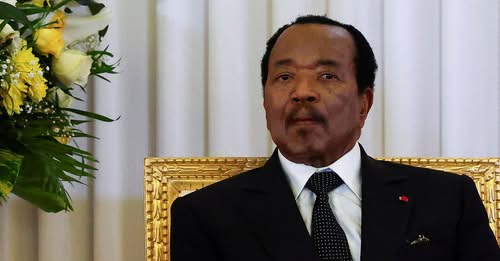
Cameroon President Paul Biya has returned to the country after spending more than 10 weeks abroad, ending his longest recorded absence since he took power more than four decades ago.
The 93-year-old president arrived at Nsimalen International Airport in Yaounde on Thursday aboard a chartered flight from Geneva, Switzerland.
Biya left Cameroon on June 7 for what the civil cabinet described at the time as a “brief private stay in Europe”. His prolonged absence later triggered speculation over his health and ability to continue carrying out his presidential duties.
Biya arrived at about 4.45pm local time, accompanied by First Lady Chantal Biya. He later travelled by motorcade to the Etoudi Unity Palace.
Hundreds of supporters of the ruling Cameroon People’s Democratic Movement (CPDM) gathered along the streets of the capital to welcome the president.
Biya waved to the crowd through a partly open window as supporters displayed party colours and banners praising his leadership.
The president’s extended stay abroad had generated renewed debate over his health and the country’s political succession, despite government assurances that he would return.
Opposition politicians had urged the Constitutional Council to consider whether an interim arrangement was necessary during his absence. The council, however, did not take action.
Cameroon’s political succession framework has also attracted attention because Biya has yet to appoint a vice president.
The vice presidency was reintroduced in April, but the position remains vacant.
Under the country’s Constitution, where the presidency becomes vacant through death, resignation or permanent incapacity, the president of the Senate is expected to assume interim duties in the absence of a vice president.
Biya has ruled Cameroon since 1982 and remains the world’s oldest serving head of state.
His return is likely to ease immediate speculation surrounding his whereabouts, but questions about succession and the country’s political future remain.
The president’s prolonged absence had placed renewed focus on what would happen if he were unable to continue exercising his presidential responsibilities.