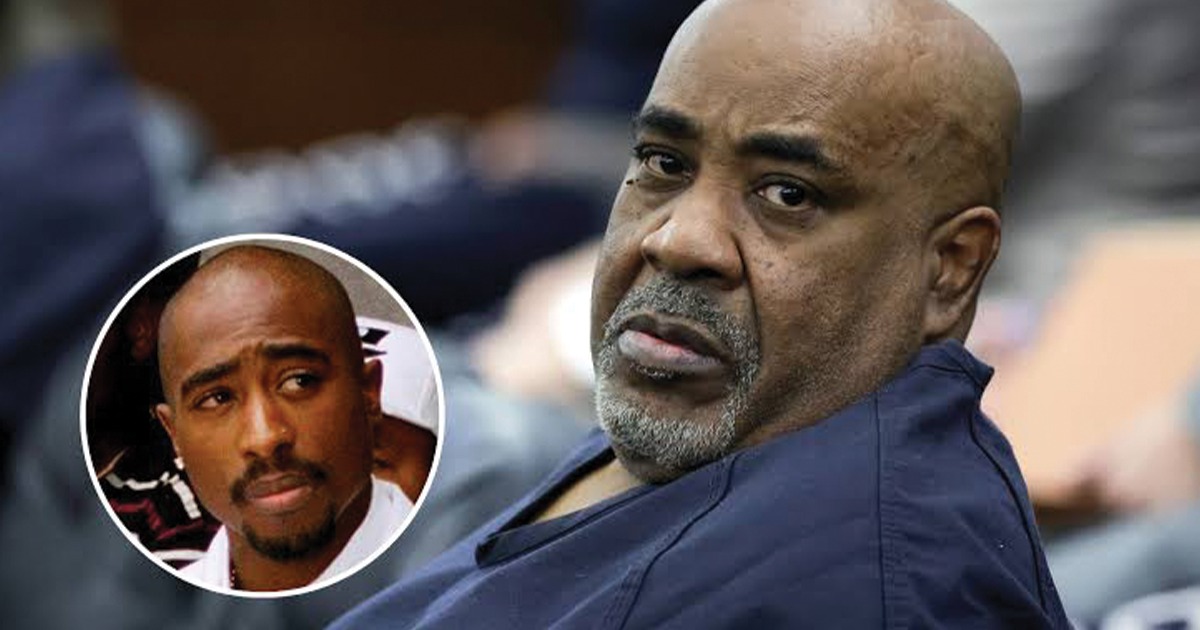
Duane “Keffe D” Davis, the former gang leader convicted of orchestrating the 1996 murder of hip-hop icon Tupac Shakur, has been sentenced to 40 years to life in prison, marking a major milestone in one of the most closely followed homicide cases in music history.
A Nevada judge handed down the sentence on Tuesday, October 13, 2026, nearly 30 years after Shakur was fatally shot in Las Vegas. Davis, 63, was convicted of first-degree murder with the use of a deadly weapon in August following a trial that relied heavily on his own accounts of the killing.
Judge Carli Kierny addressed the lasting consequences of the crime during the sentencing hearing, telling Davis that taking a person’s life also deprives their family of a future together.
“You don’t get to take a man from his family,” Kierny said. “You don’t get to take his very life, his whole life, and just walk away from it, especially when that man is Tupac Shakur.”
The sentence brings a significant development in the investigation into Shakur’s death, which remained unsolved for decades and became the subject of widespread public speculation.
Tupac Shakur’s sister delivers emotional statement
Shakur’s younger sister, Sekyiwa Shakur, urged the court to impose the maximum sentence, describing the profound loss suffered by their family and the wider community.
“He would have been the promise of our parents,” she told the court. “I believe when you take away someone like that, you deserve the maximum sentence.”
Sekyiwa described her brother as a natural icon who had been raised to champion human rights and protect the people closest to him.
She also spoke about his personal influence on her life, saying he had served as a father figure and played an important role in the lives of relatives and members of their community.
Davis appeared in court wearing a navy-blue prison uniform and handcuffs. When invited to address the court and Shakur’s family, he initially declined, saying, “I’m good.”
Clark County prosecutors had sought the maximum possible punishment, pointing to Davis’ criminal history and his public statements about the killing.
Prosecutors argued that Davis’ accounts of the murder, including statements made during interviews and in his memoir, demonstrated his involvement in the attack.
How prosecutors linked Davis to the 1996 killing
Davis was not accused of firing the fatal shots. Prosecutors argued that he helped organise the attack and supplied the firearm used in the shooting.
The prosecution’s case centred partly on Davis’ own statements about the events leading up to Shakur’s death.
In his 2019 memoir, Compton Street Legend, Davis described his involvement in the killing and portrayed himself as a senior figure in the South Side Compton Crips.
Authorities said the book and Davis’ other public accounts helped investigators revisit a case that had remained unresolved for years.
The prosecution argued that the shooting was motivated by retaliation following a confrontation at a Las Vegas hotel earlier on the night of September 7, 1996.
Shakur and members of his entourage had been involved in a fight with Orlando “Baby Lane” Anderson, Davis’ nephew. Anderson was associated with the South Side Compton Crips.
According to prosecutors, the confrontation escalated tensions and contributed to the decision to target Shakur and Marion “Suge” Knight, the co-founder of Death Row Records.
During the trial, prosecutors maintained that Davis played a central role in arranging the attack. The jury ultimately found him guilty of first-degree murder with the use of a deadly weapon.
Davis’ defence challenged the reliability of his statements, arguing that his public accounts were not necessarily trustworthy. Nevertheless, jurors reached a guilty verdict after less than three hours of deliberation.
Why the Tupac Shakur case took decades to resolve
Shakur was shot while travelling in a BMW with Knight near the Las Vegas Strip after attending a Mike Tyson boxing event.
A white Cadillac pulled alongside their vehicle at a traffic light, and gunfire erupted. Shakur was struck multiple times, while Knight also sustained injuries but survived.
Shakur died six days later, aged 25.
The investigation initially faced significant obstacles, including uncooperative witnesses and difficulties establishing a clear connection between people suspected of involvement in the shooting.
Investigators also examined tensions involving rival gangs and the wider East Coast-West Coast divide in hip-hop during the 1990s.
The rivalry was frequently associated with Death Row Records on the West Coast and figures connected to the New York rap scene. However, the circumstances surrounding Shakur’s killing were more complex than a simple record-label dispute.
For years, the absence of a conviction allowed theories about the murder to proliferate among fans, journalists and true-crime investigators.
Davis’ public statements eventually provided authorities with a renewed avenue for pursuing the case, culminating in his arrest in 2023 and subsequent conviction.
Tupac’s legacy and the unresolved murder of Biggie
Shakur’s death became one of the defining tragedies in hip-hop history. Known for his socially conscious lyrics, commentary on inequality and depictions of life in disadvantaged communities, he remains an influential figure in rap music.
His murder also intensified tensions surrounding the East Coast-West Coast hip-hop rivalry.
Six months after Shakur’s death, Brooklyn-born rapper Christopher Wallace, better known as The Notorious B.I.G. or Biggie Smalls, was murdered in Los Angeles.
Wallace’s killing generated years of speculation about possible connections to Shakur’s death. However, the two cases remain distinct, and no one has been charged or convicted in Wallace’s murder.
Davis remains the only person convicted in connection with Shakur’s killing.
His sentencing represents a major legal development in a case that has captivated audiences for nearly three decades, although it does not resolve every unanswered question surrounding the events of September 1996.