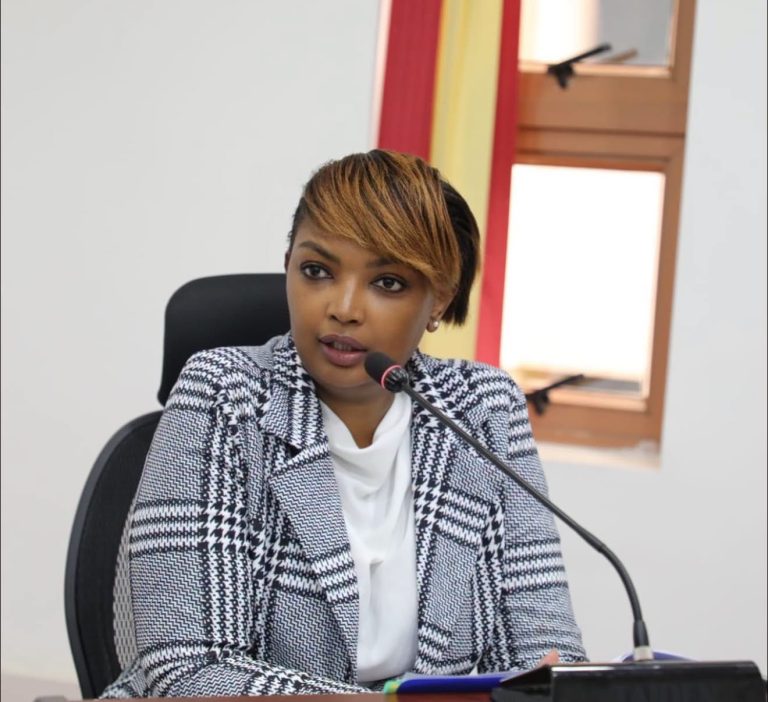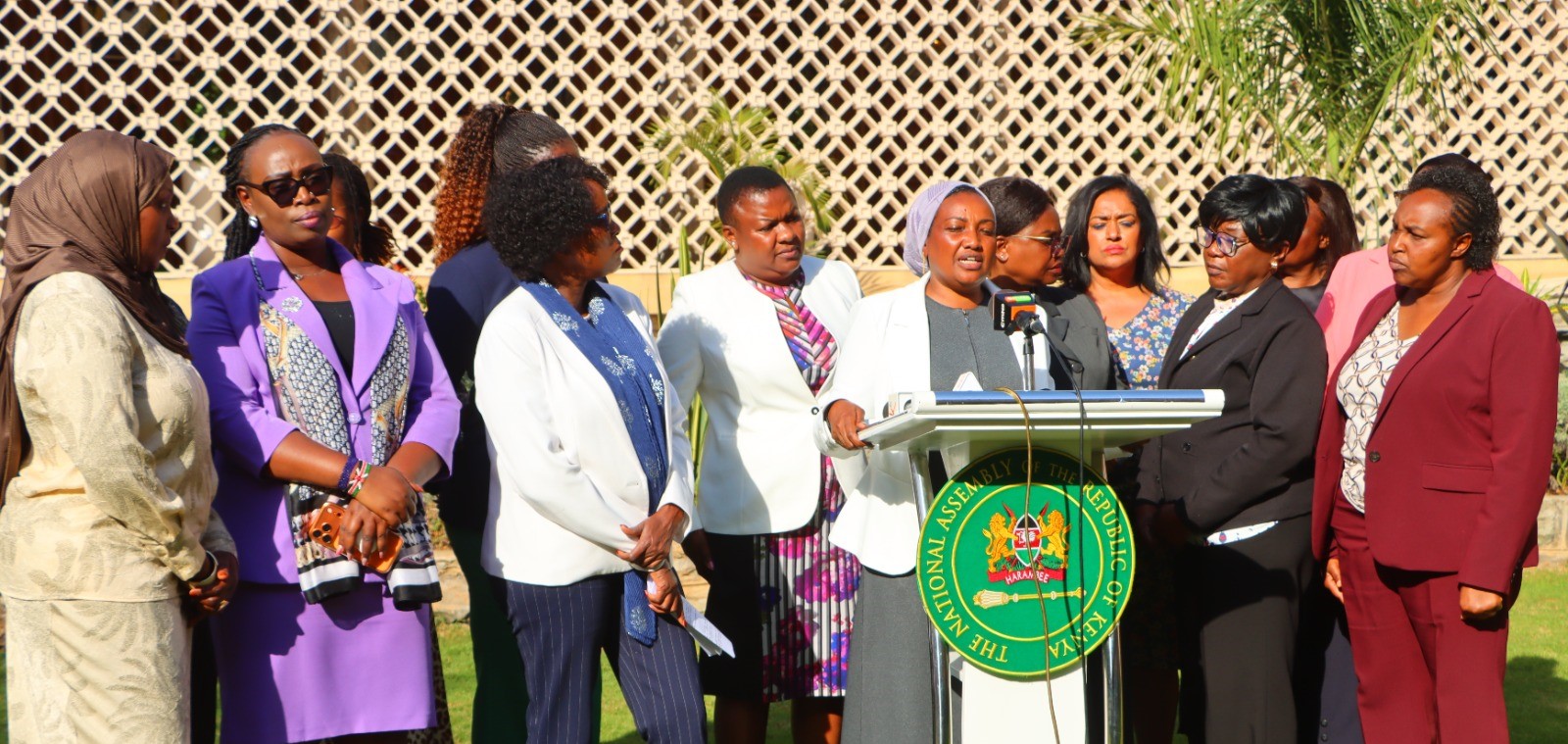
Women Members of Parliament have issued five demands to former Deputy President Rigathi Gachagua, accusing him of a pattern of gender based political attacks, intimidation, and conduct that they say undermines the dignity of women in public life.
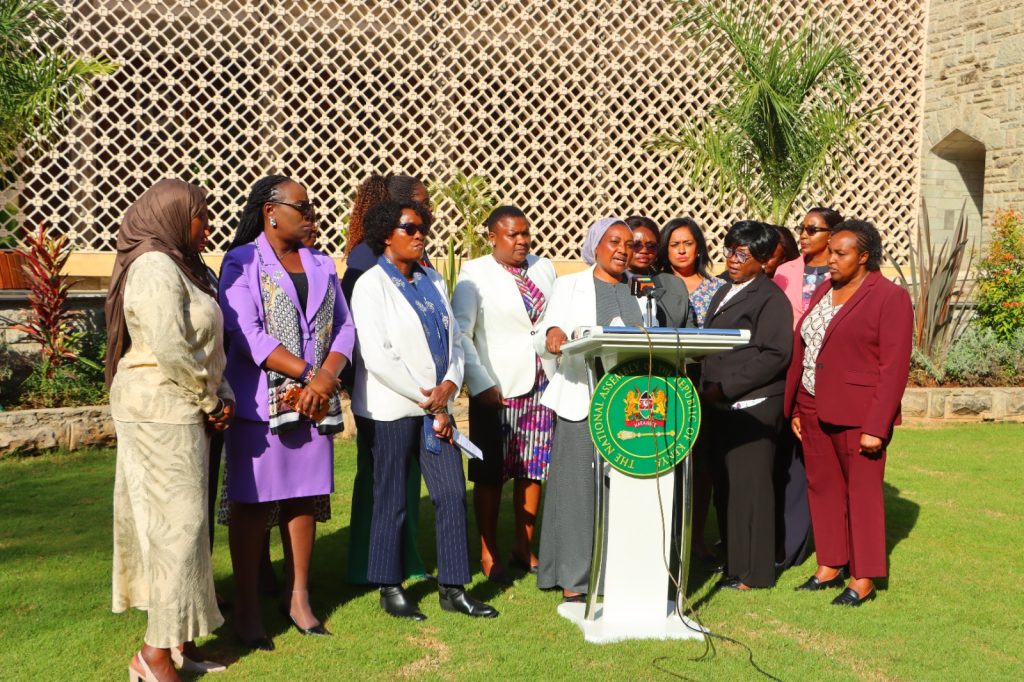
The MPs made the demands during a joint press conference on Tuesday, August 25, 2026, where they cited a series of political exchanges involving women leaders and women linked to political figures.
They said their objection was not to Gachagua criticising the government or disagreeing with women leaders, but to what they described as the manner in which some of those disagreements had been expressed.
“Our concern is not that Mr. Gachagua disagrees with women leaders. Political disagreement is a legitimate part of democracy,” the MPs said.
“Our concern is the manner in which these disagreements have been expressed, particularly where women leaders, women spouses and women in vulnerable circumstances have been singled out, personally attacked, undermined or drawn into political confrontations.”

The MPs said the Constitution protects the dignity and equality of women, citing Articles 28 and 27, as well as Article 73 on leadership as a public trust.
“A woman does not surrender her dignity because she enters politics,” they said.
“She does not lose her right to respect because she disagrees with a powerful political leader. She does not become a political target because she is married to a public official, and she does not lose her autonomy because she is a widow.”
They said Gachagua had a right to challenge policies and political opponents but added: “Political disagreement is not a license for gender based violence.”
The 5 demands
1. Gachagua should apologise
The MPs demanded that Gachagua publicly acknowledge and apologise for remarks and conduct that they said had demeaned women leaders or dragged women spouses and families into political disputes.
They referred to several incidents that they said demonstrated the concerns they were raising.
Among them was an alleged verbal attack involving Nyandarua Woman Representative Faith Gitau.
The MPs said Gitau had accused Gachagua of repeatedly using degrading and gendered insults against her, including calling her a “witch” and “malaya”, which they noted is a derogatory term meaning prostitute.
“This is not political criticism. It is gender based humiliation,” they said.
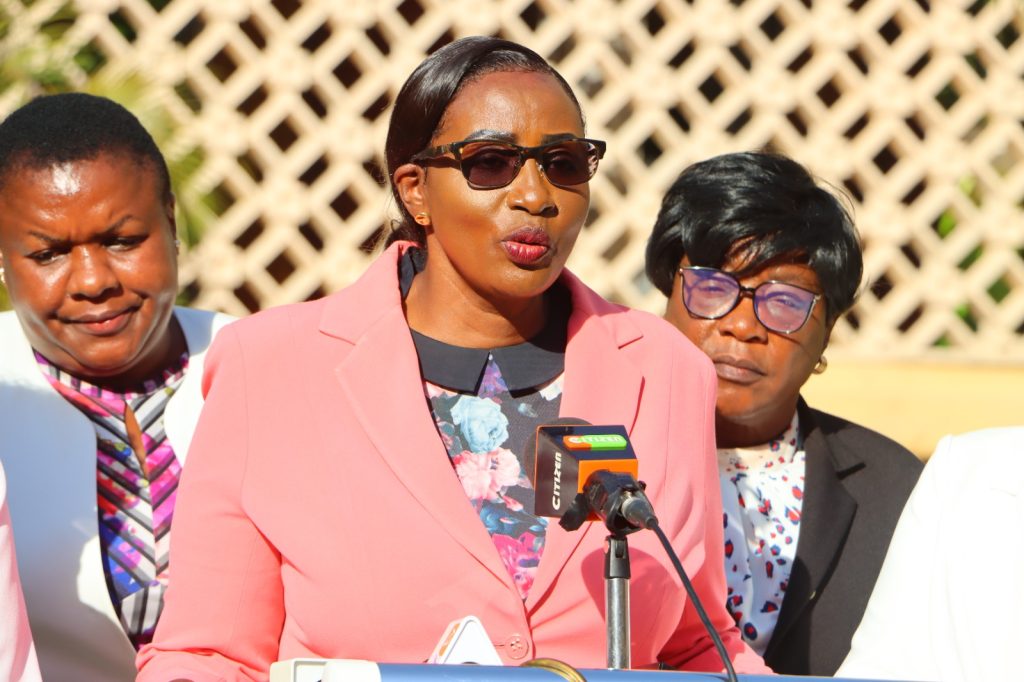
“Women leaders should be challenged on their policies, performance and ideas—not their morality, sexuality or womanhood.”
2. End sexist and abusive language
The MPs demanded an immediate end to what they described as “sexist, abusive, demeaning and gendered political language” directed at women.
They said women should not have to endure personal attacks as a consequence of participating in politics.
The MPs also cited the April 17, 2026 incident involving Mwea MP Mary Maingi during a burial ceremony.
They said Gachagua, while addressing mourners by phone, reportedly described Maingi as a “traitor of the community” and accused her of supporting the government.
“Challenge her record, challenge her decisions, challenge her policies—but do not use public platforms to humiliate a woman leader,” they said.
The MPs maintained that political disagreements should be addressed through policies, facts and political debate.
3. Keep families out of political battles
The third demand was that wives, children and other family members be kept out of political disputes.
The MPs referred to remarks by Interior Cabinet Secretary Kipchumba Murkomen on August 23, when he publicly complained that Gachagua had repeatedly dragged his wife into political discourse.
The MPs questioned why the spouse of a political opponent should become part of a political contest.
“We ask: Why should the wife of a political opponent become part of a political battle?” they said.
“If Mr. Gachagua disagrees with CS Murkomen, he should address CS Murkomen directly.”
They added: “A woman is not a political weapon simply because she is married to a politician.”
4. Respect bereaved families
The MPs also demanded that bereaved women and families be accorded full respect for their privacy, dignity, autonomy and consent.
They cited Gachagua’s August 21 visit to the family home of the late MP Johana Ng’eno in Mogondo, where he paid his respects at the gravesite and pledged support towards a mausoleum.
The MPs acknowledged that condolences and support to a bereaved family were commendable, but said political leaders should exercise sensitivity when engaging with grieving families.
“A bereaved woman must not be treated as though her voice, wishes or consent are secondary because she is grieving,” they said.
They added: “A widow’s grief is not weakness, her home is not political property and her consent must never be treated as optional.”
The MPs further asked: “What right does one have to trespass a widow’s matrimonial home without her consent?”
They described this as “the highest form of prejudice against the widow who has an identity as a wife in that home.”
5. Judge women on their performance
The MPs’ fifth demand was that women leaders be judged on their policies, decisions and performance rather than their gender, marital status or political relationships.
They cited political exchanges involving Kirinyaga Governor Anne Waiguru, Embu Governor Cecily Mbarire and Nakuru Governor Susan Kihika.

On Waiguru, they said political accountability should focus on her record, policies and performance.
“Challenge the Governor’s record; do not undermine her dignity because she is a woman,” they said.
Regarding Mbarire, they said remarks attributed to Gachagua had been criticised by women leaders in Kirinyaga and later by the Embu governor herself.
“We reject the notion that a woman who makes an independent political decision should be labelled disloyal or subjected to personal attacks,” they said.
“Political independence is not betrayal, and disagreement is not disloyalty.”
On Kihika, the MPs said she, like other elected leaders, had a right to make independent political decisions without gendered intimidation.
“Women do not owe political allegiance to any man because of his political status, former office or influence,” they said.
MPs say incidents point to wider pattern
The MPs said the individual incidents should not be considered in isolation.
“Our seventh and most important concern is the pattern that emerges when these incidents are considered together,” they said.
They pointed to the April 17 Mwea incident, the July and August political exchanges involving Waiguru, Mbarire and Kihika, the August 21 engagement with Ng’eno’s family and the August 23 complaint by Murkomen concerning references to his wife.
The MPs stressed that they were not demanding immunity for women leaders from political criticism.
“We are not saying women leaders should be immune from criticism. They must be held accountable just like their male counterparts,” they said.
“But criticize the policy, challenge the decision, question the performance—do not attack the woman’s dignity, gender, family or vulnerability.”
They said the cumulative effect of such conduct could create an environment where women are expected to tolerate personal humiliation as the price of political leadership.
“We reject that standard completely,” they said.
MPs deliver blunt message to Gachagua
The MPs said the issue extended beyond Gachagua and concerned the broader political culture in Kenya.
“A young woman entering politics should not have to fear that her family will become a political target,” they said.
“A woman seeking elective office should not believe that humiliation is the price she must pay for leadership.”
They said women should be able to disagree with powerful political figures without having to choose between their political convictions and their dignity.
“Women have a right to lead without being punished for being women,” they said.
In their closing remarks, the MPs delivered their strongest criticism of Gachagua, describing him as “the enemy of women” and “the tribal bigot”.
They accused him of believing in “violence and tribalism as a currency of politics” and referred to him as “Kenya’s number one goon”.
“This violence and political goonism perpetuated by Kenya’s number one goon must never be meted out on women leaders or women in general,” they said.