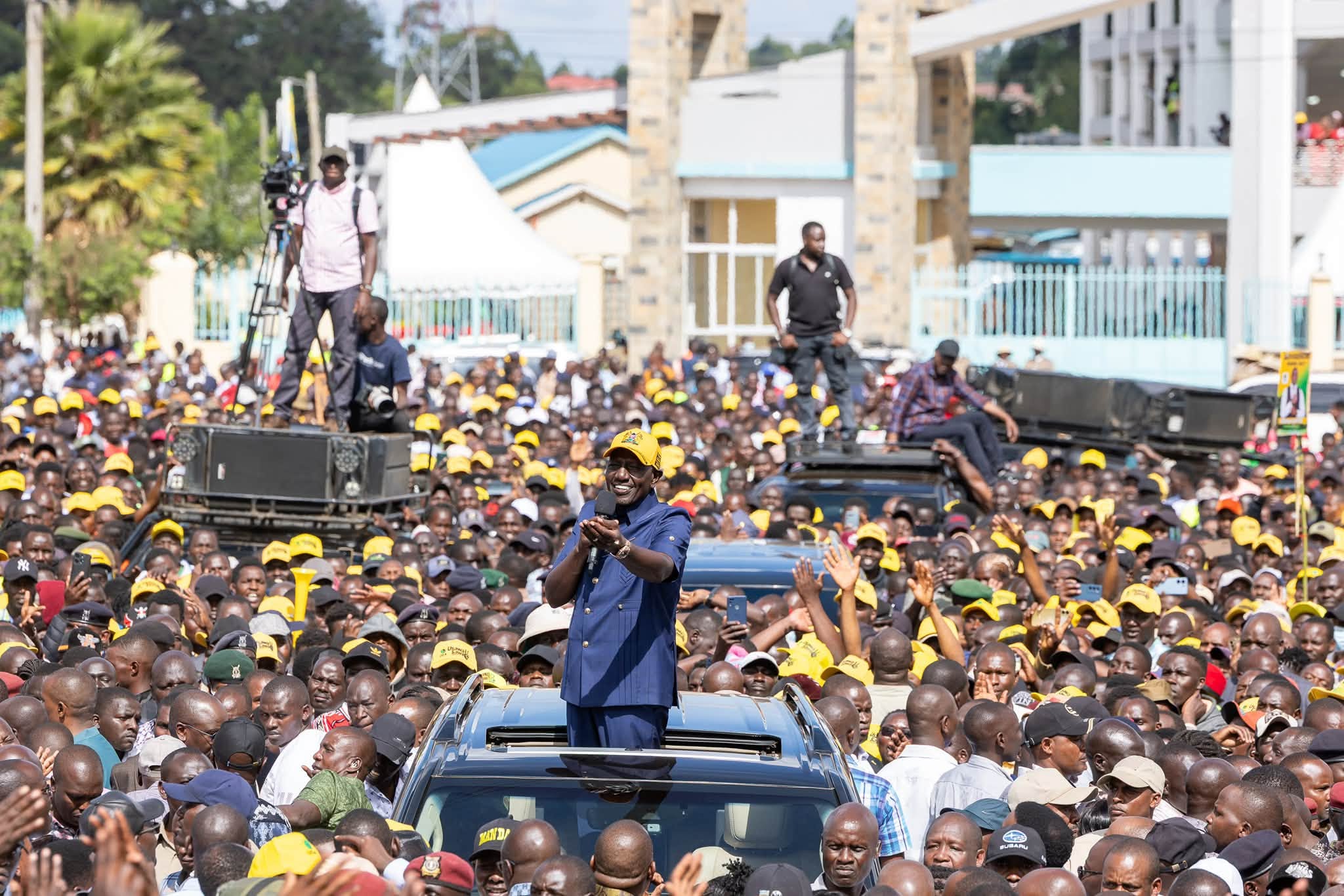
The dispute between President William Ruto and Trans Nzoia Governor George Natembeya over the Masinde Muliro Market in Kitale has escalated into a political contest over devolution, control of public projects and accountability for public spending.
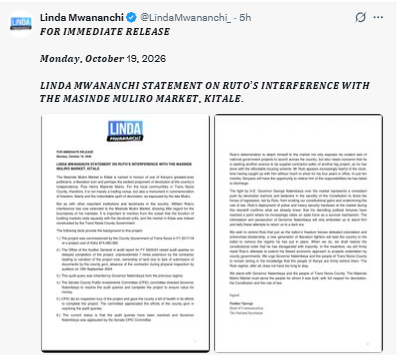
The Linda Mwananchi movement has thrown its weight behind Natembeya, accusing the Kenya Kwanza administration of undermining the constitutional mandate of county governments by seeking to associate itself with a project initiated by the county.
In a statement, Linda Mwananchi Head of Communication Pauline Njoroge said the disagreement was not merely about a market but also about protecting the constitutional order established under devolution.
“For the local communities in Trans Nzoia County, therefore, it is not merely a trading venue, but also a monument in commemoration of freedom, liberty and the indomitable spirit of devolution, as espoused by the late Muliro,” Njoroge said.
The movement argued that the county government should retain responsibility for the facility, maintaining that the national government’s involvement should respect the division of functions between the two levels of government.
The intervention adds a political dimension to the disagreement, which has centred on who financed the market, who should oversee its operations and which government should receive recognition for its completion.
Ruto has said he intervened to mobilise funds to complete the stalled facility, while Natembeya has maintained that the county government financed its development and should retain its constitutional role in managing devolved functions.
Power overlap?
The governor has also argued that the national government should direct its investment towards projects such as a university rather than take over initiatives falling within the county’s mandate.
The competing positions have raised questions about the financing and ownership of the project, with the county and national governments’ respective contributions requiring clarification through contracts, payment records and completion accounts.
According to Njoroge, the project was commissioned by the County Government of Trans Nzoia in the 2017/18 financial year for Ksh874.28 million.
She said the market also carried historical significance because it was named after the late Masinde Muliro, a liberation figure associated with the advancement of democratic governance and devolution.
But the project’s financial history has also attracted scrutiny.
The Office of the Auditor-General raised concerns in its 2023/24 audit report over delays in completing the market, seven extensions granted to the contractor, variations in the project cost, documentation relating to land ownership and the contractor’s absence during a physical inspection on September 10, 2024.
Njoroge said the audit queries had been inherited by Natembeya from the previous county administration.
Audit question
She further maintained that the outstanding issues had been resolved following the Senate County Public Investments Committee’s engagement with the project, adding that the committee had acknowledged the county government’s efforts to address the concerns and complete the facility.
The claims, however, need to be assessed against the committee’s formal findings and relevant audit records. Efforts to address audit queries do not, on their own, establish that every concern has been conclusively resolved.

The distinction is important because the political dispute over who deserves credit for the market is separate from the question of whether public funds were properly spent and the project delivered value for money.
The disagreement also has practical implications for traders who depend on the facility for their livelihoods. Questions over the market’s management and the allocation of trading spaces will need to be resolved to ensure that the political contest does not overshadow the needs of the people the project was intended to serve.
For Natembeya, the dispute is about protecting the county’s constitutional mandate. For Ruto, the intervention has been presented as an effort to complete a stalled development project. Linda Mwananchi has sided with the governor, framing the disagreement as part of a broader struggle to defend devolution.
The Constitution assigns distinct responsibilities to the national and county governments while providing for cooperation between them. The central question is therefore how the two levels can recognise their respective roles, account for public expenditure and ensure that the market operates effectively.
Linda Mwananchi has urged Natembeya and Trans Nzoia residents to remain steadfast in defending devolution, placing the movement firmly behind the governor as the dispute continues.
Ultimately, the market’s success will depend not on which political leader claims credit, but on transparent management, accountability for public funds and fair access for traders.