Interior Cabinet Secretary Kipchumba Murkomen has defended the right of Kenyans living outside the country to obtain national identity cards and register to vote, saying citizenship rather than a person’s location determines their constitutional rights.
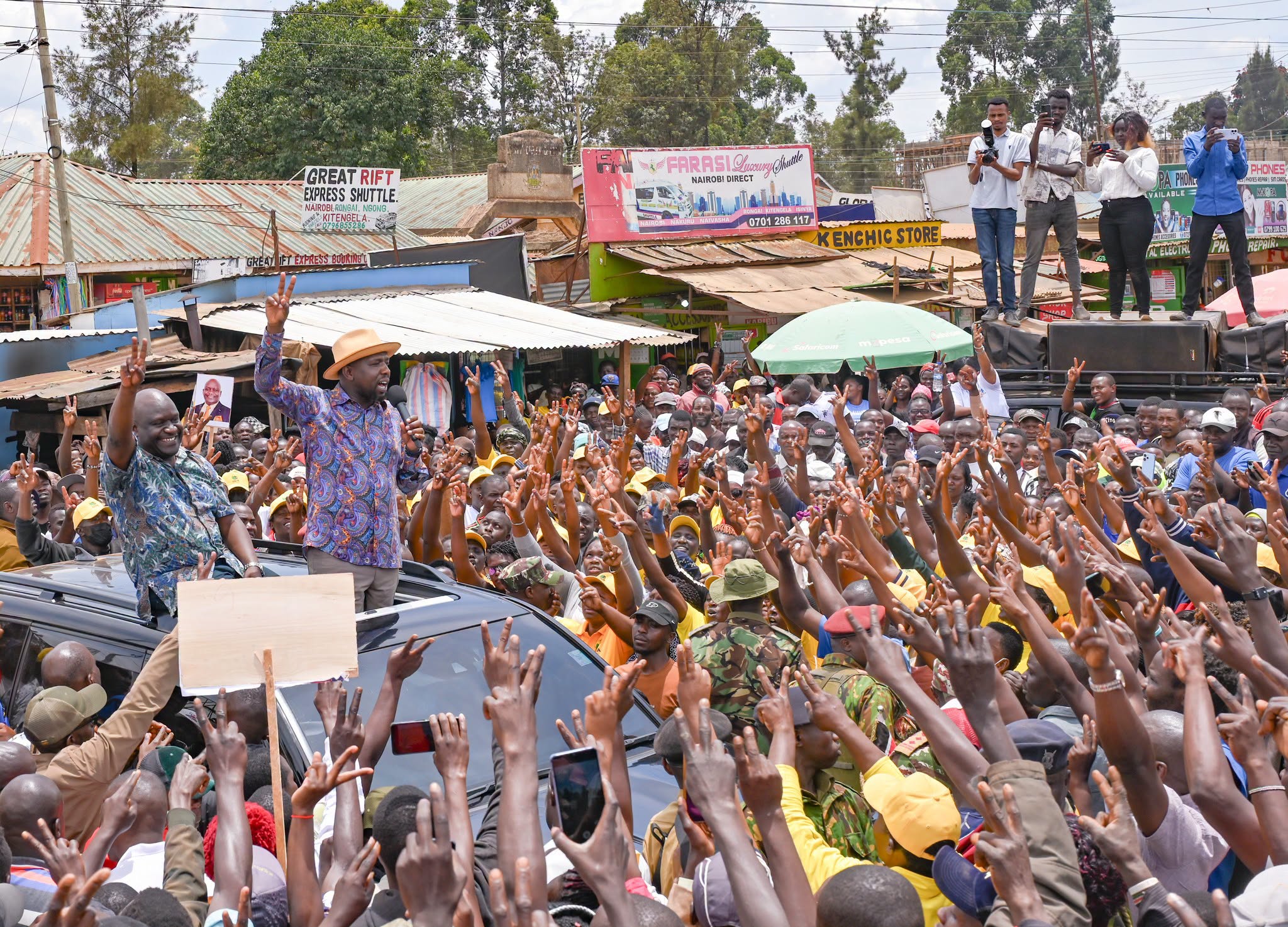
Speaking on Thursday, October 1, 2026, in Kiminini, Trans Nzoia County, Murkomen said Kenyans should not lose access to identification documents or voting rights simply because they have moved across the border to work, conduct business or live abroad.
His remarks come amid renewed scrutiny of the issuance of Kenyan identity cards and voter documents along the Kenya-Uganda border following an exposé alleging that some Ugandan nationals had been assisted to acquire Kenyan IDs and subsequently enter Kenya’s electoral system.
Murkomen, however, framed the issue around the rights of genuine Kenyan citizens living outside the country.
“A Kenyan, regardless of where they are staying or where they are doing business, for as long as they are Kenyan, has a right to have an identity card and they have a right to be registered to vote in the next elections.”
The Interior CS said the same principle should apply to Kenyans who have moved to neighbouring countries or to other parts of the world.
Murkomen invokes diaspora voting rights
Murkomen said Kenyans living in Uganda, America, Australia, Europe and elsewhere should be able to access identification services and participate in elections if they meet the legal requirements.
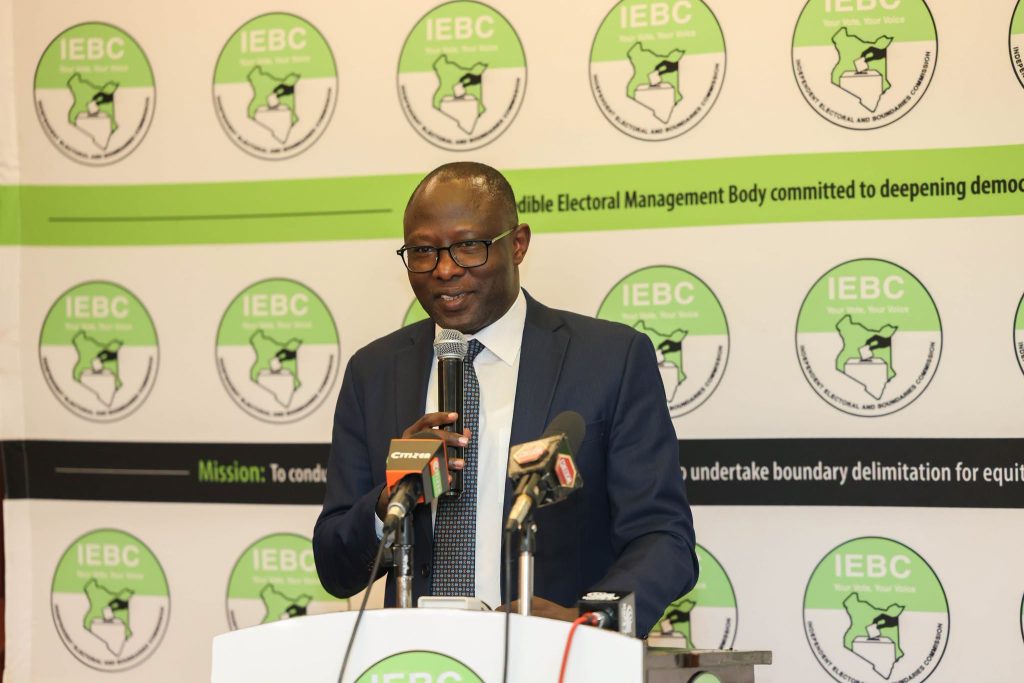
He urged the Independent Electoral and Boundaries Commission (IEBC) to ensure Kenyans living abroad have an opportunity to exercise their electoral rights.
“We want to urge IEBC to give Kenyans an opportunity, regardless of where they are in the world, because it is their constitutional right to choose a president of their choice, regardless of where they are. That is why we have diaspora voting.”
The remarks place the debate over border IDs within the wider question of diaspora voting in Kenya, which allows eligible Kenyan citizens living abroad to participate in elections subject to the applicable electoral requirements.
Murkomen’s comments are particularly significant because the controversy involves communities with longstanding social, family and economic links across the Kenya-Uganda border.
Border ID exposé puts registration under scrutiny
The debate intensified after an investigation raised allegations that some Ugandan nationals had obtained Kenyan identity cards and voter documents through irregular means.
The Standard reported allegations of an organised scheme involving the acquisition of Kenyan IDs and voter cards in areas across the border. The report also quoted claims that the alleged exercise could involve large numbers of people.
The allegations have not, however, been established as fact against all people living in the border region.

The IEBC has rejected claims of voter smuggling at the Kenya-Uganda border, saying allegations of illegal voter registration were unsubstantiated and pointing to safeguards within the voter-registration system.
That distinction is important in interpreting Murkomen’s remarks. His defence of the rights of Kenyan citizens living abroad does not, by itself, establish that any foreign national is entitled to a Kenyan ID or a place on the Kenyan voters’ roll.
‘We will not discriminate against any Kenyan’
Murkomen has previously argued that government reforms should remove unnecessary barriers facing legitimate Kenyan applicants for identification documents, including people living in border counties.
The government abolished additional vetting requirements for ID applicants from border counties in 2025, presenting the move as part of efforts to make identification services more accessible.
The State Department for Immigration and Citizen Services has similarly described the national ID as a key document for accessing government services and exercising civic rights.
At an International Identity Day event in Homa Bay, Murkomen said an ID was more than a physical card because it enables citizens to access government services and exercise civic duties.
In Kiminini, he applied the same principle to Kenyans who live or work outside the country.
His argument was that a Kenyan citizen does not cease to be entitled to national documentation simply because they have crossed an international border.
Murkomen tells critics to ‘do the right thing’
The CS also appeared to address those raising alarm over the debate, urging them to focus on what he described as the proper course of action.
“If you, instead of panicking, do the right thing, do the right thing, join the right team, and do the right thing, so that you can survive.”
The remarks come as political debate over voter registration increasingly turns towards the 2027 General Election.
Former Attorney-General Justin Muturi has called for the IEBC to examine Murkomen’s remarks and establish whether they have any connection with voter-registration activities involving people along the Kenya-Uganda border.
The question now facing Kenya
The dispute has brought two separate issues into sharper focus: the right of genuine Kenyan citizens living abroad to obtain identification and vote, and the need to prevent non-citizens from unlawfully obtaining Kenyan identity documents or entering the voters’ register.
Murkomen’s position is that location should not be used to discriminate against Kenyan citizens.
The allegations arising from the border-ID exposé, meanwhile, concern whether existing registration and verification systems are sufficiently robust to distinguish legitimate Kenyan applicants from people who may attempt to acquire documents unlawfully.
With the 2027 General Election approaching, the handling of identity registration along Kenya’s international borders and the expansion of diaspora voting are likely to remain closely watched.
For now, Murkomen’s message is clear: where a Kenyan lives should not, in his view, determine whether that citizen can obtain an ID or exercise the right to vote. The unresolved question is how that right can be protected while maintaining the integrity of Kenya’s identity and electoral systems.