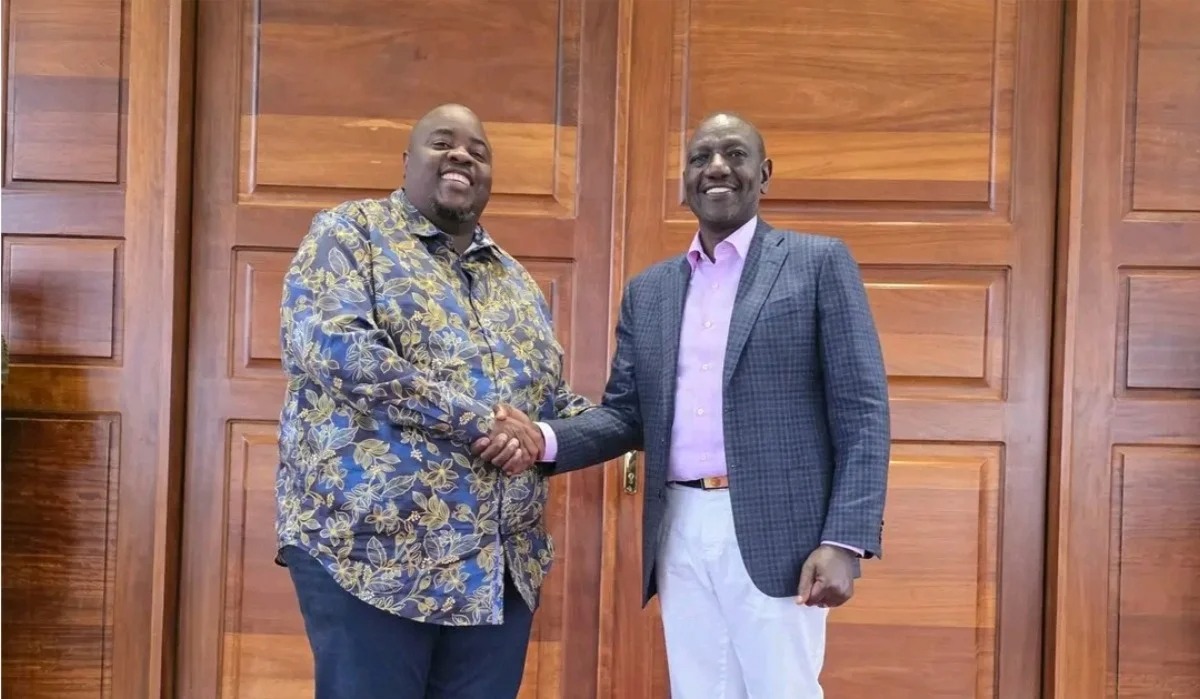
The death of Zimbabwean businessman Wicknell Chivayo has brought fresh attention to his unusually close public relationship with President William Ruto and to questions that surrounded his reported business interests in Kenya, including claims linking a company associated with him to the proposed expansion of Jomo Kenyatta International Airport (JKIA).
Chivayo, 43, died on September 30 when a helicopter carrying six people crashed in Zimbabwe’s Marondera district, southeast of Harare. His wife, Lucy Muteke, and the four other people on board also died. Zimbabwean authorities said investigations into the cause of the crash were continuing.
Ruto, who had maintained a highly visible relationship with the businessman, described Chivayo as “a dear friend” after his death.
“I am deeply saddened by the tragic passing of my friend, Wicknell Chivayo, together with his wife, Lucy Muteke, and the other lives lost in the helicopter crash in Zimbabwe,” Ruto said in a condolence message.
He said he would remember Chivayo for “his friendship, his energy and his deep conviction in the possibilities of our continent”.
The public friendship had attracted attention because it developed alongside Chivayo’s efforts to expand his commercial interests beyond Zimbabwe.
But while the meetings between the two men were documented, the available evidence does not establish that their relationship influenced a Kenyan government procurement decision.
That distinction is central to understanding the controversy surrounding Chivayo and JKIA.
A visible presidential connection
Chivayo frequently publicised his encounters with African political leaders, and his relationship with Ruto became particularly visible in Kenya.
He appeared at State House and at private and public events involving the President and his family. In August, he shared a video showing Ruto driving him towards a helicopter after an event involving the President’s daughter, Charlene Ruto.
The businessman also used social media to publicise meetings with Ruto and to describe Kenya as an important destination for his investment plans.
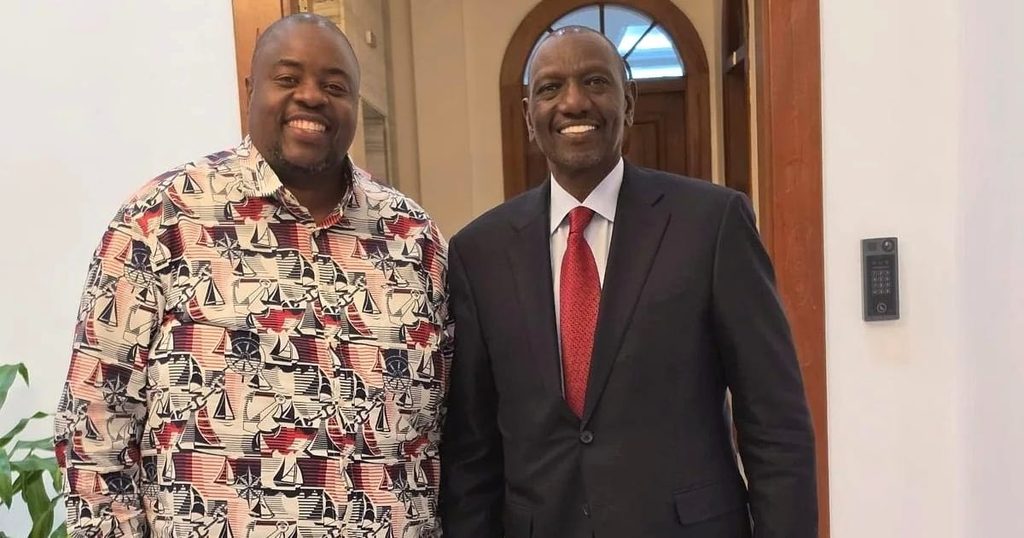
In June, after a State House meeting, Chivayo described Ruto as a leader of “ACTION”, while calling his meeting with the President a courtesy visit.
The encounters demonstrated access and a personal relationship. They did not, on their own, demonstrate preferential treatment in public procurement.
That distinction became important when Chivayo’s name was drawn into the JKIA expansion debate.
JKIA accounts diverged
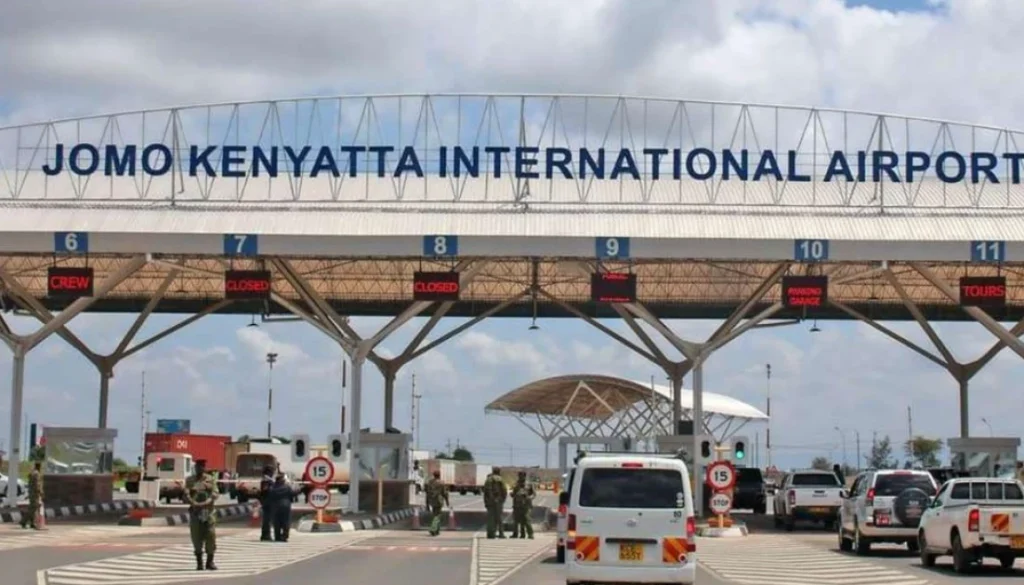
In June, reports emerged that IMC Construction Kenya, a company associated with Chivayo, had been included in a Chinese-led consortium linked to the proposed modernisation of JKIA.
The reported project value was widely put at about Ksh375 billion, triggering questions about the identities of the companies involved and the procurement process.
The government subsequently rejected the reported connection.
Transport Cabinet Secretary Davis Chirchir said companies participating in the tender were required to disclose their joint-venture partners and that Chivayo’s company had not been listed.
“They are not part of the contractors who submitted the bid for this tender,” Chirchir said.
The government’s formal contract announcement provides another important piece of the record.
On June 23, the Ministry of Roads and Transport announced a Ksh154.2 billion design-and-build contract for the JKIA modernisation project. It identified China Road and Bridge Corporation (CRBC) as the contracted firm.
The ministry said more than 40 companies had participated in a pre-bid conference and that submissions had been evaluated on technical and financial merit.
The official announcement does not identify Chivayo or IMC Construction Kenya as a contracting party.
What the record shows
The conflicting accounts mean the JKIA controversy needs to be separated into two different questions.
The first is whether Chivayo had a close relationship with Ruto. The public record clearly shows that he did, and Ruto himself described him as a friend after his death.
The second is whether that relationship resulted in Chivayo or his company securing a government contract.
On that question, the available official record does not establish such an outcome.
The government says Chivayo’s company did not participate in the JKIA tender. Its formal contract announcement names CRBC as the contracted company and puts the project value at KSh154.2 billion.
That does not erase the earlier reports linking IMC Construction Kenya to a proposed consortium. It does, however, mean those reports should not be treated as proof that Chivayo won or controlled the JKIA contract.
The distinction is particularly important because the airport project had already become politically sensitive following the collapse of an earlier proposal involving India’s Adani Group.
JKIA is one of Kenya’s most important infrastructure assets, and the government says its modernisation is intended to increase capacity, improve passenger and cargo services and upgrade airport infrastructure.
Business plans left unresolved
Chivayo’s Kenyan ambitions extended beyond the airport. Before his death, he spoke publicly about investing in Kenya and discussed plans for major infrastructure-related projects. Those statements generated interest because they coincided with his increasingly prominent relationship with Ruto.
But statements of intent are not the same as completed investments. There is currently no established public record showing that every investment Chivayo discussed with Kenyan officials had been formally concluded before his death.
His death therefore leaves companies, business partners and government agencies to account for any agreements, negotiations or proposed investments that were still under discussion.
It also leaves unanswered questions about the future of businesses associated with him.
In Zimbabwe, Chivayo’s commercial career included major government-linked projects and legal disputes. Some allegations against him resulted in investigations or court proceedings that did not lead to convictions. Those outcomes underline the importance of distinguishing allegations from established findings when assessing his business record.
In Kenya, the clearest documented position on the most contentious project is narrower: Chivayo had a public friendship with Ruto, his company was reported to have been linked to the JKIA proposal, and the government subsequently denied that the company participated in the tender.
The government ultimately announced a Ksh154.2 billion JKIA contract with CRBC.
Chivayo’s death means he will no longer be able to clarify his own plans or explain the business relationships he was pursuing in Kenya. What remains are the public statements, company records, procurement documents and government decisions that can establish what was discussed, what was proposed and, ultimately, what was actually contracted.
For Kenya, that distinction may prove more important than the speculation that surrounded Chivayo’s political connections while he was alive.