
Kenya’s 2027 presidential election is becoming a contest over more than political candidates, alliances and campaign promises.
Before a single ballot is cast, a potentially more consequential battle is unfolding over who controls the rules, technology and institutions that will determine how Kenyans vote and how their choices are translated into presidential results.
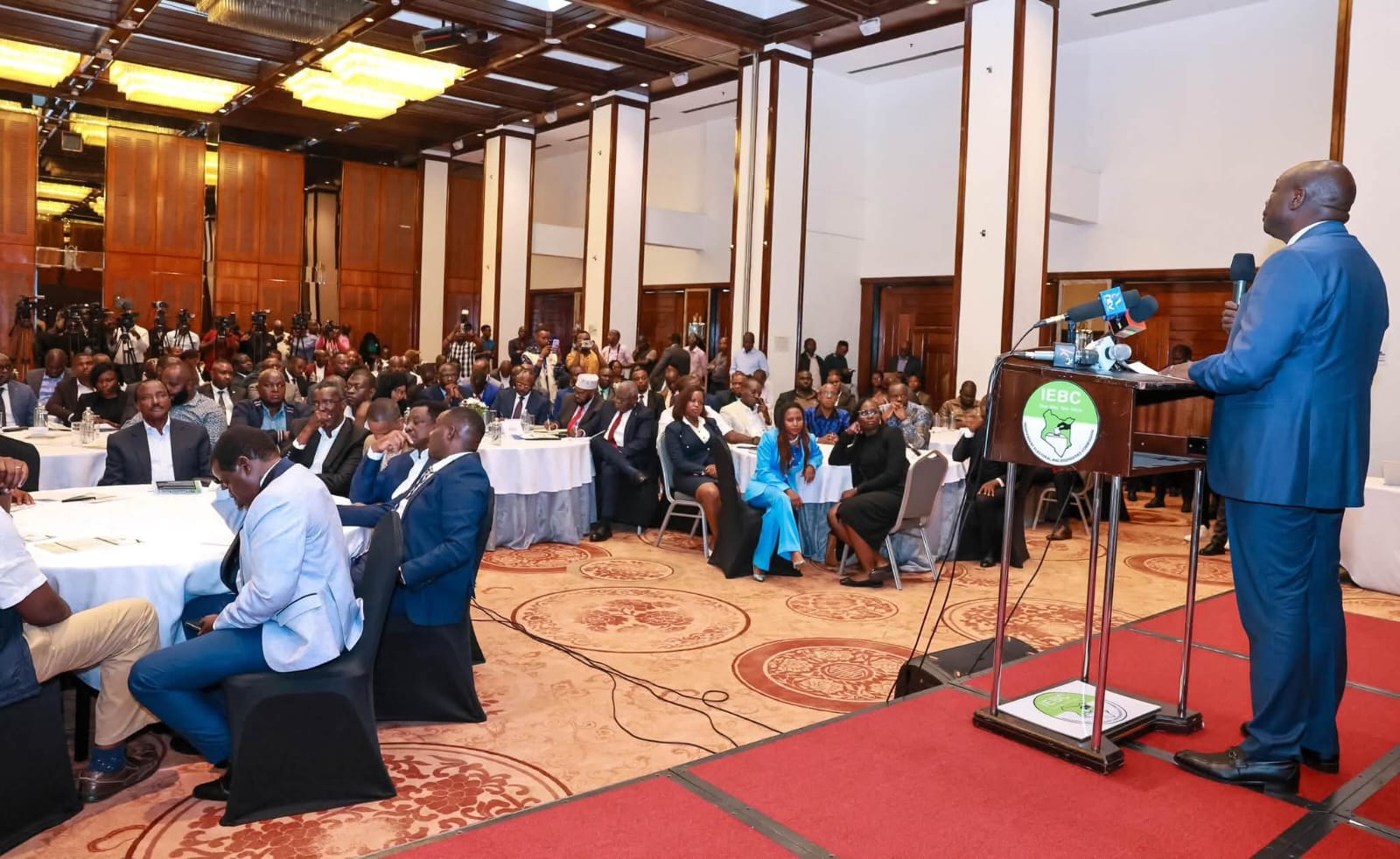
The dramatic walkout by opposition leaders from talks with the Independent Electoral and Boundaries Commission (IEBC) has exposed this struggle, turning what appeared to be a disagreement over a meeting agenda into a wider confrontation over the country’s electoral architecture.
At the centre are Rigathi Gachagua, Kalonzo Musyoka, David Maraga, James Orengo and Edwin Sifuna, whose demands include an independent audit of the voters’ register, changes to election technology, decentralised presidential results management and greater transparency in polling.
However, beneath these demands lies a bigger political question: can Kenya’s competing political interests agree on the rules of an election when they are already positioning themselves to win it?
The November 19 confrontation suggests that the battle for 2027 is already taking shape, and the IEBC is becoming one of its most important battlegrounds.
The battle before ballots
For the opposition, electoral reforms are not simply administrative adjustments. They are about establishing safeguards that can withstand political pressure and prevent disputes after voting.
Deputy President-turned-opposition figure Rigathi Gachagua accused the commission of prioritising its own agenda over the concerns raised by political stakeholders.
“We have looked at the agenda and there is no people’s agenda on the list. This is the agenda of the commission. We cannot participate in this,” he said.
Former Chief Justice David Maraga similarly questioned the approach taken by the commission, insisting that political parties should have a meaningful role in shaping the reform process.
“Kenyans must have a clean, accurate and verifiable register. We want to engage with IEBC not be lectured. That’s why we walked out,” Maraga said.

Their demands touch on some of the most sensitive aspects of election administration, particularly voter registration and the management of presidential results.
Yet there is a political dimension that cannot be ignored.
By raising these concerns months before the election, opposition leaders are putting electoral accountability at the centre of their political messaging. They are also creating a public record of the issues they believe require attention before the commission conducts the next election.
That does not necessarily mean they intend to reject an unfavourable result. However, it makes the resolution of these concerns important not only for election preparations but also for the political acceptance of the eventual outcome.
Maraga’s proposed leadership of a technical reform team is particularly significant. His judicial background gives the initiative institutional weight, while offering opposition politicians an opportunity to coordinate around electoral reforms without immediately resolving the potentially divisive question of their presidential candidate.
Who controls results?
The most consequential disagreement concerns the management and declaration of presidential election results.
The opposition wants the national presidential tallying centre at Bomas of Kenya abolished, advocating instead for a decentralised arrangement that gives constituency-level declarations greater prominence.
This proposal touches directly on the constitutional interpretation of presidential elections.
In the 2017 Maina Kiai case, the High Court affirmed the finality of presidential results declared by constituency returning officers, which can only be challenged through an election petition.
However, the ruling does not automatically abolish the national tallying centre or eliminate the IEBC chairperson’s constitutional responsibilities.
Articles 86 and 138 of the Constitution, together with the Elections Act, provide the framework within which presidential results must be transmitted, verified and declared.
Consequently, the opposition must explain how its proposed system would work without creating competing centres of authority or weakening the commission’s constitutional mandate.
There are legitimate arguments for decentralisation. Constituency-level transparency could make it easier for political parties, candidates and observers to independently verify results against polling-station declarations.
Read-only access to transmitted results, independent audits and publicly accessible records could also reduce opportunities for manipulation.
However, decentralisation is not automatically a guarantee of security.
Kenya would need reliable technology, cybersecurity protections, independent verification and safeguards against intimidation of election officials at the constituency level.
The central issue, therefore, is not simply whether Bomas should remain. It is whether the country can establish a results management system that is transparent, legally sound and trusted by competing political camps.
IEBC’s credibility test
The commission, meanwhile, is facing a difficult balancing act. It must defend its constitutional independence while convincing Kenyans that its preparations are transparent, credible and sufficiently advanced.
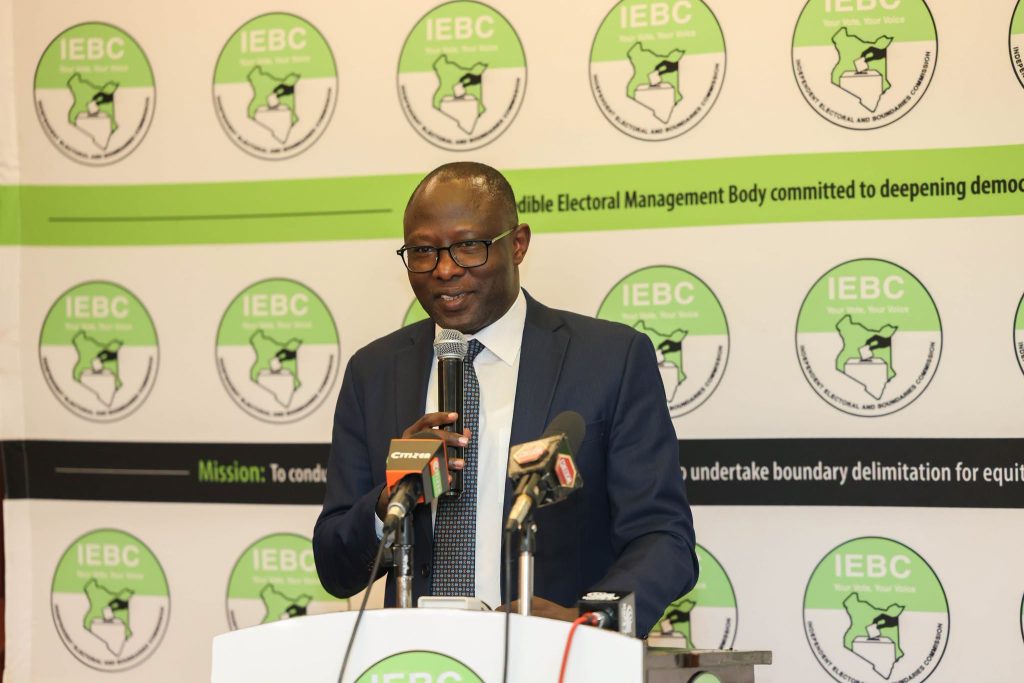
IEBC Chairperson Erastus Ethekon criticised the opposition’s decision to abandon the discussions, arguing that the move undermined opportunities for engagement.
“Walking away from dialogue before substantive discussions begin does not advance the resolution of electoral concerns,” he said on November 20.
He maintained that the leaders had missed an opportunity to hear about the commission’s preparedness, progress and outstanding challenges.
Nevertheless, the IEBC cannot expect political stakeholders to accept assurances without evidence.
In September, the Public Procurement Administrative Review Board ordered the commission to correct and amend aspects of its Integrated Elections Management System tender after identifying weaknesses in the clarity and objectivity of certain requirements.
The decision did not establish electoral fraud or procurement corruption. However, it reinforced the importance of transparent procurement, particularly when technology will play a central role in voter identification, transmission and results management.
There is also the question of time.
With the August 2027 election approaching, procurement disputes, recruitment challenges and court proceedings could complicate preparations if they remain unresolved.
The commission must demonstrate that its systems are not only legally compliant but also independently testable and capable of functioning under the pressure of a closely contested election.
At the same time, the opposition’s proposal for a smaller technical negotiating team raises questions about representation. Smaller parties must not be pushed aside in a process that claims to represent the interests of all political stakeholders.
The stakes beyond reform
The confrontation has also coincided with another important development: the IEBC’s review of political party compliance ahead of the 2027 elections.
On November 20, the commission announced that only 11 of 105 political parties had met the applicable requirements in its initial review of nomination rules, leaving 94 requiring amendments.
The affected organisations included major political players such as UDA and ODM.
Ethekon clarified that the initial findings did not automatically disqualify the parties from participating in the 2027 elections.
He said the exercise was intended to ensure “transparent, fair, inclusive and lawful nomination processes”.
Although there is no established evidence linking the compliance exercise to the opposition’s walkout, it highlights another source of political tension.
The IEBC’s responsibilities extend beyond conducting polling. Its decisions affect how parties organise themselves, nominate candidates and comply with electoral laws.
Consequently, the commission’s credibility will be tested not only on election day but also through the decisions it makes during the months preceding the contest.
There is a danger that political leaders could turn every administrative disagreement into evidence of institutional bias. Equally, the commission could undermine public confidence if it treats legitimate questions as political interference.
Ultimately, both sides have political incentives. Opposition leaders want assurances that the electoral framework cannot disadvantage them, while the commission wants to preserve its independence and demonstrate that it can discharge its constitutional responsibilities without political direction.
But Kenya’s electoral credibility cannot depend on which political camp benefits from a particular arrangement.
The country needs independently verifiable answers on voter registration, election technology, procurement, results transmission and the legal authority governing presidential declarations.
It also needs a reform process that gives smaller parties, civil society and ordinary voters a meaningful voice.
The real test is whether the IEBC and political leaders can turn their confrontation into enforceable safeguards before August 10, 2027.
Kenya’s next election will ultimately be decided by voters. However, the institutions and rules governing how their choices are counted are already at the centre of a political struggle that could determine whether the eventual winner is accepted by the country.