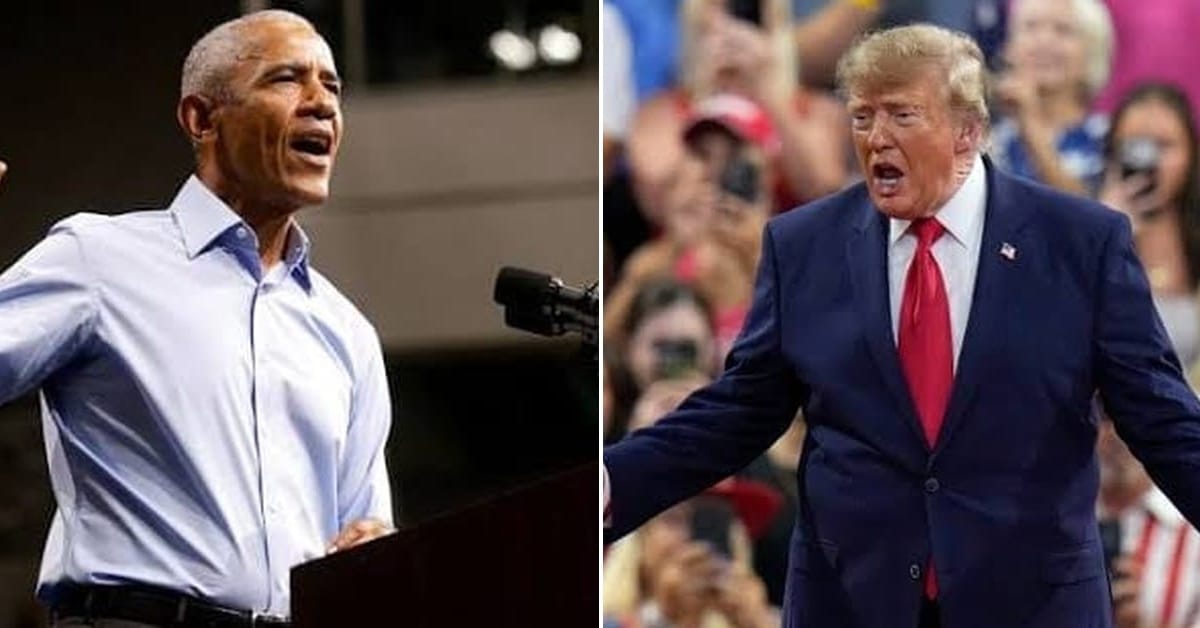
Former US president Barack Obama is emerging as a key political figure behind the Democrats’ renewed challenge to President Donald Trump, following the party’s victory in the November 2026 midterm elections.
Democrats have won control of both the House of Representatives and Senate, giving them greater powers to scrutinise Trump’s administration, challenge spending decisions and push for the restoration of foreign assistance when the new Congress convenes in January 2027.
Obama’s involvement in the election campaign has strengthened his influence within the party. According to ABC News, he raised approximately US$13.6 million for Democratic committees, endorsed candidates and campaigned in competitive states.
At a Democratic fundraising event, Obama warned supporters against taking the election for granted, saying: “I don’t want anybody to think this is a sure thing.”
His political mobilisation has now coincided with a Democratic congressional victory, giving the former president’s party a new platform to challenge Trump’s domestic and international policies.
For Africa, the emerging confrontation carries significant implications for healthcare, poverty reduction and America’s diplomatic influence.

Obama’s political reach
Obama’s influence is particularly relevant because his presidency reinforced America’s global health and development partnerships, including programmes supporting African countries.
Although PEPFAR, the President’s Emergency Plan for AIDS Relief, was established in 2003 under Republican president George W. Bush, Obama’s administration expanded the programme’s role within a broader global health strategy.
His administration launched the Global Health Initiative in 2009, emphasising HIV/AIDS prevention, treatment, stronger health systems and partnerships with developing countries.
That legacy now provides Democrats with a political reference point as they challenge Trump’s restructuring of American foreign assistance.
Obama is not returning to government and will not directly control congressional decisions. However, his fundraising capacity, public profile and ability to mobilise Democratic voters give him considerable influence over the party’s political direction.
The new Democratic majority also means that his preferred approach to international engagement will have a stronger platform in congressional debates.
Africa aid at stake
Since returning to the White House in January 2025, Trump has pursued sweeping changes to American foreign assistance, including restructuring USAID, reviewing existing programmes and terminating or suspending funding arrangements.
The disruption has affected humanitarian operations and development partnerships across countries that depend on American support for healthcare, food security and poverty reduction.
An Institute for Security Studies (ISS) analysis published in February 2025 projected that Trump’s proposed cuts could push an additional 5.7 million Africans into extreme poverty within a year.
It also estimated that sub-Saharan Africa’s economy could be US$4.6 billion smaller by 2030 compared with a scenario in which previous assistance levels continued.
“The deep and hurried cuts in US aid to Africa will seriously damage attitudes toward the US and increase poverty,” warned Jakkie Cilliers, head of African Futures and Innovation at ISS.
Healthcare remains among the most sensitive areas.
PEPFAR has supported HIV prevention, testing and treatment across Africa, making changes to American funding particularly consequential for countries with large populations dependent on donor-supported services.
Trump’s administration has not withdrawn all healthcare assistance. Instead, it has introduced bilateral agreements, increased co-financing expectations and placed greater emphasis on countries assuming responsibility for their health programmes.
Kenya illustrates this changing relationship. Under its new US health cooperation framework, annualised American health assistance commitments for 2026-2030 are estimated at US$320 million, approximately 11 per cent above the 2024 baseline.
However, Kenya is expected to contribute approximately US$170 million annually in co-financing, increasing pressure on the national budget.
Congressional power limits
Democrats’ biggest weapon against Trump’s foreign aid policy is Congress’s constitutional authority over federal spending.
Under Article I of the US Constitution, Congress controls appropriations and can use spending legislation to protect funding for HIV programmes, humanitarian operations and development assistance.
The incoming majority can also investigate USAID’s restructuring, question administration officials and examine decisions to terminate foreign assistance contracts.
However, controlling Congress does not give Democrats complete authority over foreign policy.
Trump retains executive powers and can veto legislation seeking to reverse his administration’s priorities. Overriding a presidential veto requires a two-thirds majority in both chambers.
Democrats will therefore need Republican support for major legislative reversals or pursue narrower measures that protect specific programmes through appropriations and oversight.
A study published in Science on May 14, 2026, titled Aiding peace or conflict? The impact of USAID cuts on violence, adds another dimension to the debate.
The researchers found that African areas with greater historical exposure to American assistance experienced relatively higher levels of conflict following the January 2025 USAID shutdown.
The increase included armed clashes, protests and riots, highlighting the potential security consequences of abruptly withdrawing development assistance.
Africa’s wider choices
The dispute also raises questions about America’s long-term influence across Africa.
As Washington restructures its development presence, China and other international partners have opportunities to strengthen their economic and diplomatic relationships with African governments.
However, African countries are also exploring ways to reduce dependence on foreign donors through domestic financing and alternative development partnerships.
Nigeria’s Health Minister Muhammad Ali Pate has argued for greater financial independence, saying: “We cannot build healthier populations purely on the generosity of other nations.”
That position reflects a growing demand for development partnerships that give African governments greater ownership of their priorities and financing.
For Obama-influenced Democrats, restoring assistance without addressing donor dependence and sustainability could reproduce weaknesses in the previous system.
The incoming Congress will therefore face competing demands: protecting essential health programmes, challenging Trump’s aid restructuring and ensuring American assistance remains accountable.
Obama’s political influence gives Democrats a prominent voice in that debate, but the practical contest will be decided through legislation, spending negotiations and congressional oversight.
Trump still controls the executive branch, meaning the new majority cannot independently reverse every element of his foreign policy.
For Africa, the central question is whether Obama’s enduring influence within the Democratic Party can help translate the congressional victory into concrete protections for healthcare and development programmes.
The battle over American foreign assistance is now moving from election campaigns to Capitol Hill, with millions of Africans potentially affected by the outcome.