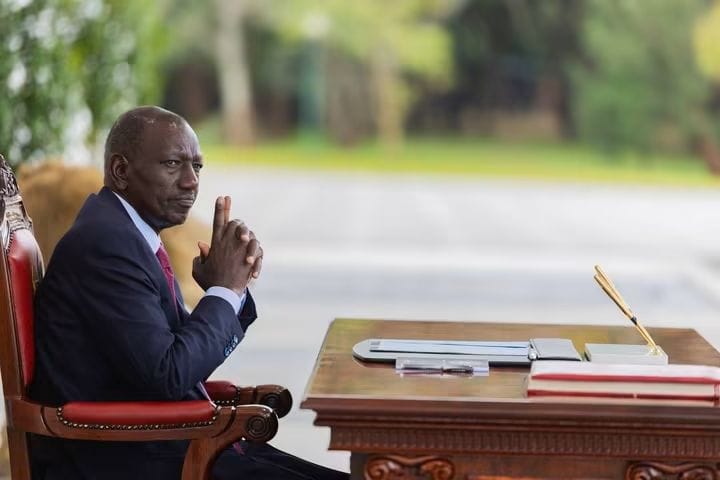
President William Ruto and politicians seeking elective office in 2027 face a December 9 deadline to participate in public fundraising activities, after which involvement in harambees could expose them to disqualification from the August 10, 2027 General Election.
The restriction places a legal boundary on one of Kenya’s most established forms of political and community engagement, where politicians routinely attend church fundraisers, contribute to school projects and support community initiatives.
Under Gazette Notice No. 13497, published on August 20, 2026, the Independent Electoral and Boundaries Commission (IEBC) has designated December 9 as the final day before the eight-month restriction takes effect.
From December 10, anyone intending to contest in the 2027 elections risks disqualification if found to have directly or indirectly participated in public fundraising or harambee activities.
The notice, signed by IEBC Chairperson Erastus Edung Ethekon, invokes Section 26(1) of the Elections Act, 2011, which prohibits candidates from participating in public fundraising within eight months before an election.
For Ruto, who has built considerable political visibility around public contributions and community fundraising, the restriction raises questions about how politicians can maintain grassroots engagement without falling foul of electoral law.

Why the restriction matters to Ruto and other aspirants
The law does not distinguish between the President, governors, MPs, senators or politicians seeking elective positions for the first time.
Anyone intending to contest in the August 2027 elections falls within its reach.
If Ruto seeks another presidential term, he would be subject to the same requirements as other candidates.
The provision also extends beyond politicians personally handing over money at fundraising events. Its reference to direct and indirect participation means that using proxies does not automatically provide protection against a potential violation.
Former IEBC chairperson Wafula Chebukati addressed the issue ahead of the 2022 elections, warning aspirants against participating in harambees either personally or through proxies.
Chebukati’s interpretation included attendance and contributions, reflecting the commission’s concern that public donations could be used to influence voters ahead of elections.
The issue is particularly sensitive in Kenya, where political leaders frequently combine community development activities with public appearances that offer opportunities to interact with voters.
What happens after December 9?
The December 9 deadline does not mean politicians must stop all forms of fundraising.
Rather, it marks the beginning of the statutory eight-month restriction on participation in public fundraising activities covered by Section 26(1).
The distinction is important because Section 26(2) of the Elections Act provides an exemption for fundraising conducted for a person contesting an election under the Act or for a political party.
IEBC reiterated this position in Note 5 of its August Gazette notice, clarifying that the restriction does not prohibit fundraising by or on behalf of an election candidate or political party.
This means the law does not impose a blanket ban on politicians raising money for their campaigns.
Instead, the central question is whether an activity constitutes prohibited public fundraising or falls within the statutory exception for election and political party fundraising.
For politicians, organisers and political parties, understanding that distinction will be essential as the deadline approaches.
The challenge of indirect participation
One of the potentially contentious aspects of the restriction is the prohibition on indirect participation.
Politicians who attend public fundraisers, make contributions or are linked to collections organised through intermediaries could face questions about the nature of their involvement.
However, attendance at a public event should not automatically be treated as proof of an electoral offence.
The circumstances of each event, the candidate’s role and the available evidence would be important in determining whether Section 26 has been breached.
Chebukati previously indicated that evidence of an alleged violation should be presented to the returning officer for consideration.
This makes the enforcement process particularly important, especially where legitimate community fundraising activities intersect with political appearances.
A test for IEBC enforcement
The restriction will also place attention on how IEBC handles complaints involving politicians across different political parties and levels of government.
The commission will need to distinguish between prohibited public fundraising and activities protected by the statutory exception.
IEBC Chairperson Erastus Ethekon has emphasised the importance of compliance with the electoral timetable, describing election timelines as legally binding requirements necessary for an orderly and credible electoral process.
For aspirants, the December 9 deadline therefore carries implications beyond the traditional fundraising calendar.
As the country moves closer to the 2027 General Election, politicians will have to navigate the tension between maintaining community engagement, supporting legitimate fundraising initiatives and complying with electoral law.
Ultimately, the distinction between a prohibited harambee and permitted campaign fundraising could become central to disputes over who qualifies to appear on the 2027 ballot.