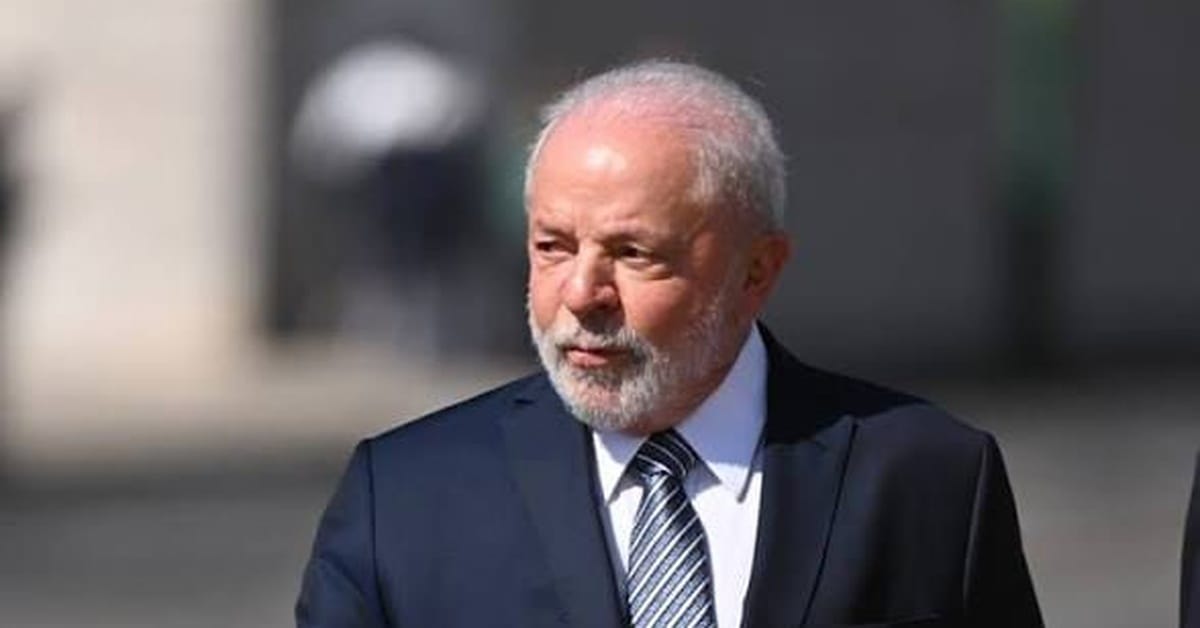
Brazilian President Luiz Inácio Lula da Silva has won a historic fourth, non-consecutive presidential term, defeating right-wing senator Flávio Bolsonaro in a result that could complicate US President Donald Trump’s efforts to expand his influence across Latin America.
Lula secured 51.79 per cent of valid votes, equivalent to 64.26 million votes, against Bolsonaro’s 48.21 per cent, or 59.83 million votes, according to Brazil’s Superior Electoral Court. The result, declared on October 25, keeps Latin America’s largest economy under left-wing leadership and reinforces Brasília’s commitment to an independent foreign policy.
The victory is a political setback for the Bolsonaro movement, which favours closer ideological alignment with Trump. However, it does not represent a direct electoral defeat for a formally Trump-endorsed candidate. Its wider significance lies in the limits it exposes on Washington’s ability to shape political outcomes in a strategically important country.
Lula’s victory challenges Trump’s regional ambitions
Relations between Brazil and the United States have faced tensions over trade, tariffs and the treatment of former Brazilian president Jair Bolsonaro, who was sentenced to 27 years in prison for plotting a coup.
Lula has made national sovereignty a central theme of his political message, resisting pressure that he believes threatens Brazil’s independence.
“This country will not accept being anyone’s backyard,” Lula declared during his campaign, articulating a position that resonates beyond the immediate election contest.
Brazil’s economic and diplomatic weight gives that position international significance. As a major agricultural exporter, a leading emerging economy and a member of the BRICS grouping, Brazil maintains important relationships with China and other partners while seeking to preserve working ties with Washington.
Lula’s victory therefore strengthens the likelihood that Brazil will continue pursuing a multipolar foreign policy rather than aligning itself exclusively with the United States.
Yet confrontation is not inevitable. Brazil and the United States have shared interests in trade, investment, energy and critical minerals. Lula will need to defend Brazilian interests without allowing political disagreements to damage economic opportunities.
A divided electorate limits Lula’s mandate
The result also reveals the limits of Lula’s political victory. Flávio Bolsonaro attracted nearly 60 million votes, demonstrating that conservative politics remains deeply entrenched in Brazilian society.
The election followed a first round on October 4 in which Bolsonaro finished ahead of Lula. The president’s subsequent comeback demonstrated his ability to mobilise supporters and persuade enough voters to secure a runoff victory.
However, the narrow margin means Lula cannot assume that his victory represents broad public agreement with his policies. Concerns over living costs, public security, government spending and corruption remain politically significant.
Bolsonaro has challenged the result, citing a last-minute decision to extend voting hours and demanding that the election be annulled. The electoral authorities have declared Lula the winner. Any challenge must be assessed through Brazil’s legal institutions rather than treated as evidence that the result was illegitimate.
The dispute nevertheless risks prolonging political tensions in a country that has experienced serious challenges to democratic institutions in recent years.
A conservative Congress could obstruct Lula’s agenda
Lula’s greatest immediate challenge may be domestic rather than diplomatic.
A conservative-leaning Congress will constrain his ability to advance legislation, finance social programmes and implement economic reforms. Negotiating support across party lines will be essential to governing effectively.
His administration must also address household debt, fiscal pressures and demands for improvements in employment, public services and living standards. Failure to deliver tangible benefits could weaken the coalition that secured his re-election.
These pressures could influence his foreign policy as well. A government facing domestic resistance may find it harder to sustain an extended confrontation with Washington, particularly if trade tensions threaten Brazilian exporters.
What Lula’s victory means for Brazil and the United States
For Trump, the result is a reminder that US political influence has limits, particularly when external pressure becomes a question of national sovereignty.
For Lula, victory creates an opportunity to strengthen Brazil’s international standing, maintain partnerships with China and other emerging economies, and negotiate with Washington from a position of political continuity.
But the election has not resolved Brazil’s internal divisions or guaranteed the success of Lula’s economic programme.
Ultimately, Lula’s fourth term will be judged less by his ability to resist Trump than by whether he can improve living standards, maintain democratic stability and deliver results for Brazilian voters.
His victory preserves an independent voice in Latin American politics. Whether that independence translates into lasting economic and diplomatic gains will depend on the decisions his government makes next.