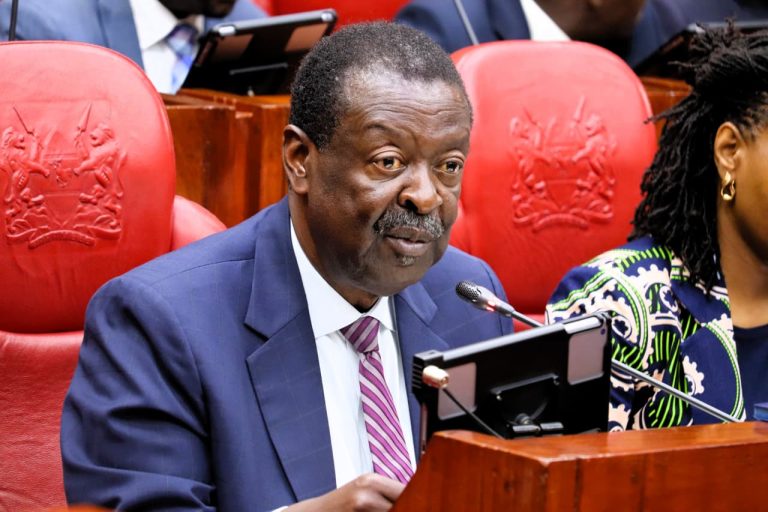
At least 354 Kenyan nationals have been linked to the Russia-Ukraine war, with 84 recorded as killed or missing in action and another 52 listed as being of unknown location or unclassified, Prime Cabinet Secretary Musalia Mudavadi has told the Senate.
The figures were contained in a government response on the recruitment of Kenyans into the Russian military and the detention of Kenyan nationals in Ukraine, presented by Mudavadi before the Senate on Thursday, October 8, 2026.
The latest government records offer one of the clearest breakdowns yet of the number of Kenyans caught up in Russia’s military operations.
According to the report, 77 Kenyans are at the front lines, while 38 are in camps. Another 34 are hospitalised, 62 have been repatriated to Kenya, one is in detention, and one has completed a military contract.
Five Kenyans are currently being held as prisoners of war in Ukraine.
The government’s figures mean that families are still seeking answers about dozens of Kenyans whose whereabouts or fate remain unclear.
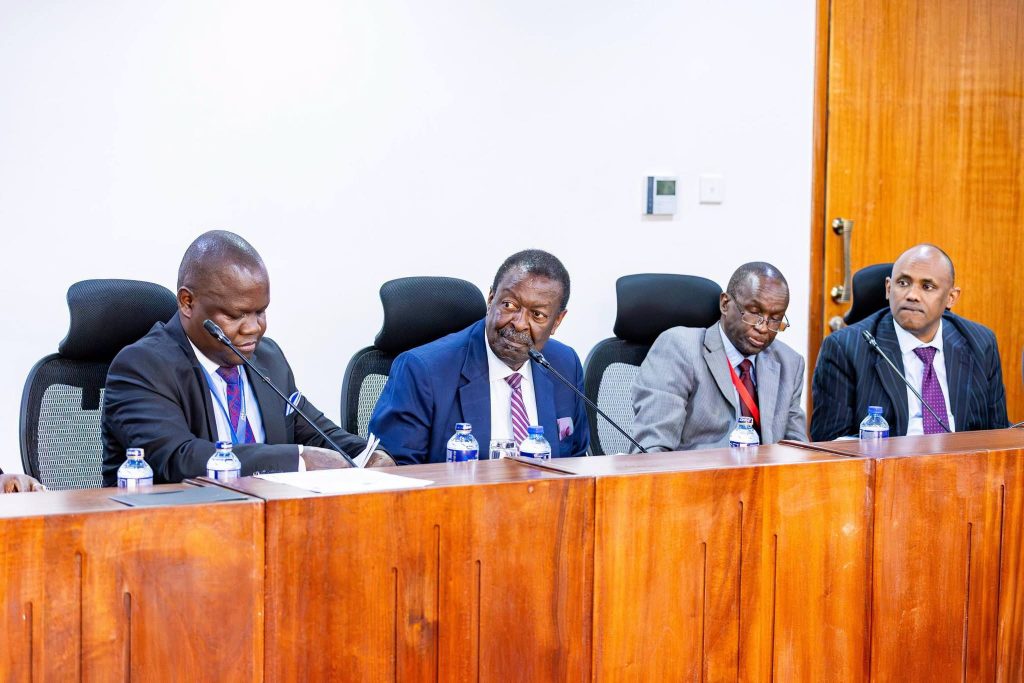
Mudavadi said the State Department for Diaspora Affairs has recorded 84 Kenyans as “Killed or Missing in Action (KIA/MIA)”, while another 52 are classified under “Unknown Location / Unclassified.”
The two categories are separate in the government’s records, underscoring the difficulty Kenyan authorities face in establishing the whereabouts of some nationals who travelled to Russia and became involved in the conflict.
“It has been noted that families tend to engage with the State Department often after communication with their relatives in the Russian Federation has been disrupted or ceased,” Mudavadi said.
He urged families to contact the government as soon as communication with their relatives is lost.
Once a case is reported, the State Department obtains identification details of the Kenyan involved, including information on when the person travelled and details of their next of kin. The case is then referred to the Kenyan Embassy in Moscow for verification.
77 Kenyans still at the frontlines
The government records show that 77 Kenyans remain at the frontlines, making them part of the group whose status continues to concern their families and the Kenyan authorities.
Mudavadi said Kenya has continued diplomatic engagement with Russia through the Embassy in Moscow, including communication with Russian authorities over the welfare and possible disengagement of Kenyans involved in military service.
He said Kenya secured inclusion on Russia’s “Stop List” during his official visit to Moscow in March 2026.
The measure was intended to prevent further enlistment of Kenyan nationals in Russia’s military operation.
“The Embassy of Kenya in Moscow has since confirmed that no additional Kenyan nationals have been enlisted,” Mudavadi said.
Russian authorities have, however, indicated that requests to terminate military contracts are considered on a case-by-case basis by individual military commanders.
62 Kenyans brought back home
The government has so far facilitated the repatriation of 62 Kenyans who had been involved in the military operation.
Mudavadi said the State Department has also been documenting cases reported by families, maintaining communication with relatives, providing updates received through diplomatic channels and offering psychosocial support to affected families.
The government is also assisting families with procedures surrounding the repatriation, cremation or burial of remains.
The report says Russia’s Defence Ministry has informed Kenya that it is unable to meet the cost of repatriating the mortal remains of deceased Kenyan nationals.
Kenya continues to engage Russian authorities and affected families on possible arrangements for the remains.
Five Kenyans held as POWs
Separately, five Kenyan nationals are confirmed as prisoners of war in Ukraine.
The Ukrainian Embassy in Vienna informed Kenya on September 3 that the five were being held in Ukraine. Kenya’s Honorary Consul also visited the Zakhid 1 prisoner-of-war camp and reported that detainees were being held in humane conditions and had access to medical services.
The government further said Ukraine was holding the remains of four other Kenyans.
Mudavadi warned that more Kenyan remains could be in combat zones in Donetsk and Luhansk, where Ukrainian authorities have said they cannot provide information about people in territories outside their control.
The government has also raised concerns over the circumstances under which some Kenyans entered the Russian military.
According to Mudavadi, many Kenyans held as prisoners of war reported that they had been recruited under false promises of employment.
Kenya is considering having them designated as victims of international human trafficking during negotiations for their repatriation.
For families still searching for missing relatives, however, the government’s latest figures leave a stark question: where are the 52 Kenyans whose locations remain unknown or unclassified, and what happened to the 84 recorded as killed or missing in action?