
Western Kenya’s swelling voter population is reshaping the 2027 presidential race, threatening President William Ruto’s biggest electoral investment as Nairobi Senator Edwin Sifuna gains momentum in opposition politics.
The Independent Electoral and Boundaries Commission‘s (IEBC) latest voter registration drive added 231,168 new voters across Kakamega, Bungoma, Busia and Vihiga counties, pushing Western Kenya’s register to more than 2.45 million.
The increase is politically significant because it exceeds the roughly 230,000-vote margin by which Ruto defeated Raila Odinga in the 2022 presidential election, making Western Kenya an even more decisive battleground ahead of the next polls.
Even a modest swing in the region could significantly alter the electoral arithmetic in 2027, forcing both the government and the opposition to intensify campaigns for the increasingly influential voting bloc.
For Ruto, the numbers present both an opportunity and a growing political challenge.
The President invested heavily in Western Kenya before the 2022 election by bringing Prime Cabinet Secretary Musalia Mudavadi and National Assembly Speaker Moses Wetang’ula into the Kenya Kwanza coalition.
That alliance helped expand his support in a region that has historically split its vote among rival presidential candidates rather than backing a single political formation.
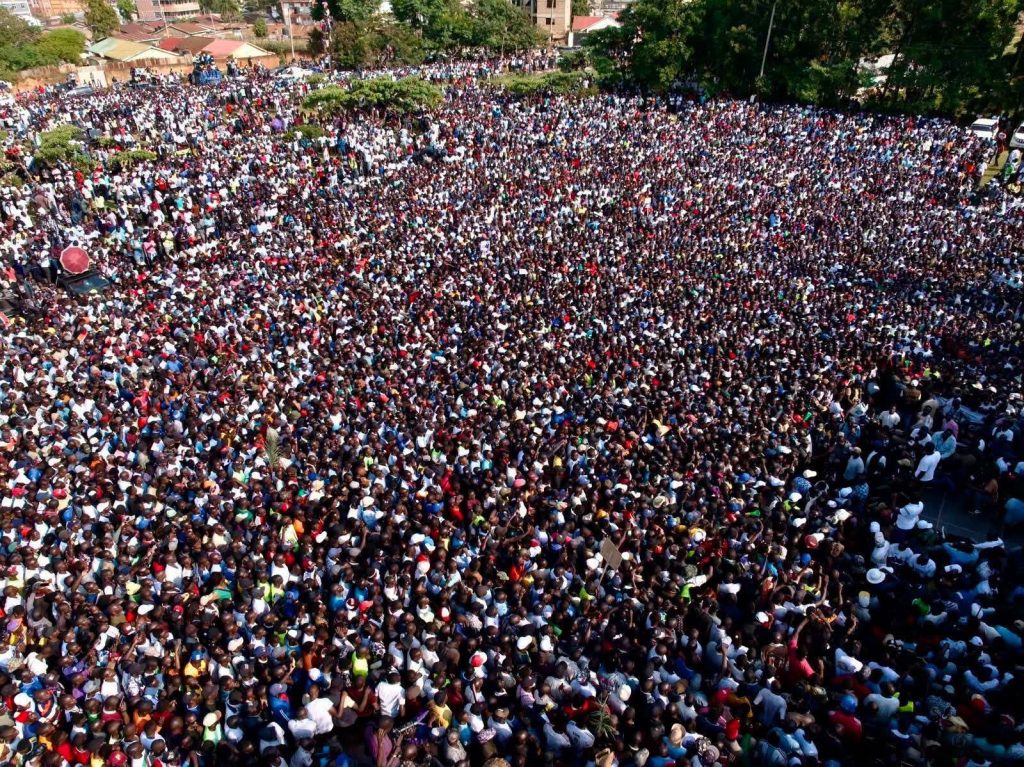
The strategy now faces a fresh test
Sifuna, a first-term senator from Bungoma County, has declared his readiness to run for president, while former Deputy President Rigathi Gachagua has publicly backed his ambitions, elevating the youthful opposition politician in coalition talks.
His emergence is challenging a political order long dominated by Mudavadi, Wetang’ula and Democratic Action Party-Kenya leader Eugene Wamalwa.
“If he is picked as the United Opposition presidential candidate or running mate, three quarters of Western Kenya votes will shift with Sifuna,” Embakasi North MP James Gakuya said recently.
The remarks reflect growing expectations that Sifuna could appeal to first-time and younger voters, many of whom were added to the register during the latest IEBC exercise.
Western Kenya recorded one of the country’s fastest voter registration growth rates.
Kakamega added 93,858 new voters, Bungoma 73,599, Busia 39,311 and Vihiga 24,400, representing a 10.4% increase compared with the 2022 register.
Political analyst Dismas Mokua said Western Kenya’s growing youth population could make the region less predictable than in previous elections.
“The increase in first-time voters means political parties cannot rely solely on traditional ethnic alliances. Candidates will increasingly have to persuade young voters on issues such as jobs, the economy and development,” Mokua said.
For Kenya Kwanza, the challenge will be convincing voters that having Mudavadi and Wetang’ula at the heart of government has delivered tangible development gains.
The administration has highlighted investments in roads, healthcare, agriculture, sugar sector reforms and employment as evidence that the region benefits from remaining in government.
Wetang’ula argues that backing Ruto remains Western Kenya’s best path to national influence.
“The region’s long-term dream of producing a President can only be realised by first delivering strong support for President William Ruto’s 2027 re-election bid,” he said.
The National Assembly Speaker said Ruto had honoured development commitments made to the region while ensuring equitable distribution of national resources.
“We can deliver more than four million votes to President Ruto in the next election,” Wetang’ula said.
Kakamega Deputy Governor Ayub Savula also dismissed suggestions that Kenya Kwanza’s support in the region was weakening.
“Their coming together united the two major sub-tribes, which is Bukusu and Maragoli. We remain united and will vote for President Ruto’s re-election bid in 2027,” Savula said.
The opposition, however, sees Western Kenya’s expanding electorate as an opportunity to narrow or overturn Ruto’s advantage in the next presidential election.
With more than 2.45 million registered voters, a rapidly growing youth population and competing political heavyweights pulling in different directions, Western Kenya is emerging as the electoral battleground that could determine Kenya’s next occupant of State House.
The region’s expanding voter register has turned it into one of the country’s most valuable political prizes, ensuring that both Ruto’s re-election campaign and Sifuna’s rising national ambitions will increasingly be judged by who wins the battle for Western Kenya.