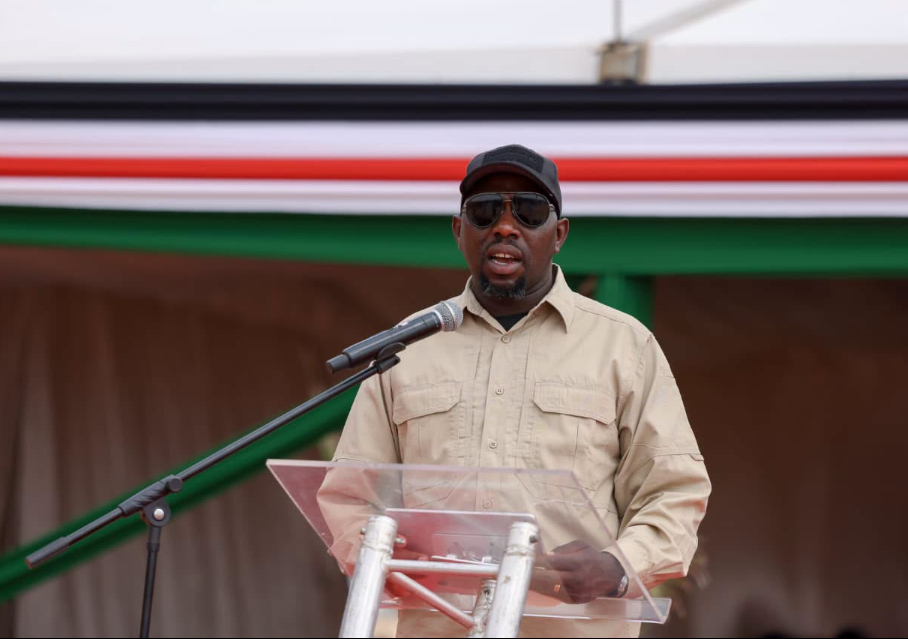
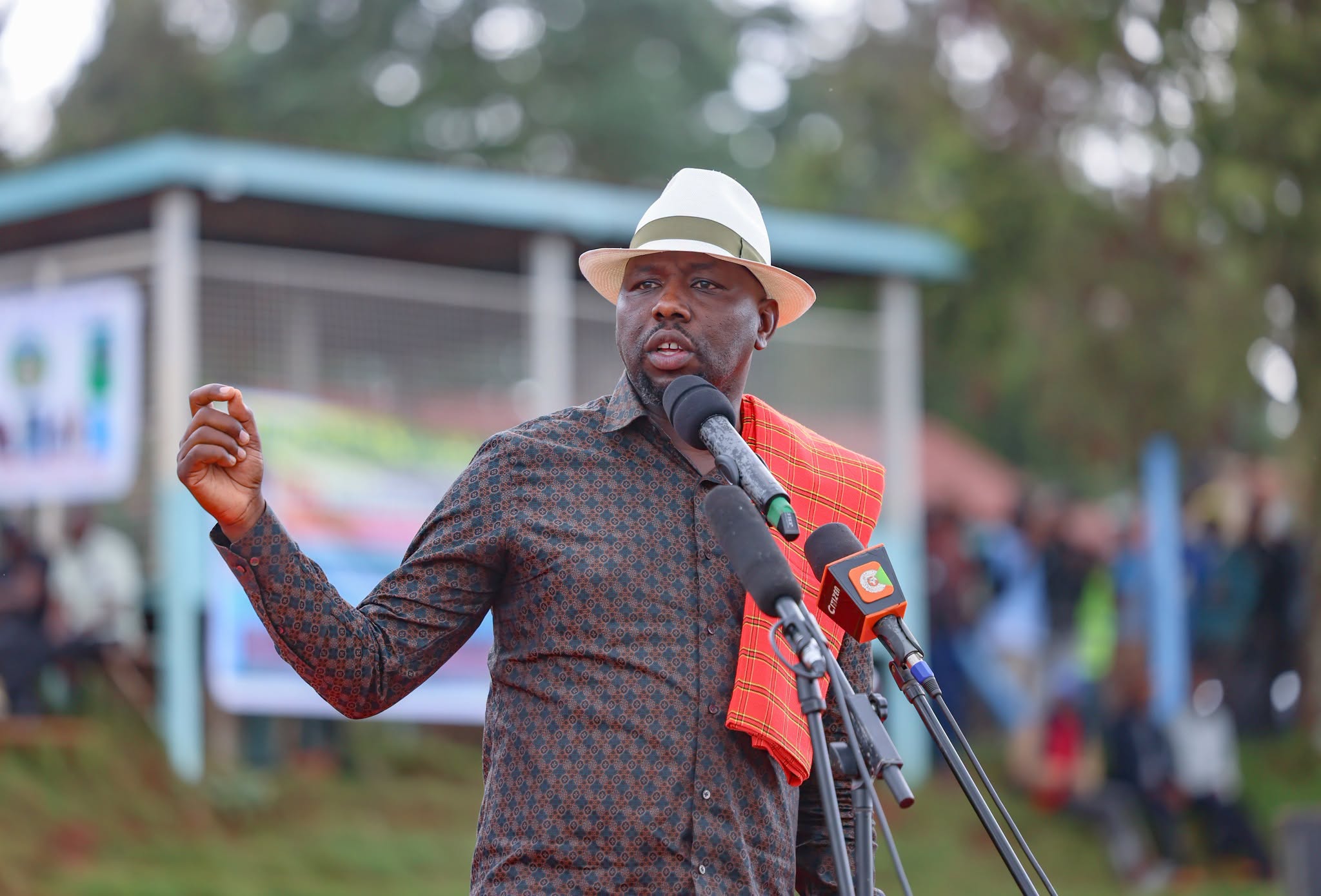

Interior Cabinet Secretary Kipchumba Murkomen has challenged the Opposition to present its development agenda ahead of the 2027 General Election, saying voters will judge political leaders by their track records and vision for Kenya.
Murkomen maintained that the next election would be determined by the ability of competing political leaders to deliver tangible results and present credible plans for transforming the country.
He cited economic inclusion, small and medium-sized enterprise (SME) development, infrastructure and security as some of the areas in which the government says it has demonstrated its commitment to delivering on its promises.
“The next General Election will be decided on track record and vision to transform Kenya into a more inclusive and developed nation,” Murkomen said during an empowerment event at Juakali, Kericho County, on Saturday, November 21, 2026.
His remarks put government performance and competing development agendas at the centre of the political contest ahead of the next national elections.
Murkomen challenges Opposition over IEBC criticism
The Interior Cabinet Secretary called on opposition leaders to focus on presenting alternative policies and development proposals instead of criticising the Independent Electoral and Boundaries Commission (IEBC).
He argued that political competitors should explain what they intend to do differently to address the country’s challenges and improve the lives of Kenyans.
“We have demonstrated our commitment to translate our promises into tangible results, economic inclusion, SME development, infrastructure and security, among other sectors,” he stated.
Murkomen further challenged the Opposition to outline its priorities, accusing its leaders of resorting to attacks against the electoral commission rather than presenting an alternative national agenda.
“We challenge our competitors to present their agenda, rather than resorting to baseless attacks on the Independent Electoral and Boundaries Commission,” he said.
The remarks signal the government’s defence of its development record as political leaders begin positioning themselves ahead of the 2027 polls.
Murkomen defends polling station results in Kenya’s electoral process
Murkomen also defended the constitutional framework governing the counting and declaration of election results, insisting that polling stations remain central to determining electoral outcomes.
He maintained that votes are counted and results declared at polling stations before the results are subjected to subsequent tallying and verification.
“The Constitution provides that votes are counted and results declared at the polling stations, with the results forming the basis of subsequent tallying and verification,” Murkomen said.
His position reflects Article 86 of the Constitution of Kenya, which requires votes to be counted, tabulated and announced promptly by presiding officers at polling stations.
The same constitutional provision requires results from polling stations to be openly and accurately collated and promptly announced by returning officers.
The provision also requires the electoral system to be simple, accurate, verifiable, secure, accountable and transparent.
Murkomen said the government would defend these constitutional requirements and protect the integrity of the electoral process against what he described as attempts by the Opposition to undermine them.
“We will, therefore, safeguard the integrity of our electoral processes and protect the constitutional provisions from the Opposition’s attempts to undermine them, which are driven by fear of an impending defeat,” he stated.
Electoral integrity features in 2027 election debate
The Cabinet Secretary’s remarks place electoral integrity, the role of the IEBC and the handling of election results among the issues shaping political discussions ahead of the next General Election.
His comments also reinforce the government’s position that political competition should be based on development performance, policy proposals and the ability to deliver on campaign commitments.
With the 2027 General Election approaching, questions surrounding the credibility of electoral institutions and the implementation of constitutional safeguards are likely to remain important in discussions about Kenya’s democratic process.
Murkomen’s challenge to the Opposition is to present an alternative vision for the country and allow voters to assess competing political formations based on their records, policies and proposed development agenda.