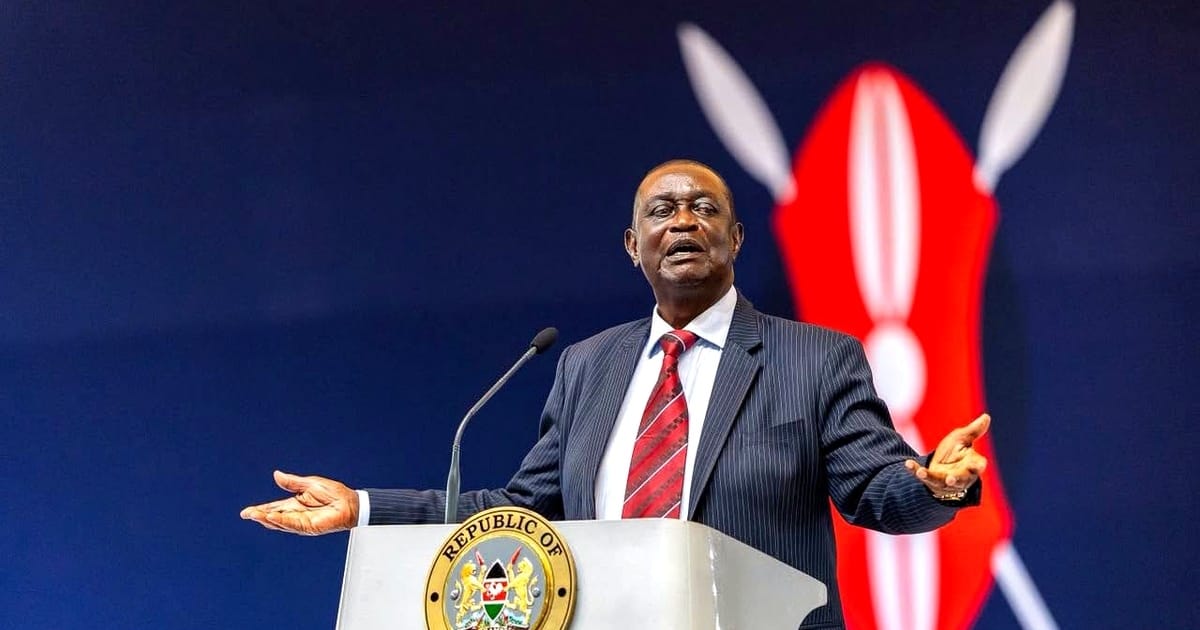
Orange Democratic Movement (ODM) party leader Oburu Oginga has welcomed the planned Sh2.2 trillion Dangote oil refinery in Lamu, describing the project as a major boost to industrialisation and economic development along the Coast.
In a statement issued on September 29, Oburu said the refinery represents a “structural revolution” that could transform the economic fortunes of Lamu County and the wider coastal region.
He said the project, which he described as the largest private industrial investment in East Africa, would create jobs, improve energy security and accelerate development along the Lamu Port-South Sudan-Ethiopia Transport (LAPSSET) corridor.
“Today we witness the groundbreaking of the largest private industrial investment in East African history on our coastline. This mega investment is a powerful catalyst towards national industrialization,” Oburu said.
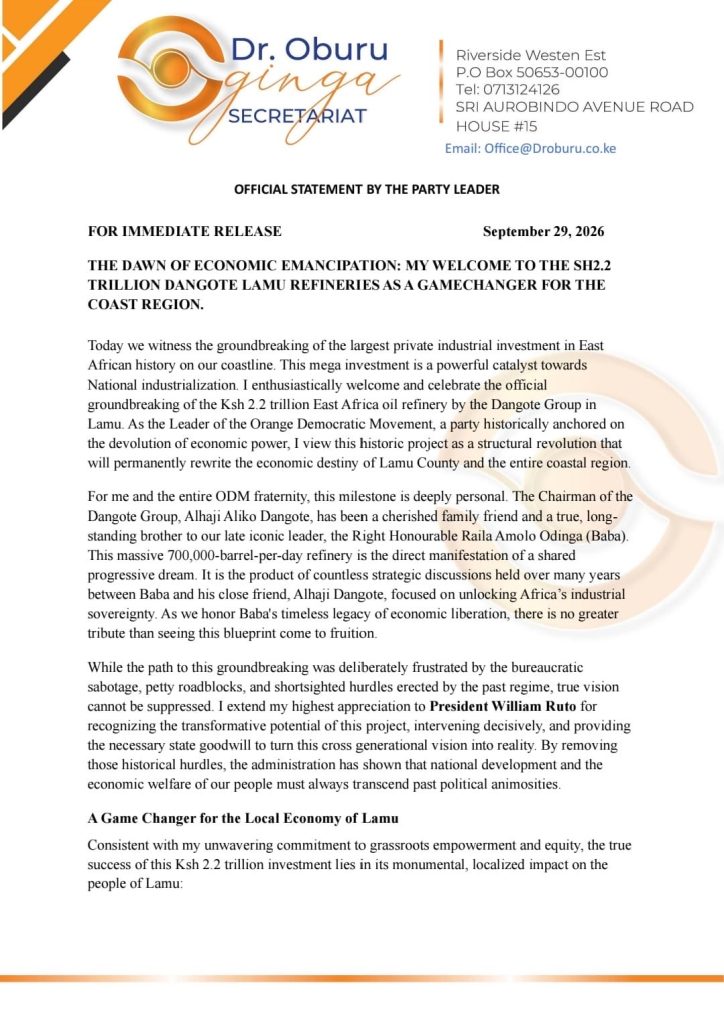
The ODM leader also credited President William Ruto for supporting the project, saying the administration had provided the state goodwill needed to move the investment forward.
He claimed the project had previously faced bureaucratic hurdles and delays under the former administration.
“By removing those historical hurdles, the administration has shown that national development and the economic welfare of our people must always transcend past political animosities,” he said.
Jobs and power generation
Oburu said the proposed refinery is expected to generate 1,000 megawatts of electricity, with 500MW intended for sale to Kenya’s national grid.
He argued that the additional power supply would support businesses and industries in the Coast region while helping address electricity reliability challenges.
The ODM leader further said the project could create more than 60,000 direct and indirect jobs, providing employment and skills-transfer opportunities for young people in Lamu and the wider Coast region.
He also linked the refinery to the expansion of the LAPSSET corridor, saying the investment could stimulate growth in shipping, logistics and marine infrastructure.
According to Oburu, the refinery could also attract downstream industries, including petrochemicals, manufacturing, packaging and fertiliser production.
Oburu invokes Raila-Dangote relationship
Oburu also connected the project to the legacy of his late brother and former ODM leader Raila Odinga, saying Dangote Group chairman Aliko Dangote was a long-standing family friend of Raila.
He said the refinery reflected a shared vision between Raila and Dangote on African industrialisation and economic independence.
“The Chairman of the Dangote Group, Alhaji Aliko Dangote, has been a cherished family friend and a true, long-standing brother to our late iconic leader, the Right Honourable Raila Amolo Odinga (Baba),” Oburu said.
He described the project as a potential tribute to Raila’s vision of economic empowerment and industrial development.
Call for protection of Lamu communities
Despite his strong support for the investment, Oburu urged the government and project stakeholders to ensure that communities hosting the project benefit from it.
He called for fair compensation, protection of land rights and meaningful involvement of local residents.
“In line with my stance on land rights and economic justice, I urge the government and project stakeholders to ensure that host communities are fully integrated, justly compensated, and protected,” he said.
Oburu also urged residents of Lamu and the wider Coast region to support the project, while accusing unnamed critics of attempting to derail the investment.
“This is your project; it is the key to your children’s future and the economic liberation of your households,” he said.
His statement comes amid renewed debate over the proposed refinery and its impact on communities in Lamu, with questions surrounding compensation, local benefits and environmental concerns forming part of the wider discussion around the project.
Oburu concluded by describing the refinery as a step towards reducing Kenya’s economic dependence and empowering communities through industrial investment.
“For us, such empowerment projects for our people is what it means when we say ‘Tunataka Pawaa!’” he said.