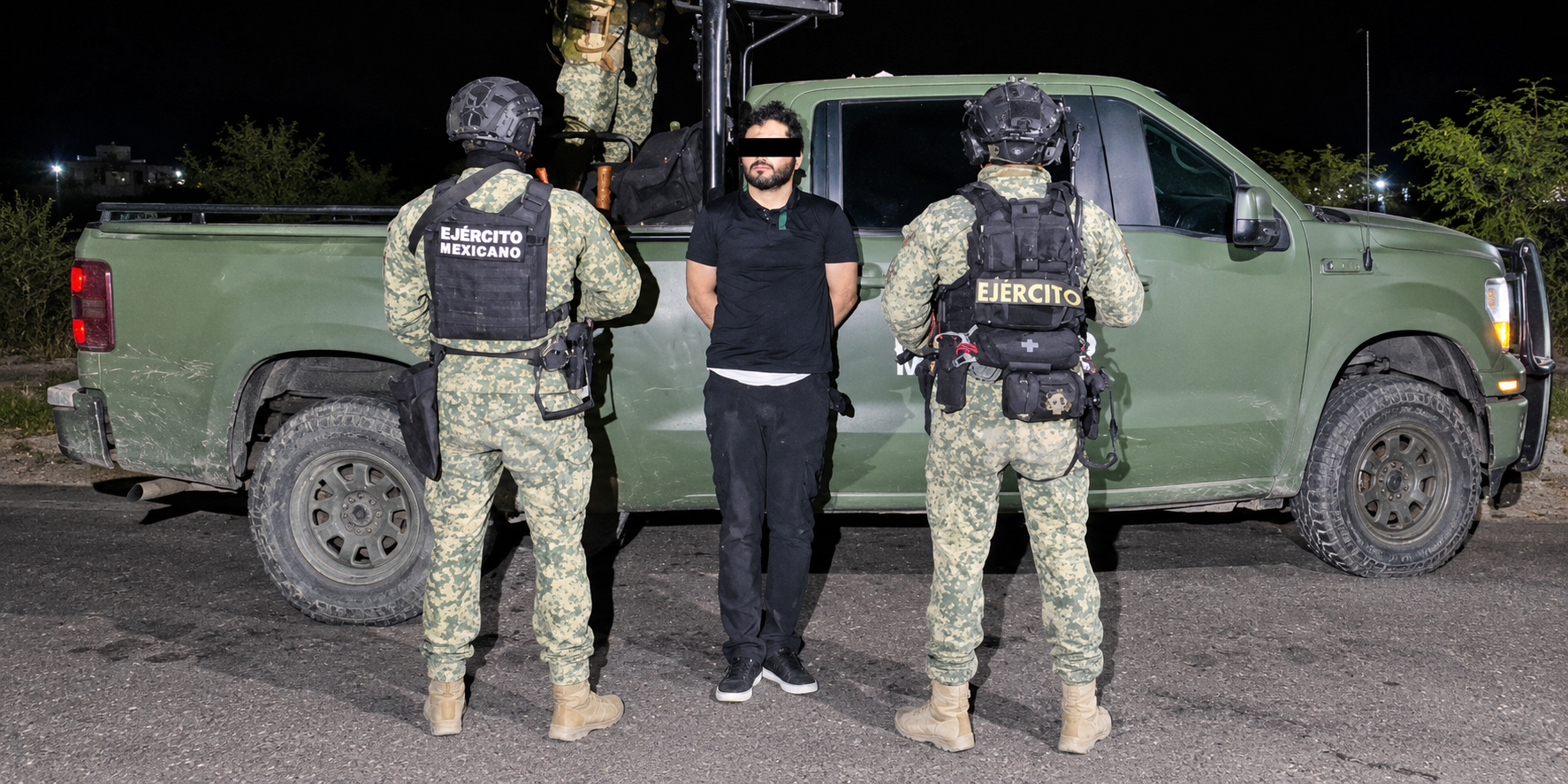

Mexican special forces have captured one of the country’s most wanted drug lords, Fausto Isidro Meza Flores, known as ‘El Chapo Isidro’, in an operation supported by US intelligence that triggered violent clashes across the northwestern state of Sinaloa.
Meza Flores was arrested alongside two alleged senior members of his criminal organisation in Guasave on Friday night, November 20, 2026. Mexican authorities confirmed the arrests on Saturday, describing the operation as a major development in the country’s fight against organised crime.
Mexico’s Security Secretary Omar García Harfuch announced the arrests, while the Defence Ministry said the operation involved Mexican Army special forces and National Guard personnel working with intelligence information provided by the United States.
According to the Defence Ministry, security forces tracked down the suspects before launching a surprise operation at their location.
The military said its personnel came under attack from suspected cartel members using firearms and explosives. Despite the resistance, troops managed to arrest the three suspects and transfer them to Mexico City aboard a Mexican Air Force aircraft.
The other detainees were identified as Germán, known as ‘Serafín’, who allegedly served as the organisation’s second-in-command, and José, an alleged financial operator.
The capture is particularly significant because Meza Flores had remained a major target of Mexican and US law enforcement agencies for years.
Violence grips Sinaloa
The arrest was followed by a wave of violence in parts of Sinaloa, where suspected cartel members reportedly responded with armed attacks, burning vehicles and road blockades.
Several businesses and vehicles were set on fire, while gunfire caused panic among residents in affected communities.
One of the most alarming incidents occurred during a baseball game in Guasave, where spectators fled the stadium after shooting was heard nearby. The match between Algodoneros de Guasave and Venados de Mazatlán was suspended.
Paola Sánchez, a Guasave resident and firefighter, described the destruction caused by the violence.
“Last night, many businesses were burned, including Oxxo stores, kiosks and pharmacies, along with cars and trucks,” she said.
She added that firefighters had remained inside their station during the violence before receiving permission to inspect affected areas on Saturday morning.
Authorities urged residents to avoid affected roads as security forces worked to restore order.
García Harfuch said security personnel would remain deployed across the state and described the arrest as “an important step in pacifying Sinaloa.”
The clashes demonstrate the security challenges facing Mexican authorities as they target senior figures in powerful criminal organisations.
Why his arrest matters
Meza Flores was considered a leading figure in the Beltrán Leyva criminal organisation and had links to the Los Mayos faction of the Sinaloa Cartel.
He was also listed among the FBI’s Ten Most Wanted Fugitives, with US authorities offering a reward of up to $5 million for information leading to his arrest.
According to the FBI, Meza Flores allegedly led the Meza-Flores Transnational Criminal Organisation, which was involved in trafficking cocaine, heroin, methamphetamine, fentanyl and marijuana into the United States.
His organisation maintained influence across parts of northern Sinaloa, including areas around Guasave and Los Mochis.
The arrest comes amid growing pressure from US President Donald Trump on Mexico to intensify its crackdown on drug cartels and disrupt the flow of illegal drugs across the border.
The US Drug Enforcement Administration welcomed the development, describing the capture as a significant setback for the criminal organisation.
“The capture of El Chapo Isidro delivers a significant blow to a ruthless criminal organization,” the agency said.
However, removing a senior cartel figure does not necessarily dismantle the network behind him. Such organisations often retain armed members, financial operators and trafficking connections even after their leaders are arrested.
The immediate concern for Sinaloa residents is whether the violence that followed the operation will continue. For Mexican and US authorities, the bigger test will be whether Meza Flores’ capture weakens the organisation’s drug-trafficking operations or creates a power struggle among those seeking to take his place.