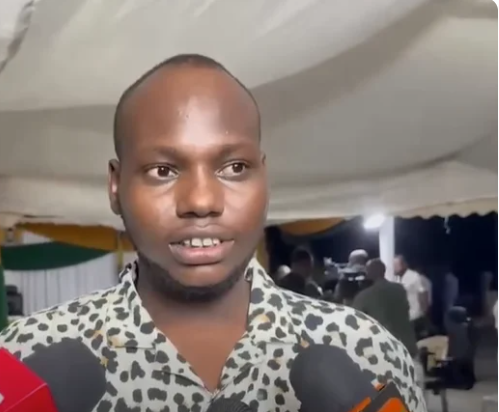
When Paul Mackenzie’s religious teachings began shaping his children’s lives, one of his sons refused to follow the path his father had chosen for them.
Dan Mackenzie did not want to attend church. He resisted the fasting and the religious demands that increasingly defined life around his father’s Good News International Church.
His refusal, however, came at a cost.
“He was just rebellious. I didn’t want to join or go to church when I was a kid. So he just gave up on me,” Dan recalled.
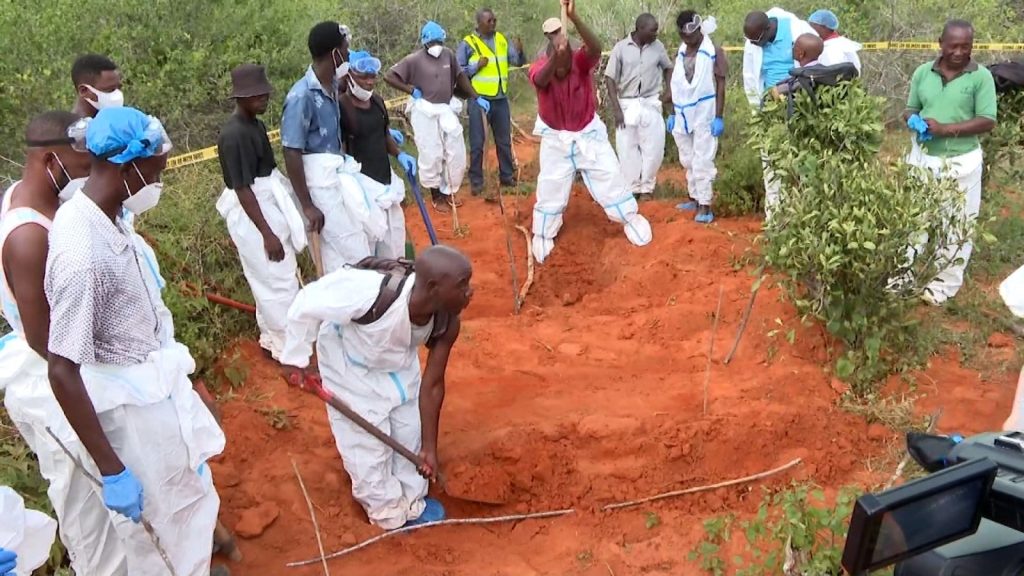
What appeared to be a childhood disagreement over religion would eventually become a defining moment in Dan’s life, separating him from his father and the religious movement that would later be linked to the deaths of hundreds of people in Shakahola Forest.
But the consequences of that separation did not end with his childhood.
Years later, as the Shakahola tragedy unfolded and his father faced murder charges, Dan found himself confronting another painful reality: some of his younger siblings were still caught up in the same religious teachings he had struggled to escape.
And this time, he would not remain silent.
The childhood that separated a son from his father
Dan’s account reveals a family relationship that had already become strained long before the Shakahola tragedy attracted national attention.
He recalled being subjected to fasting when he was just 12 years old, despite not understanding or accepting the religious demands placed on him.
In one particularly disturbing incident, Dan said he was beaten by church members for nearly three hours because he refused to attend a church service.
The experience deepened his resistance to the religious environment surrounding his father.
His relationship with Mackenzie deteriorated further, with Dan eventually finding himself without the parental support he needed.
“I never had a close relationship with my father. I have no childhood memories with him.”
The separation affected his education and livelihood. Dan previously disclosed that he left school in Class Seven and turned to boda boda riding in Malindi to support himself.
For a young man who had grown up in a family headed by a preacher, the experience was a painful departure from the life his father had envisioned.
Yet, in hindsight, his refusal to surrender to those teachings may have saved him from the fate that befell other followers.
The shocking discovery that forced him to confront his own family
Perhaps the most difficult chapter in Dan’s story came years after he had separated himself from his father’s church.
Despite Mackenzie’s arrest in April 2023, the influence of the religious teachings had not disappeared from the family.
In October 2026, Dan raised the alarm after discovering that his younger siblings were allegedly still being subjected to forced fasting.
According to his account to the BBC, the children had been denied food for almost three days.
He reported the matter to authorities, triggering a police operation that rescued eight children, including five of his younger siblings, from their grandmother’s home.

It was a decision that placed him in an uncomfortable position.
The person he had to report was his own grandmother.
“I had to report my grandmother,” he told the BBC.
The decision illustrates how deeply the crisis had penetrated his family. Dan was no longer simply a son trying to distance himself from his father’s religious beliefs. He was now taking action to protect children who remained exposed to them.
For someone who had previously experienced the consequences of resisting those teachings, the discovery brought back painful memories.
But this time, he was in a position to intervene.
Why dan says his father’s 200-year sentence is justice
On November 6, 2026, the High Court in Mombasa sentenced Paul Mackenzie to 200 years in prison following his conviction for the murder of 190 children and one adult in the Shakahola case.
The sentence comprised two consecutive 100-year terms: one for murder by starvation and another for direct homicide.
Twenty-eight co-accused persons also received prison sentences ranging from 10 to 160 years.
For Dan, the judgment was not a moment to defend his father simply because of their family relationship.
Instead, he viewed it through the experiences of those who lost their loved ones.
Speaking after the conviction, he said: “It’s justice to the people who we lost over there in Shakahola.”
His position was particularly striking because he was speaking about a man whose name he carries and whose teachings had once shaped his childhood.
Dan also revealed that his father accused him of betrayal after they spoke following the judgment.
“My father told me that I had betrayed him. I don’t know why. For me, I have nothing to tell him,” he said.
The exchange exposed just how far apart the two had become.
For Mackenzie, his son’s actions were apparently an act of betrayal. For Dan, however, distancing himself from the teachings and protecting his younger siblings were decisions he could not reverse.

The other victims in Dan Mackenzie’s story
Beyond the court proceedings, Dan’s experience raises a difficult question about families caught up in extremist religious movements: what happens to those who survive but must rebuild their lives after leaving?
Dan has previously spoken about losing friends and his younger brother to the movement.
He has also had to deal with the stigma of being associated with a father whose name became synonymous with the Shakahola tragedy.
Yet he has maintained that he should not be judged for crimes he did not commit.
In an interview with the BBC, he explained that some residents had initially been angry with him because of his father’s actions, although others eventually understood that he had separated himself from that life.
His story is therefore not simply about a son celebrating his father’s imprisonment.
It is about a young man who says he was rejected for resisting religious demands, struggled to establish himself outside that environment, and later took the difficult step of reporting members of his own family to protect his siblings.
The 200-year sentence may determine Mackenzie’s future, but it cannot restore the childhood Dan says he lost, reunite him with those he lost to the movement, or erase the years of family separation.
And perhaps the most striking part of his account is that the son his father allegedly gave up on became one of the people who stood up when his younger siblings needed protection.