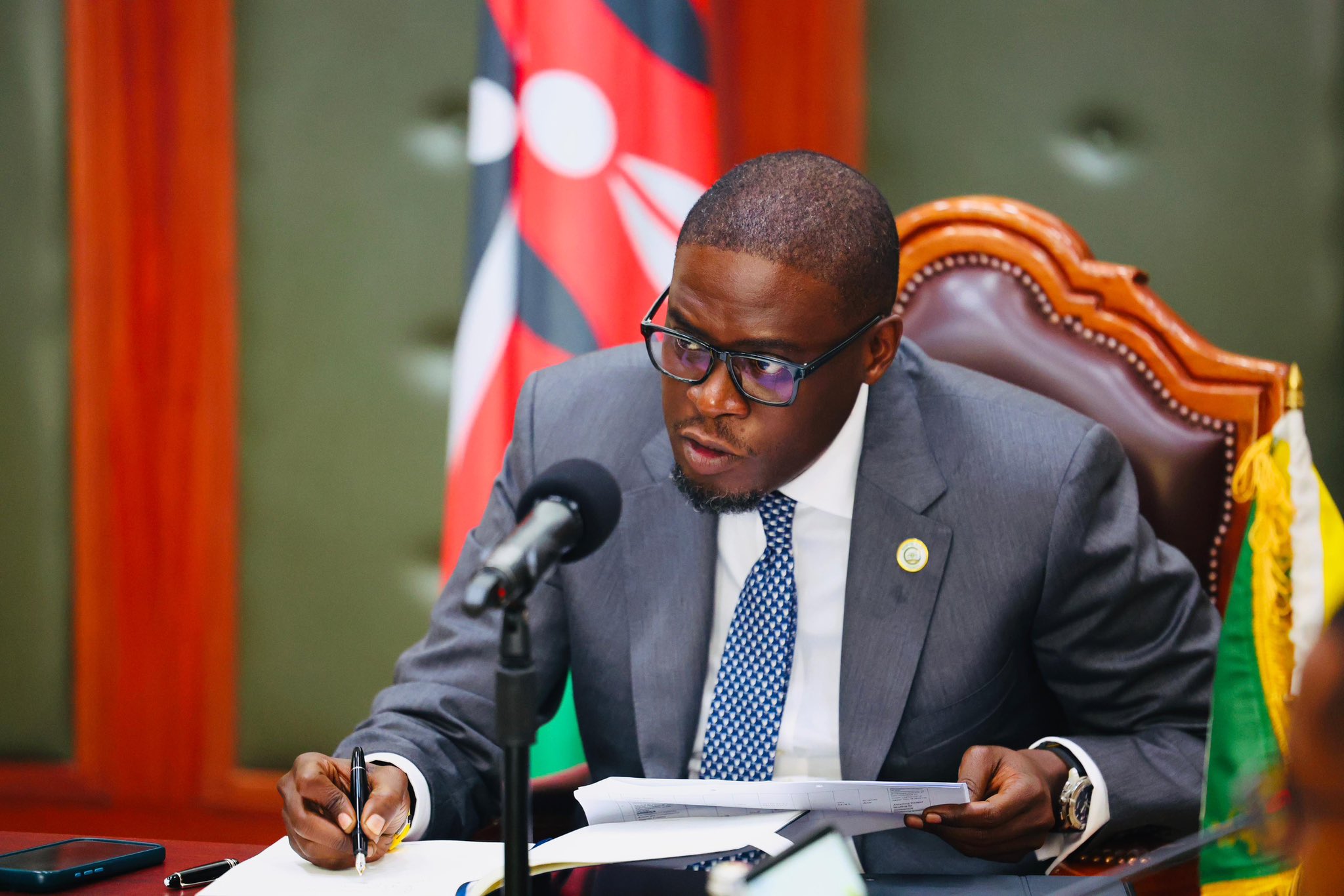
Nairobi Governor Johnson Sakaja has revealed that about 250 building enforcement cases remain pending, calling for special prosecutors to handle physical planning violations following the collapse of a multi-storey building in Eastleigh.
Sakaja said delays in prosecuting alleged construction offences were undermining Nairobi County’s efforts to enforce building regulations and hold developers accountable.
Speaking to journalists at the scene of the collapsed building on Friday, October 23, the governor said the backlog had made it difficult to translate enforcement action into meaningful legal consequences.
“We have 250 cases that have been stuck in that process of enforcing,” Sakaja said, describing the challenges facing the county as it pursues developers accused of violating construction regulations.
He called on the Office of the Director of Public Prosecutions (ODPP) to facilitate the appointment of special prosecutors to handle building and physical planning offences in Nairobi’s city courts.
“We have written severally to the different agencies, DPP, asking them to even gazette special prosecutors to the city courts who can handle infractions of a similar nature, especially enforcement of physical land-use plans,” he said.
Sakaja: Building violations are a matter of life and death
The governor said enforcement failures could have serious consequences for residents, workers and members of the public, particularly where construction rules intended to protect lives were ignored.
“It’s about life and death. It’s about the life of kids,” Sakaja said, urging authorities to address weaknesses in the system.
He explained that prosecuting developers could become difficult when suspects were unavailable or had left the country, complicating efforts to enforce legal requirements.
Sakaja also questioned the effectiveness of enforcement notices when developers continued with projects despite interventions by county officials.
His remarks have renewed attention on the role of county authorities, prosecutors and other regulatory agencies in preventing unsafe construction in Nairobi.
Residents urged to report unsafe buildings
Sakaja said the county had received photographs and complaints from residents concerned about cracks and other suspected defects in buildings across the capital.
He urged residents’ associations to share information about developments they suspected had been constructed without the necessary approvals.
The governor said the reports would help officials identify buildings requiring further inspection and establish whether developers had complied with planning and construction requirements.
He indicated that the county would continue examining complaints about potentially unsafe structures as it worked to strengthen enforcement.
However, suspected defects or the existence of an enforcement case do not, on their own, establish that a building is unsafe or that a developer has committed an offence. Such findings require appropriate technical assessments and legal processes.
Eastleigh collapse puts construction oversight under scrutiny
The building collapsed on Friday along 9th Street in Eastleigh, Nairobi, triggering a rescue operation amid fears that people were trapped beneath the rubble. The structure was under construction, while its ground floor was occupied. Authorities had not immediately established the cause of the collapse. <
The incident has raised fresh questions about building approvals, inspections and the enforcement of construction safety regulations in the capital.
Sakaja’s remarks place particular focus on whether enforcement notices and prosecution proceedings are sufficient to deter developers from violating building regulations.
The governor said stronger coordination with national agencies was necessary to address the backlog and improve enforcement of physical planning rules.
The approximately 250 pending cases he cited relate to the county’s wider enforcement challenges; he did not establish that all the cases involved buildings at risk of collapse or were connected to the Eastleigh incident.
Investigations into the collapse will be needed to establish the circumstances that led to the disaster and determine whether any individuals or companies should face legal or professional action.
Sakaja’s call for special prosecutors underscores the county’s position that enforcement must go beyond issuing notices and must result in appropriate action against those found to have breached the law.
For Nairobi, the immediate challenge is to strengthen oversight of construction projects, investigate suspected violations and ensure that building regulations designed to protect lives are enforced.