

For Samuel Kopi, buying a home at Karibu Homes in Athi River was supposed to be a long-term investment for his family.
He had hoped to raise his children there and eventually pass the property on to the next generation.
“I was so happy. I thought that this one I will pass it to my generation,” Kopi said.
Now, he is packing up and preparing to leave.
Kopi is among homeowners facing eviction from the development following concerns over structural defects that have left visible cracks on several apartment blocks.
But as affected families prepare to leave, at least some homeowners say they are still servicing loans used to buy the properties.
“I don’t know where to go and what to do because I am servicing a loan that I have not cleared. Then I have to move out,” Kopi said.
His predicament highlights the financial dilemma at the centre of the dispute: leaving a home does not automatically end the financial obligations incurred to buy it.

Karibu Homes comprises 500 residential units spread across 63 apartment blocks in phases one and two. Some residents have lived in the development for more than eight years.
In blocks M, N and P, known as the London blocks, vertical cracks run along the expansion joints from the rooftop towards the ground floor. Residents say the cracks are visible both inside and outside the buildings.
The concerns have turned what homeowners regarded as a major investment into a dispute over the safety of the buildings, responsibility for the defects and what should happen to families who are required to leave.
“This has been a dream, to have a home and to live in it,” homeowner Kenneth Njukira said.
Njukira said an assessment conducted by five government agencies identified structural defects and made recommendations concerning the buildings.
“Out of the assessment done by five government agencies, they drew recommendations which pointed to the structural defect and everything to do with the structure of the buildings,” he said.
Compliance
The Machakos County government has also issued an enforcement notice to the developer.
According to the notice, the county’s Department of Physical and Land Use Planning cited the development for allowing occupation without acquiring a certificate of compliance. It also cited the development for substandard residential buildings that it said posed a danger to the public.
The notice has intensified pressure on residents as the deadline for leaving approaches.
For affected families, the consequences extend beyond losing access to their homes.
Kopi said his children attend school in the area, raising concerns about the disruption that relocation could cause to their education. At the same time, homeowners who have outstanding loans face the prospect of finding alternative accommodation while continuing to meet their existing financial obligations.
Mary Rukwaro said residents want the developer to account for the condition of the properties.
“We feel that he needs to be accountable because it seems like the properties were not properly built. Basically, you own a home but are getting nothing out of it,” Rukwaro said.
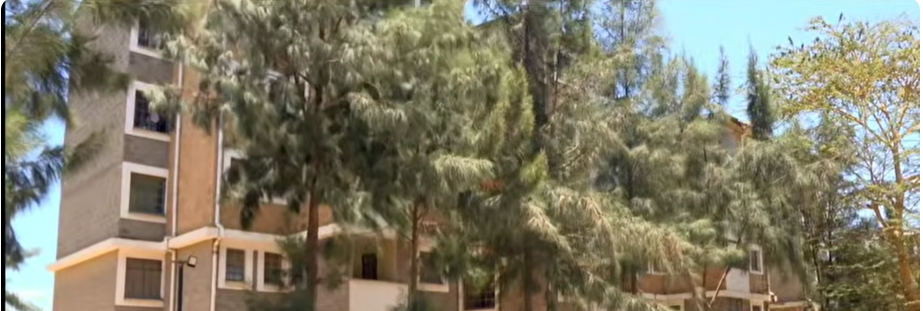
Njukira said retrofitting had been discussed as one possible response to the structural concerns, but that representatives of the developer wanted another assessment.
“Part of what they quoted was the retrofitting, but the team representing the developer, they are for doing another report to come up with their own assessment,” he said.
Njukira said homeowners want the findings of the government assessment acted upon and the necessary work completed so residents can eventually return to their homes.
“The report is clear and it points to liability. It’s clearly indicated there, so that the owners of these units can come back, just to have their homes back,” he said.
However, the homeowners’ assertion that the developer is liable remains part of the dispute and should not be presented as an established legal finding unless supported by a formal determination.
The immediate concern for residents is therefore twofold: whether their homes are safe to occupy and what happens to the financial commitments attached to those homes if they have to leave.
For Kopi, that uncertainty is compounded by his family’s circumstances.
“I don’t know where to go and what to do because I am servicing a loan that I have not cleared. Then I have to move out. Children are in school around…” he said.
The homeowners now face questions over the cost of repairs, the duration of any evacuation, alternative accommodation and the status of their financial obligations while they are unable to occupy their homes.
The developer’s response to the structural-defect allegations, the county enforcement notice, the government assessment and the homeowners’ claims of liability is also central to the dispute. That response should be included before publication.
For residents who spent years working towards home ownership, the crisis has created a painful contradiction: they may have to leave properties they spent years buying while continuing to pay for them.
Kopi’s experience puts that dilemma in stark terms.
“I don’t know where to go and what to do because I am servicing a loan that I have not cleared. Then I have to move out.”