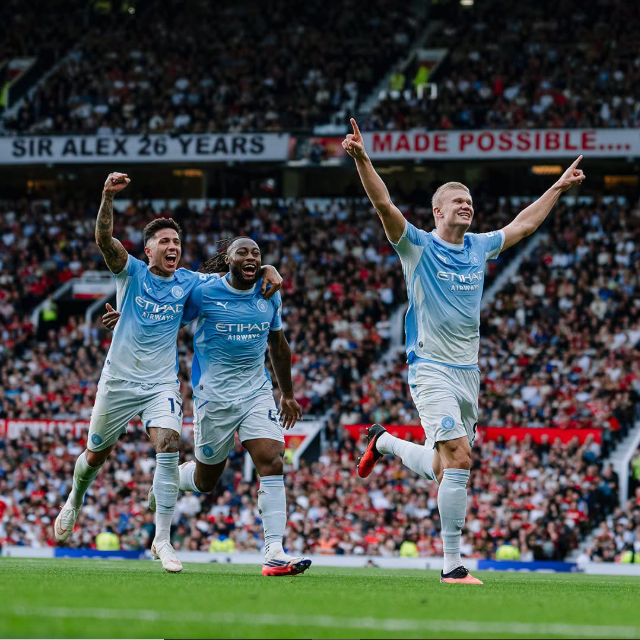
Manchester City’s 1-0 victory over Manchester United at Old Trafford on Sunday, September 13, 2026, may have been decided by a moment that has once again raised serious questions about the effectiveness of Video Assistant Referee (VAR) in the Premier League.
Erling Haaland’s 60th-minute goal gave Manchester City victory in the latest Manchester derby, but the goal should not have stood, according to Pro Ref, the body responsible for professional refereeing in English football. The admission has placed VAR under renewed scrutiny at a time when the technology is supposed to provide greater accuracy and reduce controversial refereeing decisions.
The incident is particularly damaging because it was not a case of technology failing to identify an offside position. Instead, it was a failure of interpretation by the officials operating the technology.
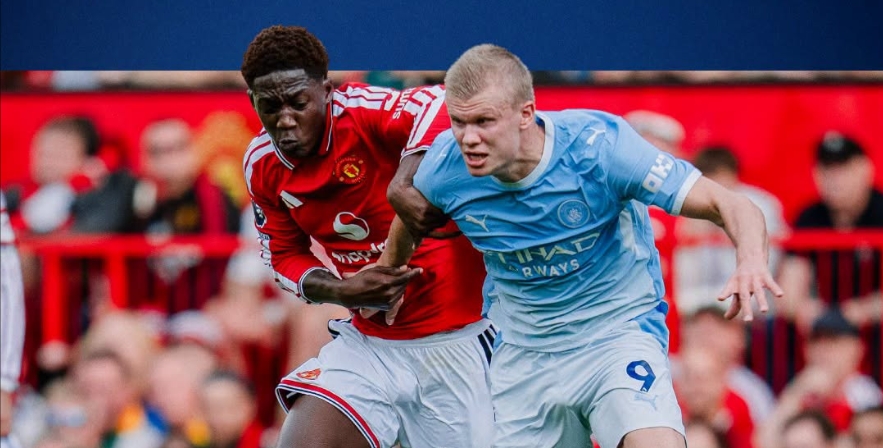
Haaland was initially flagged offside after turning in Josko Gvardiol’s cross. VAR subsequently established that the striker was actually being played onside by Patrick Dorgu’s boot and overturned the assistant referee’s decision.

However, another Manchester City player, Enzo Fernandez, was in an offside position and attempted to reach the cross. Although Fernandez did not touch the ball, his movement raised the question of whether he had interfered with play or affected the ability of United’s defenders to deal with the cross.
VAR error in Manchester Derby
Pro Ref later admitted that VAR had failed to take Fernandez’s potential influence into account and should have recommended an on-field review by referee Michael Oliver. The organisation described the decision as an “error of judgement” and contacted Manchester United to acknowledge the mistake.
That admission is significant because it exposes one of VAR’s biggest weaknesses in the Premier League: technology can provide more information, but it cannot eliminate human interpretation.
When technology creates another problem
VAR was introduced to correct clear and obvious errors. Yet the Manchester derby demonstrated how the system can sometimes move a match from one controversial decision to another.
The assistant referee’s initial decision was to rule out Haaland’s goal for offside. VAR correctly established that Haaland himself was onside. But the subsequent assessment of Fernandez’s involvement was subjective.
That means the technology did not simply identify whether a player was ahead of the last defender. It required officials to decide whether an offside player had influenced the play. That distinction matters.
The Premier League itself says VAR is not intended to “re-referee” matches and operates with a high threshold for intervention. The league’s own Key Match Incidents Panel has repeatedly acknowledged that VAR can miss situations where intervention should have occurred.
The problem, therefore, is not necessarily that VAR exists. It is how much authority is given to VAR officials when dealing with subjective incidents.
The danger to competitive fairness
The biggest concern is the effect such mistakes can have on the league table.
A wrong decision in September can appear insignificant because there are still dozens of matches remaining. But Premier League seasons are frequently decided by only a handful of points.
A goal can change three points into one, or one point into zero. A penalty can change the outcome of a match. A red card can alter an entire contest.
In the Manchester derby, City’s winning goal came after Phil Foden had already been sent off in the 23rd minute, leaving City with 10 men for more than an hour. United therefore had a major numerical advantage, yet ultimately lost the match after Haaland’s disputed goal.
United’s performance cannot simply be dismissed because of the VAR error. The home side had opportunities to score and failed to take advantage of City’s numerical disadvantage. But that does not make the officiating issue irrelevant.
The Premier League must be able to guarantee that decisive incidents are judged consistently, particularly in matches involving clubs competing for European qualification, titles or survival.
The problem is bigger than Manchester
The Manchester derby is only the latest example of a wider problem.
The Premier League’s own KMI system has already identified VAR errors during the opening weeks of the 2026/27 campaign. After Matchweek 2, the league reported that 56 key match incidents had been assessed during the season, with 84 per cent of on-field decisions judged correct and 96 per cent correct after VAR intervention. However, the same assessment identified a missed VAR intervention.
Those numbers demonstrate that VAR improves decision-making overall, but they also show that the system is not infallible.
Last season, the KMI Panel identified 25 VAR errors, according to reporting based on the panel’s assessments. That was an increase from 18 the previous season. Importantly, those figures do not include every controversial refereeing decision because an error may not meet the Premier League’s threshold for VAR intervention.
A better VAR model is possible
The answer should not necessarily be to abolish VAR.
The technology has undoubtedly corrected many serious mistakes and has become an established part of elite football.
Instead, the Premier League needs to improve the way it is used.
VAR officials should be encouraged to intervene when there is credible evidence that a major decision may be wrong, particularly in subjective situations. Referees should also be more willing to use the pitchside monitor rather than allowing VAR officials to make increasingly important interpretations from Stockley Park.
The league could also strengthen the publication of VAR audio and explanations after controversial matches.
That would allow supporters, clubs and the media to understand not only what decision was made but why it was made.
The experience of other European leagues also suggests there is no single perfect VAR model. Different countries have adopted different approaches to intervention, review thresholds and communication, with some favouring a lighter-touch system.
The Premier League cannot afford to lose credibility
The greatest threat posed by VAR is not that it occasionally makes mistakes.
Human beings will always make mistakes.
The real danger is that repeated mistakes could convince supporters that the system is inconsistent, unpredictable or incapable of correcting the very errors it was introduced to eliminate.
The Manchester derby should therefore serve as a warning.
Manchester City deserved credit for surviving more than an hour with 10 men and finding a way to win. Manchester United must also accept responsibility for failing to exploit their numerical advantage.
But both truths can exist alongside another uncomfortable fact: the decisive goal was wrongly awarded according to the organisation responsible for Premier League refereeing.
That is precisely why VAR must be improved.