President William Ruto has instructed Kenya’s police to remain impartial as political competition intensifies ahead of the 2027 General Election, telling officers to protect peaceful dissent while acting firmly against violence and other criminal conduct.
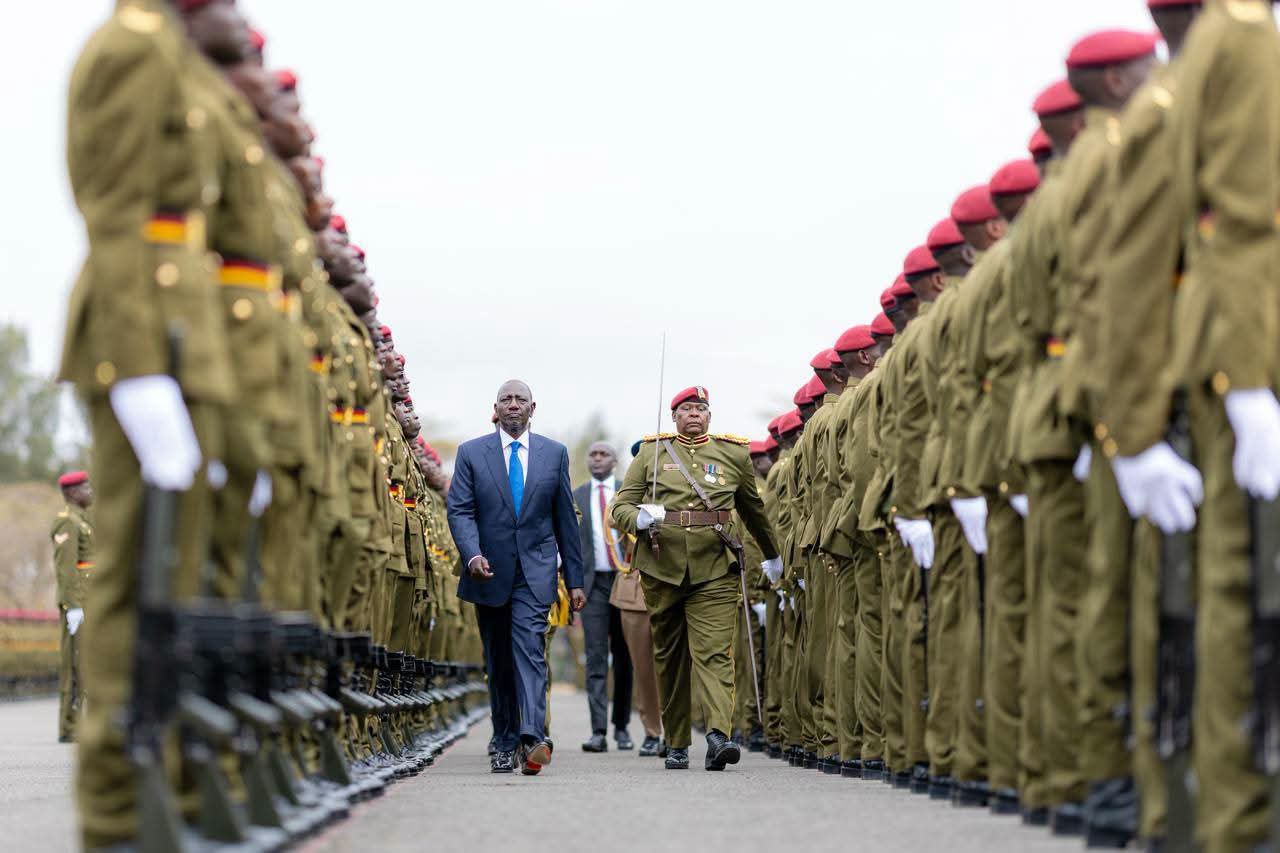
Ruto made the remarks on Friday, September 18, while presiding over the passing-out parade of 1,273 General Service Unit officers at the National Police College in Embakasi.
His message placed police neutrality and the protection of political rights at the centre of Kenya’s preparations for the next election.
“Political competition will intensify, parties will organise, candidates will campaign, and citizens will assemble.”
He then set out what he said should be the police response:
“The duty of the police is to secure this democratic space impartially.”
Ruto warned political leaders against involving police officers in partisan activity, saying leaders should not “draw the police into partisan contests, incite violence, or ask officers to carry out unlawful instructions.”
The instruction is consistent with Kenya’s Constitution, which states that national security organs, including the National Police Service, must not act in a partisan manner, advance the interests of a political party or cause, or prejudice a legitimate political interest or cause.
Ruto draws line between protest and violence
Ruto also addressed the police response to demonstrations, distinguishing constitutionally protected political activity from criminal conduct.
He referred to Article 37 of the Constitution, which protects the right to “assemble, demonstrate, picket and present petitions”, and said:
“Peaceful dissent is part of constitutional democracy and must be protected.”
But he said the protection did not extend to violence, intimidation, looting, arson or destruction of property.
His instruction was unequivocal:
“No political objective can excuse criminal conduct. Protect peaceful assembly, protect life and property, and act firmly and lawfully against those who organise, fund, incite or perpetrate violence.”
The distinction is significant as Kenya enters an increasingly active pre-election period. The National Police Service has already begun developing its security framework for the 2027 polls, with neutrality, human rights, public order, accountability and the rule of law identified among its guiding principles.
Inspector General of Police Douglas Kanja said on September 2 that the police election-security framework would cover the period before, during and after the 2027 election. The plan includes cooperation with the Independent Electoral and Boundaries Commission, inter-agency coordination, public-order management, human rights and strategic communication.
The IEBC’s election operations plan also includes ongoing electoral risk assessment, coordination with the National Police Service, and training security officers on electoral security.
Warning comes amid reports of pre-election violence
Ruto’s call for impartial policing comes amid documented reports of violence at political and civil-society gatherings.
Human Rights Watch said on September 11 that unidentified armed groups had attacked civil-society and opposition political gatherings in several parts of Kenya in recent months. It said the attacks had reportedly killed at least six people and injured dozens more.
The organisation said the incidents had created a climate of fear around the elections and called for prompt and transparent investigations.
Human Rights Watch documented attacks including an incident at a civil-society meeting in Nairobi in June, violence during by-elections in Ol Kalou, an attack at a church service in Kisumu in July and an August attack on a convoy travelling to a political rally in Homa Bay. It was also reported that police had announced arrests in some of the cases.
Those reports provide context for Ruto’s warning, but they should not be presented as evidence that Kenya is already entering an election crisis. The incidents are specific and documented; their wider political significance remains contested.
Police neutrality now under scrutiny
Ruto also sought to reassure the newly trained officers that the government would support them when they acted within the law.
“When you perform your duty lawfully, professionally, and courageously, your Government will stand with you.”
The statement puts the focus on a central challenge for the National Police Service during the election period: enforcing laws and maintaining public order while respecting constitutional political rights and avoiding partisan involvement.
That challenge will become more consequential as campaigns, rallies and political mobilisation increase ahead of the August 2027 election.
The National Police Service says its preparations are already under way, with a phased security framework running from September 2026 through the post-election period. Its stated principles include neutrality and non-interference, equal treatment and non-discrimination, accountability and the rule of law.
For the police, therefore, Ruto’s message is not simply to keep order. It is to enforce the law without allowing political competition to determine how that law is applied.