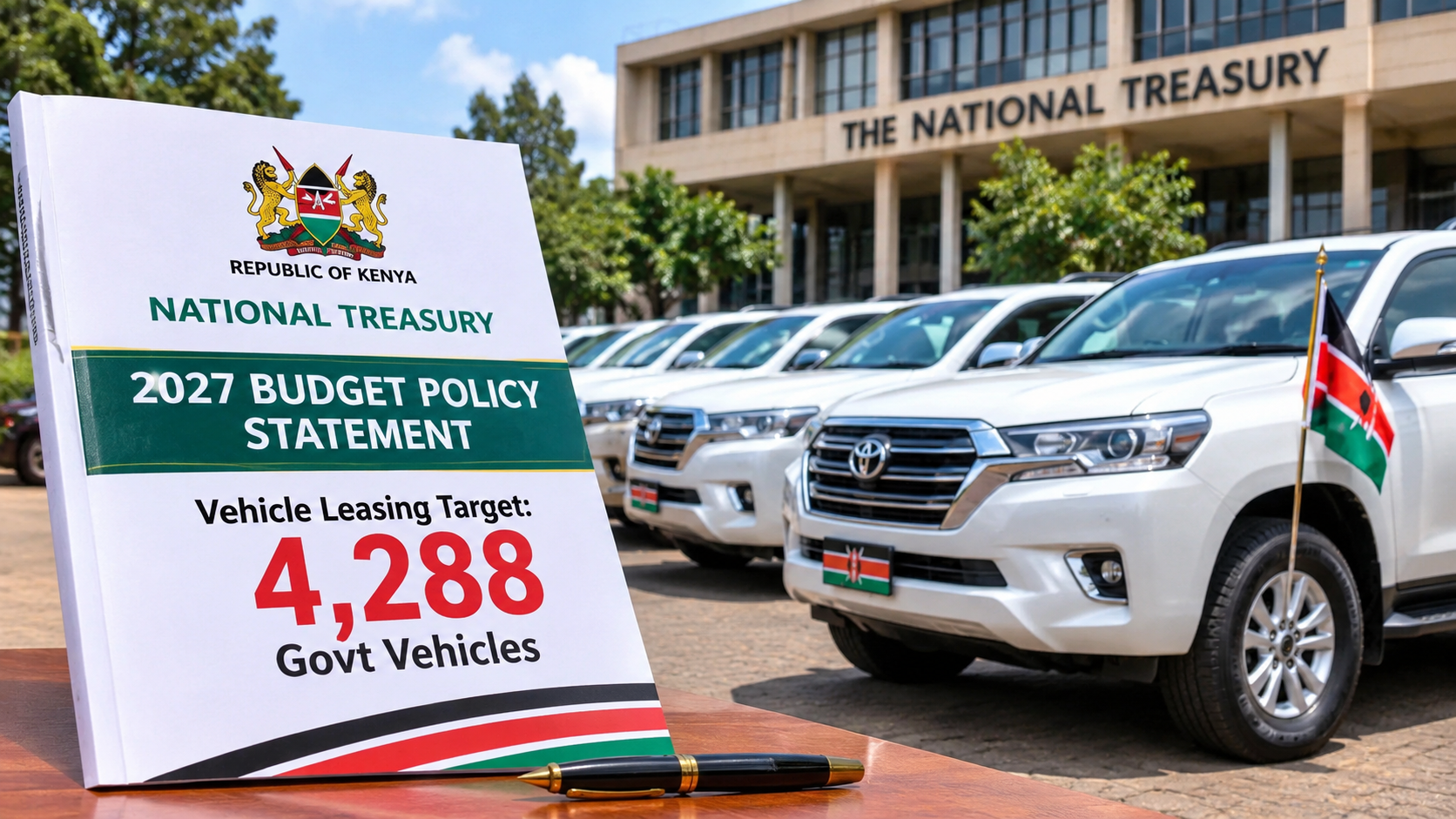

Kenya’s National Treasury plans to facilitate the leasing of 4,288 motor vehicles annually for the next three financial years, setting a target that could sustain a sizeable government vehicle-leasing programme through to 2030.
The plan is contained in the Treasury’s 2027 Budget Policy Statement submission to Parliament. It targets 4,288 leased vehicles in each of the financial years 2027/28, 2028/29 and 2029/30.
The Treasury says the programme is intended to improve public service delivery across government.
“To facilitate the leasing of 4,288 motor vehicles during FY 2027/28, in line with the planned vehicle leasing requirements, with a view to enhancing efficient and effective service delivery across Government,” the submission states.
The three-year target puts government vehicle leasing among the Treasury’s planned administrative activities over the medium term. However, the submission does not disclose the total cost of the programme, the expected payments per vehicle or the government agencies that will benefit.

Three-year target
The Treasury’s performance targets show that the 4,288-vehicle figure is not limited to the 2027/28 financial year.
The same annual target is maintained for 2028/29 and 2029/30, suggesting that vehicle leasing will remain part of the department’s administrative support programme throughout the period.
The document also records a target of 4,500 leased vehicles for 2025/26, against an actual achievement of 3,688.
These figures provide a historical reference point for the new target, although the submission does not explain whether the planned 4,288 vehicles will be new leases, renewals, replacements or vehicles required to maintain an existing fleet.
It also does not specify the types of vehicles involved, their intended distribution or the duration of the leasing contracts.

Cost remains unclear
One of the major gaps in the Treasury’s submission is the absence of a detailed financial breakdown for the vehicle-leasing target.
The document gives the number of vehicles expected to be leased but does not state how much the government expects to spend on the programme in 2027/28 or over the full three-year period.
Without the projected expenditure, it is not possible to establish the average leasing cost per vehicle or assess the programme’s overall financial implications.
The submission also does not identify the procurement method, potential suppliers or whether the target will be implemented through existing contracts or new arrangements.
These details will be important in assessing value for money, particularly when comparing leasing with purchasing and maintaining government-owned vehicles.
Accountability questions
The Treasury presents vehicle leasing as a measure intended to improve efficiency and service delivery. However, the submission provides limited information on how the programme’s performance will be measured beyond the number of vehicles leased.
Key questions remain over which departments will receive the vehicles, how allocation decisions will be made and what safeguards will ensure that the leasing arrangements deliver value for public money.
The figures should also be understood as planned performance targets, not confirmation that the vehicles have already been procured or delivered.
Parliamentary scrutiny of the budget and subsequent procurement disclosures will be important in establishing the programme’s cost, beneficiaries and implementation arrangements.
For now, the Treasury has set a clear numerical ambition: 4,288 leased vehicles every year from 2027/28 to 2029/30. The financial details needed to assess the full cost to taxpayers remain undisclosed in the submission.