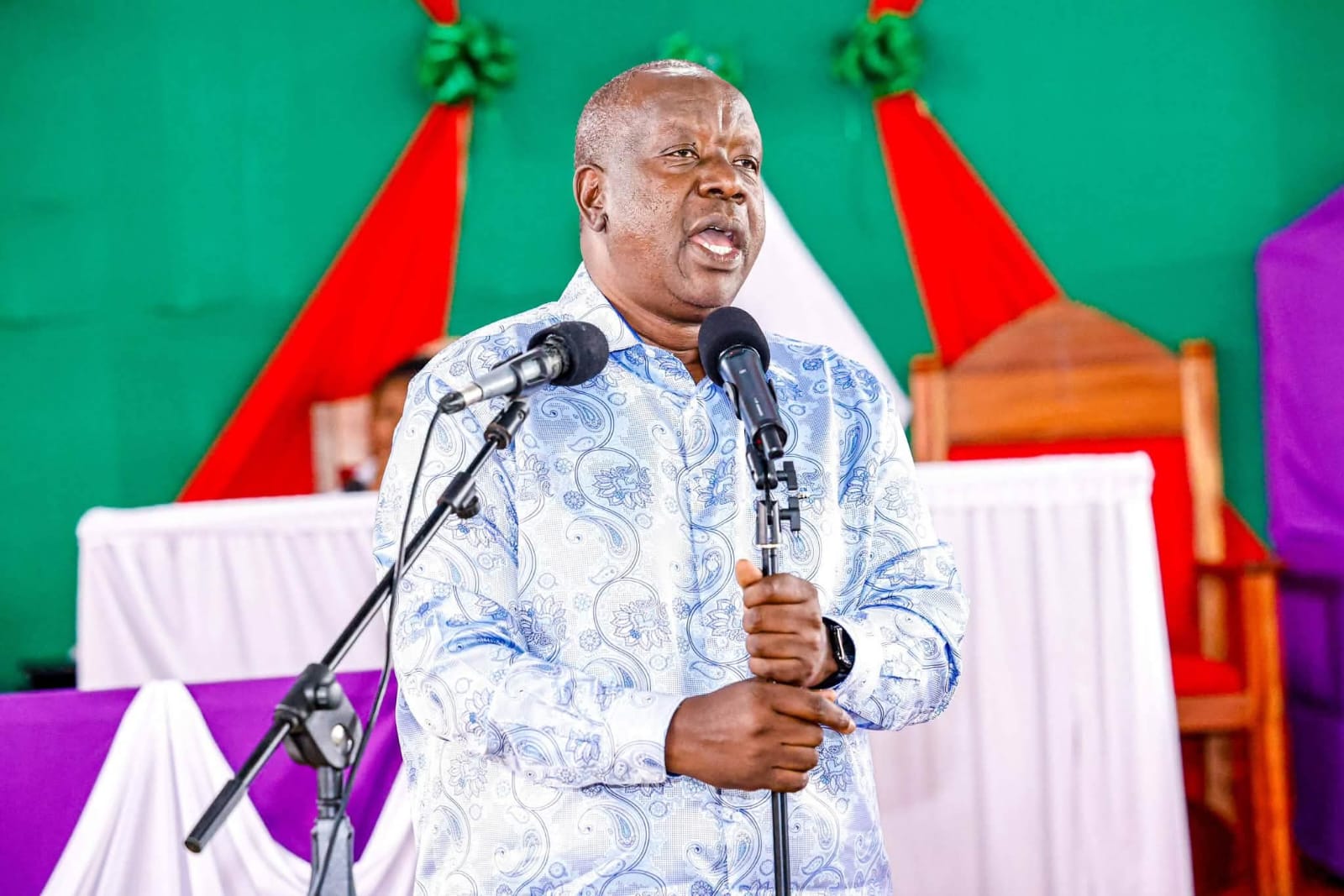

Jubilee Party leader Fred Matiang’i has drawn fresh political lines within Kenya’s opposition, declaring that he cannot work with leaders whose political views and approach to leadership differ from his, in remarks that place his relationship with former Deputy President Rigathi Gachagua under renewed scrutiny.
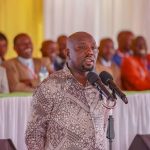
Speaking at ACK St Mary’s Church in Kimunye, Gichugu Constituency, Kirinyaga County, on Sunday, November 22, the former Interior Cabinet Secretary said he was only prepared to engage with leaders with whom he shared common ground and who were committed to finding solutions to the country’s challenges.
“I cannot sit with someone we do not see eye to eye. I can only sit with people we can work with,” Matiang’i said.
Although he did not mention Gachagua by name, the remarks come against the backdrop of growing disagreements between the two opposition figures over political strategy, leadership and the direction of the emerging opposition coalition.
The statement is particularly significant because it comes barely two weeks after Matiang’i, Gachagua and Wiper leader Kalonzo Musyoka held a meeting aimed at easing tensions and preventing their differences from undermining efforts to build a united political front ahead of the August 2027 General Election.
The latest remarks raise questions about whether the reconciliation efforts have addressed the underlying disagreements or merely provided a reprieve as opposition leaders pursue their individual political ambitions.
Tensions within opposition
The disagreements between Matiang’i and Gachagua have largely revolved around how the opposition should organise itself, mobilise voters and determine who should eventually lead the coalition into the 2027 presidential contest.
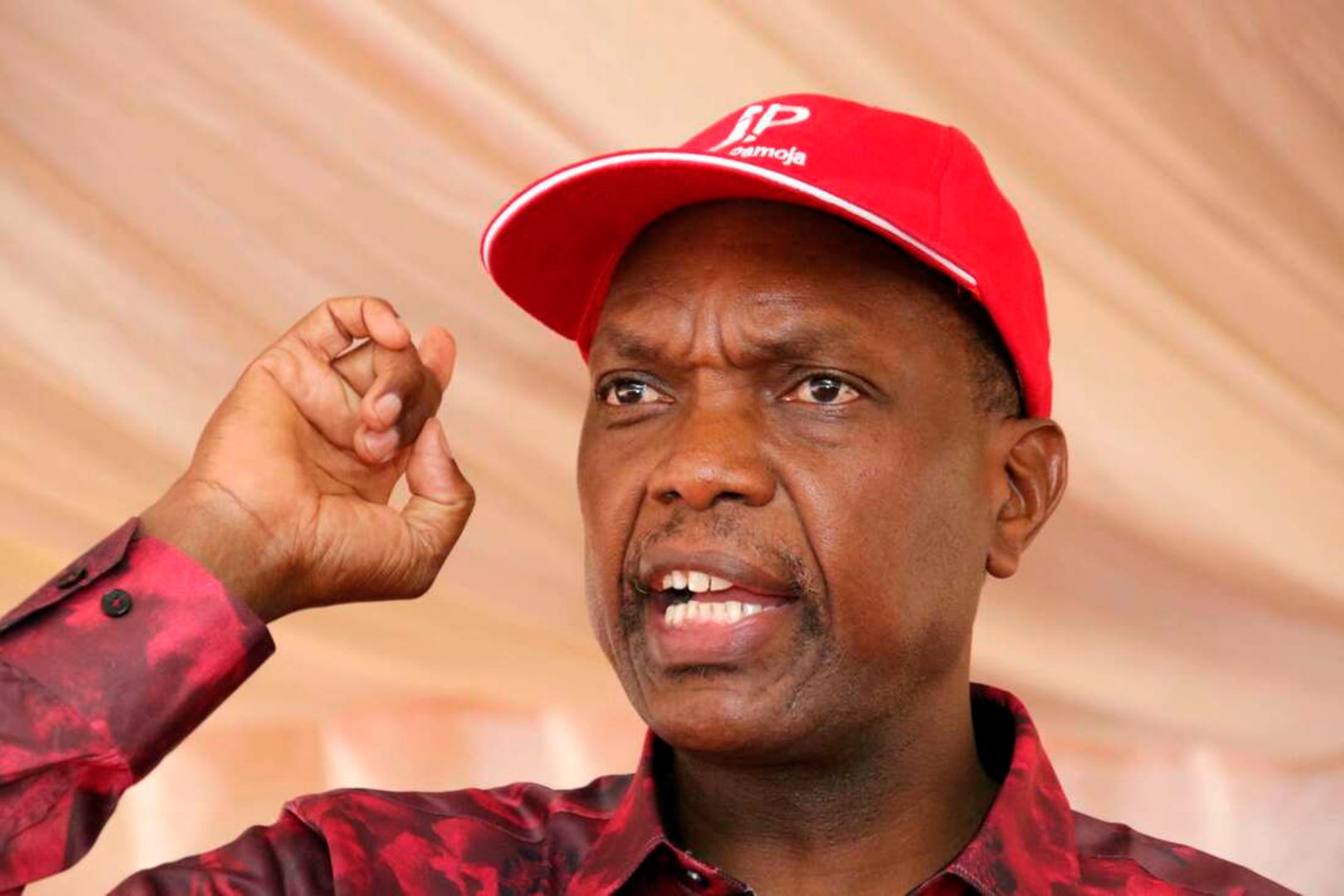
Gachagua has repeatedly emphasised the importance of political numbers, grassroots mobilisation and regional voting blocs, arguing that leaders seeking the presidency must demonstrate their ability to attract voters.
He has also challenged Matiang’i and other opposition figures to move beyond political meetings and demonstrate their influence on the ground.
Matiang’i, on the other hand, has emphasised leadership credentials, policy direction and the need for political partners who share common objectives.
The differences point to a deeper disagreement over what should determine the opposition’s presidential candidate: electoral mobilisation and regional political strength or national appeal, experience and the ability to offer an alternative governance programme.
On November 7, Gachagua, Matiang’i and Kalonzo met in Nairobi following public exchanges that threatened to weaken their cooperation.
The meeting was viewed as an attempt to contain the disagreements, with Kalonzo particularly concerned that continued hostility between the two leaders could undermine the opposition’s search for a common presidential candidate.
However, Matiang’i’s latest remarks suggest that agreeing to work together publicly may not necessarily mean that the leaders have resolved their political differences.
Gachagua under pressure
The divisions have also attracted attention in public opinion.
A TIFA Research survey released on November 12 found that 43 per cent of opposition supporters identified Gachagua as the figure most responsible for disagreements among opposition leaders.
President William Ruto and the United Democratic Alliance government followed at 15 per cent, while Nairobi Senator Edwin Sifuna received seven per cent and Kalonzo six per cent.
Matiang’i was identified by four per cent of respondents.
The findings present a difficult political situation for Gachagua, who has positioned himself as one of the leading figures in efforts to unite the opposition against Ruto.
The former Deputy President has rejected the suggestion that he is responsible for divisions, maintaining that he is playing a central role in bringing opposition leaders together.
The survey, however, measures perceptions among opposition supporters rather than establishing who is objectively responsible for the disagreements.
It nevertheless illustrates the public relations challenge facing opposition leaders as they attempt to convince voters that their differences will not prevent them from presenting a credible alternative in 2027.
Separate political engagements
The latest developments were also reflected in Sunday’s political engagements in Kirinyaga and Embu counties.
Matiang’i attended the church service in Kimunye alongside People’s Liberation Party leader Martha Karua and Kiharu MP Ndindi Nyoro, while Gachagua and his allies held a separate engagement in Runyenjes, Embu County.
The parallel engagements fuelled speculation about the emergence of different political centres within the opposition.
However, leaders at the Kirinyaga gathering dismissed suggestions that they were establishing a separate political formation.
Nyoro insisted that opposition leaders remained united despite attending different events across the country.
He said the engagements were part of a broader mobilisation effort and maintained that the opposition would eventually agree on one presidential candidate.
Matiang’i also praised Nyoro, describing him as a straightforward leader who understood the solutions needed to address Kenya’s challenges.
“I know Ndindi. He is a straightforward man and knows the solutions that are needed,” he said.
The Jubilee leader further insisted that his political camp was focused on developing practical solutions rather than engaging in political exchanges.
“We will provide solutions. We are not here for stories; we are here for solutions,” Matiang’i said.
The remarks suggest that policy and leadership approach are becoming important parts of how Matiang’i wants to define his political identity as the opposition succession debate intensifies.
Battle over 2027
The opposition’s challenge is no longer simply about bringing together leaders opposed to Ruto. It is also about agreeing on who should lead the coalition, how a presidential candidate should be selected and what political interests each formation will bring to the arrangement.
Recent developments demonstrate that opposition leaders can still cooperate on specific issues.
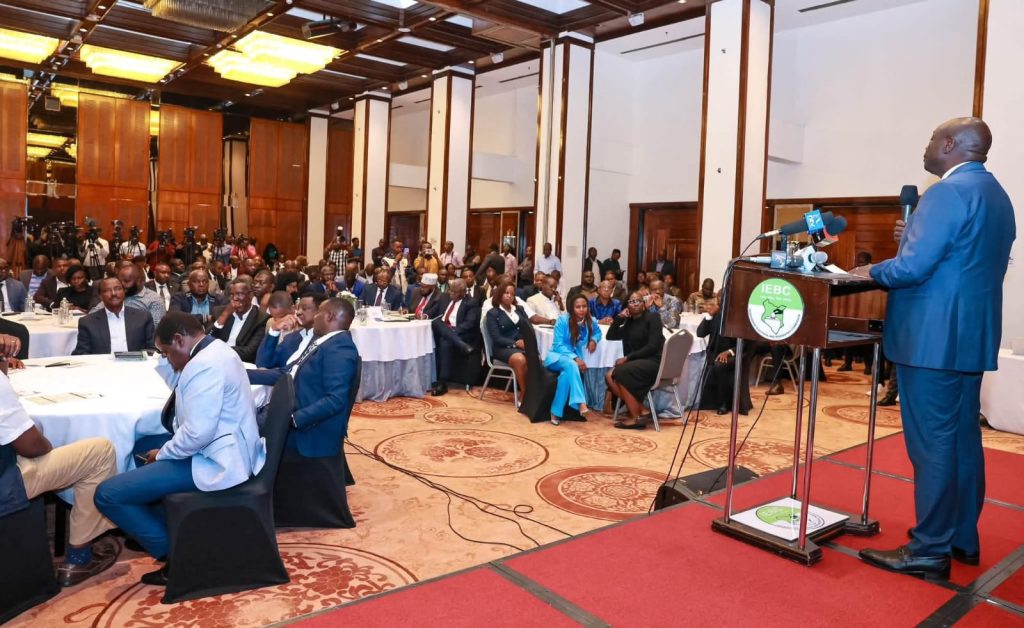
On November 19, Gachagua, Kalonzo and other opposition figures walked out of a consultative meeting with the Independent Electoral and Boundaries Commission (IEBC), protesting what they described as the exclusion of critical electoral reform issues from the discussions.
The joint action demonstrated their ability to coordinate around electoral concerns even as disagreements over political leadership persist.
But such cooperation does not automatically resolve the competition for the opposition’s presidential ticket.
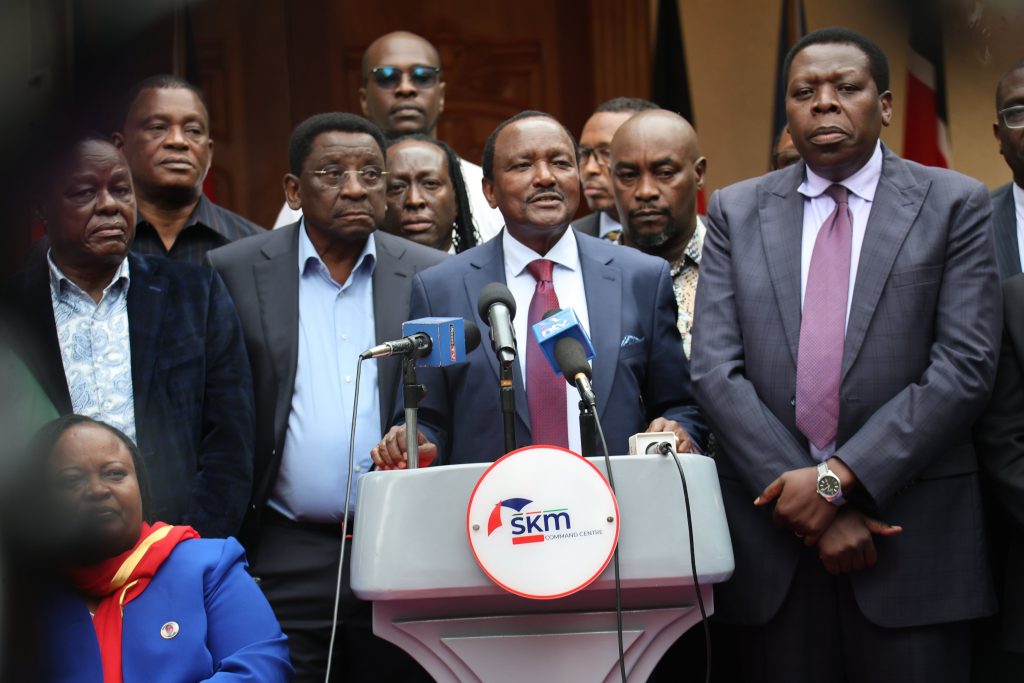
Matiang’i, Gachagua, Kalonzo and other prominent opposition figures have their own political ambitions, while the question of how to accommodate their interests remains unresolved.
For Matiang’i, insisting on shared political values could help distinguish his leadership approach from that of other opposition figures. However, it could also make coalition negotiations more difficult if competing leaders are unwilling to compromise.
For Gachagua, the challenge is to maintain his influence in the opposition while addressing perceptions that his political approach contributes to internal disagreements.
Ultimately, the opposition faces a difficult choice: accommodate its competing personalities and ambitions in pursuit of a common presidential candidate, or risk entering the 2027 election with a divided political movement.
Matiang’i’s latest remarks have brought that dilemma back into focus, raising questions about whether the recent reconciliation efforts can withstand the pressure of an increasingly competitive succession battle.