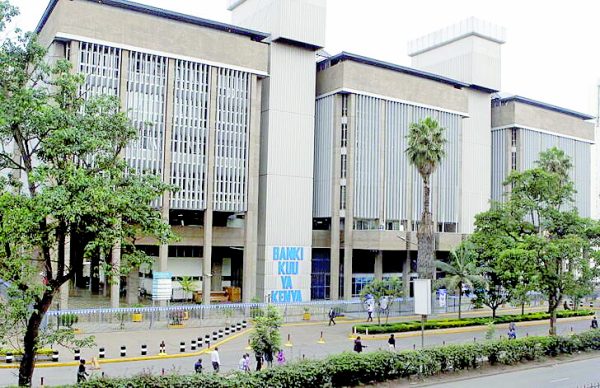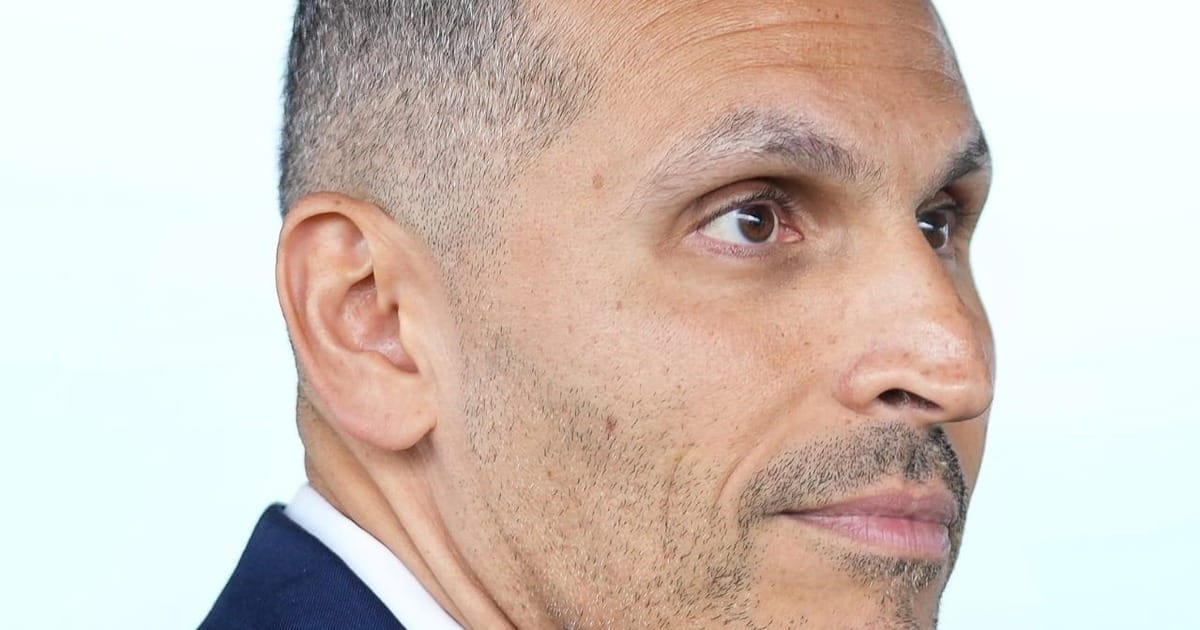


Mining Cabinet Secretary Hassan Joho has named three successful bidders for strategic mineral development projects in Kwale, Samburu and Tharaka Nithi counties, marking a major step in the government’s plan to commercialise Kenya’s mineral resources.
However, the selected companies must first obtain community consent and secure prospecting licences before undertaking exploration activities.
In a statement on Thursday, November 19, 2026, Joho said the competitive tendering process was intended to attract investors with the technical expertise and financial capacity to develop the deposits while ensuring benefits for host communities.
“Our commitment from the outset was to ensure that Kenya attracts only world class, technically capable, and financially sound partners who share our vision for in-country value addition, environmental stewardship, and shared prosperity,” Joho said.
Three firms selected for mineral projects
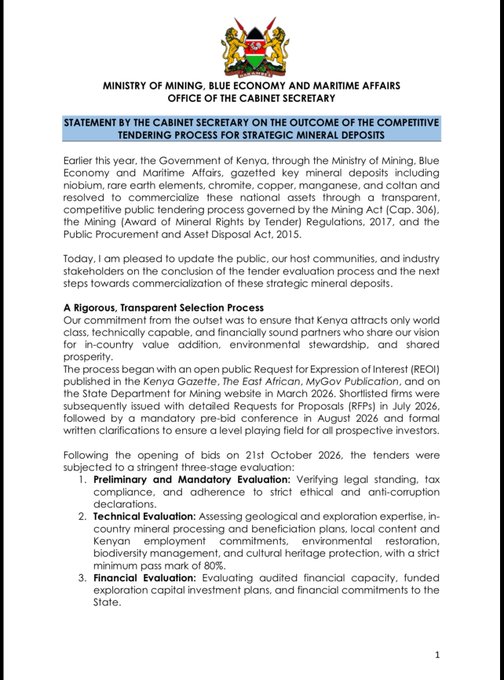
For the Mrima Hill Niobium, Rare Earth Elements and Other Minerals Project in Kwale County, the successful bidder is Frontier Minerals Consortium.
The consortium comprises Frontier Minerals LLC, Bunker Hill Mining Corp, ReElement Technologies and American Resources Corporation.
In Samburu County, Fangda Special Steel Technology Co. Ltd and Sinohydro Corporation Joint Venture have been selected for the Kang’ura Chromite Development Project.
The same joint venture secured the bid for the Kamacabi Copper Development Project in Tharaka Nithi County.
Joho said the two projects would be addressed separately in accordance with the law, without providing further details on the next tendering process.
Community consent required before prospecting
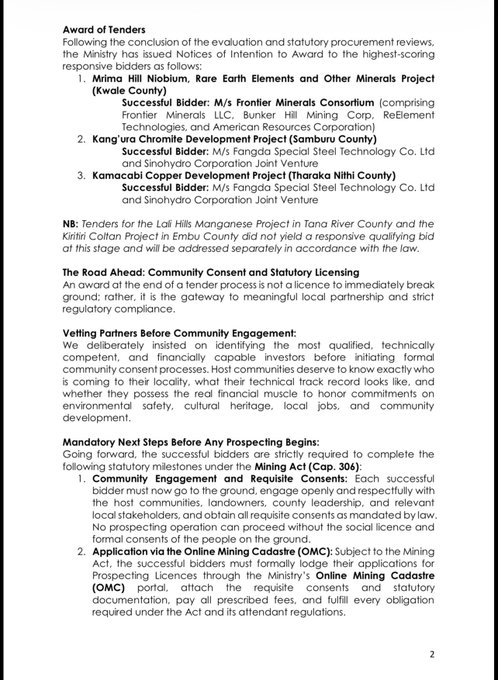
Although the three bidders have been selected, they cannot immediately begin prospecting. They must first engage host communities, landowners, county leadership and other local stakeholders and obtain the requisite statutory consents.
Joho said the government had deliberately identified technically competent and financially capable investors before beginning formal community engagement, arguing that residents should understand who intends to operate in their areas and whether the companies can meet their obligations.
“Host communities deserve to know exactly who is coming to their locality, what their technical track record looks like, and whether they possess the real financial muscle to honor commitments on environmental safety, cultural heritage, local jobs, and community development,” he said.
He further stressed that community approval was a prerequisite for prospecting.
“No prospecting operation can proceed without the social licence and formal consents of the people on the ground,” Joho stated.
After securing the necessary consents, the successful bidders must submit applications for prospecting licences through the Ministry’s Online Mining Cadastre portal, together with the required documentation and prescribed fees.
The applications will then undergo review by the Mineral Rights Board, which will make recommendations before the Cabinet Secretary can grant the licences.
Joho cautioned that being selected through the tendering process does not give the companies immediate authority to begin exploration.
“An award at the end of a tender process is not a licence to immediately break ground; rather, it is the gateway to meaningful local partnership and strict regulatory compliance,” he said.
The government says the projects are expected to support local employment, in-country mineral processing and environmental protection, while creating economic opportunities for communities hosting the deposits.
The focus now shifts to community engagement and statutory approvals before the selected companies can begin prospecting.