The Independent Electoral and Boundaries Commission (IEBC) has finally removed three nominated Members of the County Assembly (MCAs) in Kwale whose nominations were nullified by the High Court in 2023, ending a three-year legal and administrative limbo, but leaving two other names at the centre of the original case outside its latest replacement exercise.
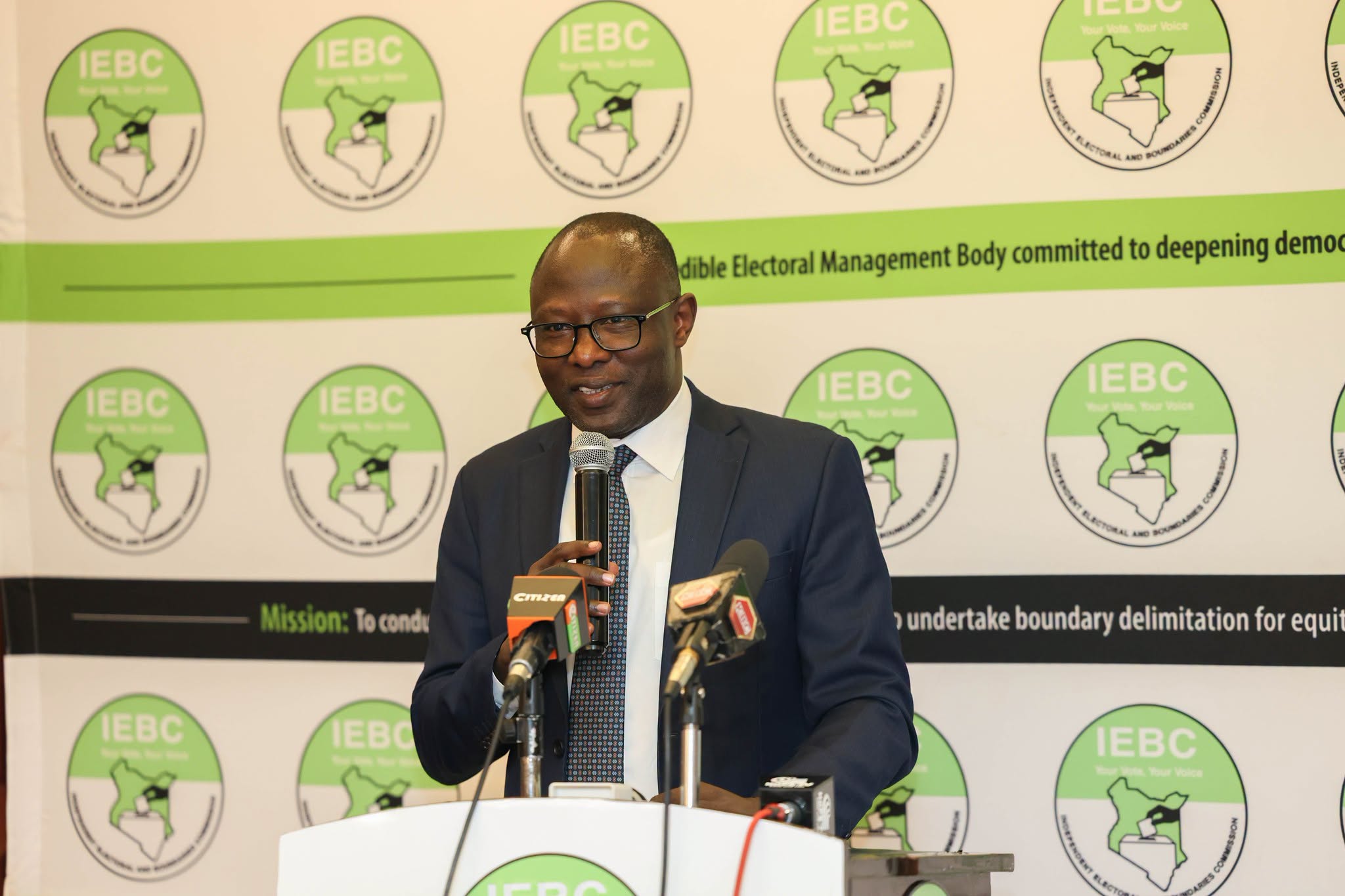
IEBC Chairman Erastus Edung Ethekon, in a Gazette notice issued on September 18, 2026, removed Fartun Mohamed Musa of the Orange Democratic Movement (ODM), Augustine Ndegwa of the United Democratic Alliance (UDA) and Rachael Katumbi Mutisya of the United Democratic Movement (UDM) from the Kwale County Assembly.
The three have been replaced by Agnes Otieno, Aaron Kennedy Kavuwa and Nuria Huka respectively.
“The deleted nominees stand excluded as Members of the County Assembly of Kwale,” Ethekon stated in the notice.
The action comes nearly three years after the High Court declared five nominated MCA seats vacant and ordered IEBC to complete the replacement process within 14 days.
That leaves a striking question at the heart of the Kwale saga: why has IEBC now replaced three of the five nominees named in the 2023 judgment, and what is the current status of the other two?
Court voided five
The dispute began with a petition by Mary Charles Kalinga challenging the nomination of several people to special seats in the Kwale County Assembly.
On September 14, 2023, Justice DKN Magare of the High Court in Mombasa ruled that Fartun Mohamed Musa, Josephine Wairimu Kinyanjui, Augustine Ndegwa, Mulki Abdullahi Adan and Rachael Katumbi Mutysia had not been validly elected through nomination to the affected special seats.
The court found that nomination of people who were neither residents nor registered voters of Kwale County was invalid. It consequently declared the five positions vacant and directed IEBC to select replacements from qualifying party lists while prioritising marginalised groups.
“I therefore declare that Fartun Mohamed Musa, Josephine Wairimu Kinyanjui, Augustine Ndegwa, Mulki Abdullahi Adan and Rachael Katumbi Mutysia were not validly elected by nomination,” Justice Magare ruled.
The court ordered IEBC to conclude the nominations within 14 days and directed the Clerk of the County Assembly to ensure that the newly nominated members were sworn in within seven days of appointment.
The affected nominees challenged the judgment. The Court of Appeal dismissed their appeal on March 22, 2024, while the Supreme Court dismissed a further challenge on June 28, 2024. The original judgment therefore remained the basis for the subsequent enforcement proceedings.
Three-year legal limbo
The delay in implementation, however, became entangled in further litigation.
In September 2024, Mulki Abdullahi Adan obtained interim conservatory orders restraining her de-gazettement and allowing her to continue serving while her constitutional petition was pending. The petition was subsequently struck out in January 2026, according to a later High Court ruling.
The wider dispute continued before the High Court.
In March 2026, the court recorded an application by Ms Kalinga seeking orders to stop the affected nominees from attending County Assembly proceedings and to freeze their salaries, allowances and other benefits. She also sought permission to commence contempt proceedings against IEBC officials, County Assembly officials and the affected nominees.
Kalinga alleged that the affected nominees had continued attending Assembly proceedings and receiving public remuneration despite the 2023 judgment. The court record identifies these as allegations advanced in the proceedings; they should not be treated as a final finding that every affected nominee unlawfully received public funds.
IEBC and the County Assembly, meanwhile, pointed to subsequent court proceedings as part of the explanation for the delay. The commission also referred to proceedings before the Employment and Labour Relations Court involving some of the affected MCAs.
But the legal battles did not erase the original order.
The High Court subsequently reaffirmed that the 2023 judgment remained enforceable and that the five seats had been declared vacant. It directed the relevant parties to comply and warned that failure to do so could expose them to contempt proceedings.
Why only three?
The latest Gazette notice resolves part of the dispute while opening another.
The 2023 judgment named five people whose nominated positions were declared vacant. The September 18, 2026 IEBC notice, however, provides replacement names for only three: Musa, Ndegwa and Mutysia.
Josephine Wairimu Kinyanjui and Mulki Abdullahi Adan are not among the three new nominees listed in the latest notice.
The discrepancy is significant because the March 2026 High Court proceedings continued to refer to the original five affected seats and reproduced the 2023 order requiring IEBC to fill them.
There is another twist. Ms Kalinga, whose legal challenge triggered the dispute, is also not among the three people gazetted as replacements. Neither are several names she had proposed during the proceedings, including Mwanauba Omar Mwaphatsa, Bakari Mwafrika Wakilesho and Luvuno Zawadi Jackson.
The High Court had earlier declined to order IEBC to gazette Kalinga or her proposed replacements, noting that such an order was not contained in the original judgment.
The latest development therefore does not simply mark the end of the Kwale MCA dispute.
It leaves three questions hanging over the electoral record: why did implementation of a 2023 order take nearly three years; what happened to the two other nominees named in the judgment; and how did IEBC determine the three names now occupying the affected positions?
With the 2027 General Election less than a year away, the Kwale case offers a close look at the distance that can emerge between a court ruling, an electoral commission’s records and the people actually serving in public office.
For IEBC, the September Gazette notice closes one part of the case. The unresolved two-seat question means it may not yet be the final chapter.